Home Blog Page 1089

Ogun First Lady Unveils Endoscopy Machine at Teaching Hospital

0

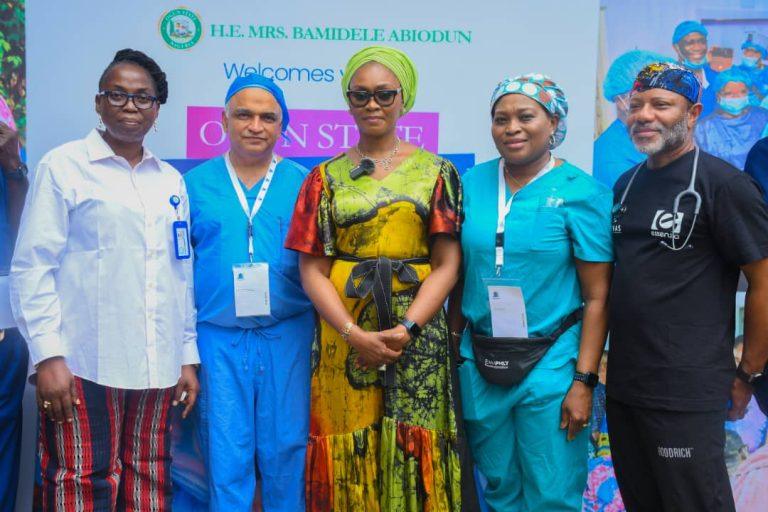
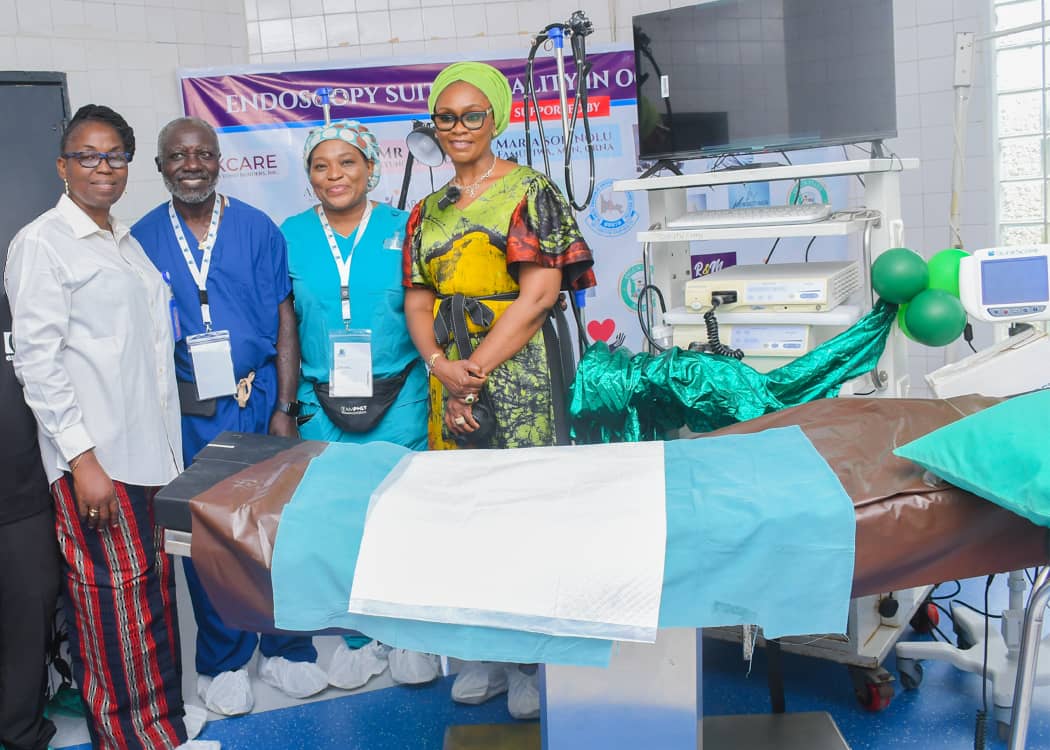
The wife of the Ogun State Governor, Mrs Bamidele Abiodun, has unveiled an endoscopy machine at the Olabisi Onabanjo University Teaching Hospital (OOUTH), Sagamu, as part of her ongoing commitment to improving healthcare delivery in the state through her Ajose Foundation.

The machine was donated in partnership with Naykas Healthcare Incorporated, a US-based medical team that has consistently provided free medical care and surgeries to indigent residents of Ogun State.

Speaking at the unveiling, Mrs Abiodun commended the Naykas medical team for their continued support, noting that the collaboration had significantly boosted the hospital’s diagnostic and treatment capacity over the years.

Read Also: Kwara Agency Inspects Pharmacies To Ensure Environmental Safety

She added that the institution had benefited from the regular donation of modern medical equipment aimed at strengthening health service delivery.

She also expressed appreciation to the hospital’s management and medical personnel for their cooperation and synergy with the visiting international team.

Mrs Abiodun advised citizens to seek early medical intervention, especially for treatable conditions, to improve health outcomes.

The head of the medical team, Dr Musbau Kasumu, explained that the endoscopy machine would significantly enhance diagnostic accuracy, enabling detailed internal examinations and more targeted treatments.

He highlighted the potential of the new equipment to improve patient outcomes, especially in the early detection of conditions like colon cancer, which is fully curable if diagnosed early.

Dr Kasumu further disclosed that the team had already performed 42 cataract surgeries within two days and planned to conduct about 200 surgeries during their one-week outreach programme.

The Chief Medical Director of OOUTH, Dr Bunmi Fatungase, stated that the initiative aligned with the Ogun State Government’s broader efforts to improve medical infrastructure and expand access to quality healthcare.

She added that the endoscopy machine would support both diagnostic and therapeutic procedures, contributing significantly to cancer prevention and treatment efforts.

Dr Fatungase lauded the donors for their invaluable contribution, emphasising the critical role of early diagnosis in saving lives.


Constitution Review: Deputy Speaker Woos Media Executives’ Support

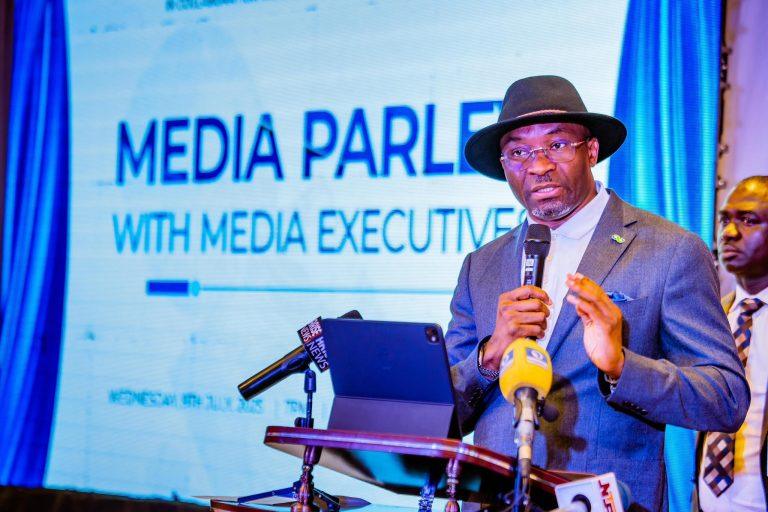
The Deputy Speaker of Nigeria’s House of Representatives, Mr. Benjamin Okezie Kalu, has solicited the partnership of editors and media executives in the ongoing constitution review process.

Speaking during a parley with top media managers under the auspices of Nigerian Guild of Editors (NGE) in Abuja on Wednesday, Kalu, who recognized the pivotal role of the media in shaping public discourse and ensuring transparency, emphasized the importance of working together to facilitate a comprehensive and inclusive review that reflects the aspirations of Nigerians.

He stated that the engagement with media chiefs aims to create a platform for open dialogue, constructive feedback, and informed public participation in the review process.

He said the constitution review process is expected to address emerging national challenges and align laws with citizens’ aspirations.

Key areas of focus, Kalu said, include electoral reforms, judicial reforms, devolution of powers, state policing, economic development, gender issues, and inclusivity, among others.

The Deputy Speaker, who is also the chairman of the House’s Constitution Review Committee, urged media executives to intensify their efforts in the panel at every level, while also calling on Nigerians to participate actively in the forthcoming zonal public hearings and provide their input.

He said that together, the lawmakers, media executives, and Nigerians can create a more just, equitable, and prosperous society for all through a people-oriented government.

“As the fourth estate, you are our partners in progress, and your role in shaping public discourse towards transparency, good governance, and holding us accountable is deeply acknowledged and essential to our nation’s progress.

“As we move forward with the constitution review process, I urge you all to amplify our efforts in the committee. And to Nigerians, you are the reason we are here. I urge you all to please participate actively in the zonal public hearings and provide your inputs.”

“We truly, truly need your partnership. And let me also appeal, please cover the public hearings well, all the zonal public hearings. Inform the people working under you to pay special attention to covering it across the nation. That’s very important to us. And then, also prepare for the national public hearing, which is coming up on the 21st of July,” Mr. Kalu said.

The Deputy Speaker, who also received a copy of a proposal from the NGE, on amendment to the media laws in Nigeria to enable the practitioners hold government to account, assured that the committee will look into the issues raised in the document.

“We will want this engagement to go beyond the constitutional amendment period. You are a sector that is key. You market this country both to Nigerians and those who are outside the country. Your narrative is important. Tailor the narrative to reflect the dignity of this nation, to embrace investors and other key stakeholders. I am promising that my committee will look at issues raised in this document critically,” Kalu said.

Read Also: NASS Urged To Pass Law Criminalizing Unexplained Weath 

The Deputy President of the Nigerian Guild of Editors, Mr. Sabastine Abu, assured the Deputy Speaker that the guild would work with the constitutional review committee.

He also called for the amendment to the media laws in Nigeria to enable the practitioners to hold the government to account.

The Executive Director of the Policy Legislative Advocacy Centre (PLAC), Mr. Clement Nwankwo, explained the importance of the media to the success of the constitutional review.

He also pointed out the need to amend the constitution to create special seats for women in the parliament.

In their contributions, other stakeholders lauded the media parley.

Anglo-Nigerian partnership berths ₦1.5Billion Creative Sector Fund, podcast hub


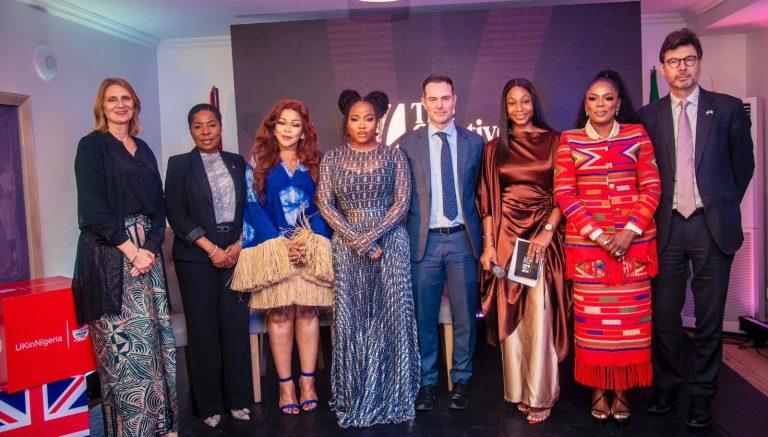
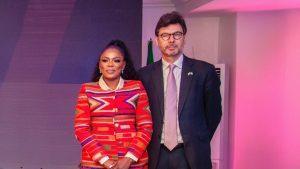
In a groundbreaking move to boost Nigeria’s creative economy, Woodhall Finance House has unveiled a ₦1.5 billion Creative Sector Fund alongside a podcast hub called The Creative Currency Podcast.

This initiative was made possible through the support of the UK Government’s Department for Business and Trade, Polaris Bank, and the Lagos State Government.

While the fund is aimed at supporting export-ready businesses and SMEs across fashion, film, music, beauty, and digital arts, the Creative Currency Podcast is a dynamic new platform designed to serve as both a storytelling hub and an economic engine for the continent’s creative sector.

Hunponu-Wusu, Woodhall Capital Founder and President, said the twin-initiative would significantly give Nigerian creatives the opportunity to build capacity while at the same time telling Nigerian stories to a global audience.

Creativity is not just an abstract concept—it’s a bankable commodity. We must start treating it as such. Nobody can tell the Nigerian story better than Nigerians,” she stated.

This fund is our commitment to building our own systems, financing our own stories, and converting cultural capital into real economic power.

Growth

Jonny Baxter, British Deputy High Commissioner, said the initiative is poised to harness the power of policy, capital, and narrative to unlock sustainable growth within one of Africa’s most promising export sectors.

The UK is proud to support Nigeria’s creative economy through long-term partnerships that blend innovation, investment, and cultural exchange,” he said.

Platforms like The Creative Currency Podcast, along with the Creative Industries Technical Working Group established under the UK-Nigeria Enhanced Trade and Investment Partnership (ETIP), reflect our deep commitment to creating real opportunities, building lasting partnerships, and empowering the next generation of African talent to shine globally.

The launch event, held in Lagos, brought together an influential mix of policymakers, investors, development finance leaders, high-net-worth individuals, and prominent creatives from across Africa.”

The initiative is poised to harness the power of policy, capital, and narrative to unlock sustainable growth within one of Africa’s most promising export sectors.

Positioned at the intersection of finance, culture, and diplomacy, The Creative Currency Podcast aims to catalyze investment, foster international collaboration, and strengthen the UK-Nigeria creative alliance—helping to transform the sector into a global economic force.

Representing Lagos State Governor Babajide Sanwo-Olu, the Commissioner for Commerce, Cooperatives, Trade and Investment, Mrs. Folashade Bada Ambrose, delivered a keynote that reinforced Lagos’s role as Africa’s creative heartbeat.

A high-level panel discussion on financing Africa’s creative economy featured Mrs. Abimbola Ozomah (Executive Director, Polaris Bank), Sola Carrena (MD/CEO, Helios Investment Partners), and Mrs. Mojisola Hunponu-Wusu (President, Woodhall Capital). The session emphasized the urgent need for innovative funding mechanisms—such as blended finance, creative bonds, and factoring—to unlock the sector’s full economic potential.

The evening also featured a vibrant fireside chat on “UK-Nigeria Cultural Synergies to Drive Global Innovation and Transformation,” with contributions from fashion designer Veekee James Atere, actress and singer Shaffy Bello, and Mark Smithson, UK’s Country Director for the Department for Business and Trade.

The trio explored how cross-cultural collaboration can open new creative frontiers.

The celebration wrapped up with a cultural exchange under the UK’s Jollof and Tea campaign—a symbolic blend of British and Nigerian identities through food, storytelling, and high-level networking. Guests shared reflections on identity, investment, and the future of African creativity on the global stage.

The Creative Currency Podcast is more than just a platform—it’s a strategic tool for economic transformation.

As global demand for African creativity accelerates, initiatives like this are essential to turning visibility into viability, and culture into capital.


President Tinubu Urges Governor Okpebholo To Bridge Divides

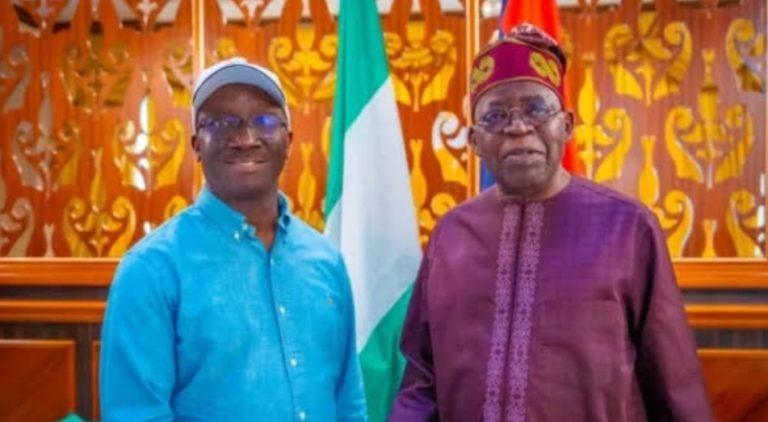
President Bola Tinubu has called on Governor Monday Okpebholo to show magnanimity in victory and unite the people of Edo State across all divides to collectively pursue the goal of advancing the state’s development.

Congratulating Governor Okpebholo on the affirmation of his election by the Supreme Court, President Tinubu advised him, “to accelerate the delivery of exceptional services and good governance to the people of Edo State, which he has already begun to do.”

Read Also: Senate President Calls for Stronger Nigeria-Morocco Ties

In a congratulatory message issued by the Presidential Spokesperson, Mr. Bayo Onanuga, the President felicitated the leadership and members of the All Progressives Congress (APC) in Edo State and called for cohesion and dedication in effectively discharging the mandate given by the people.

Governor Monday Okpebholo was declared the winner of the Edo State governorship election by the Independent National Electoral Commission (INEC) in September 2024.

The Supreme Court of Nigeria affirmed the election of Monday Okpebholo as the Governor of Edo State, upholding his victory in the September 21, 2024, governorship election.

President Ruto Orders Kenyan Police to Curb Protest Vandalism

0

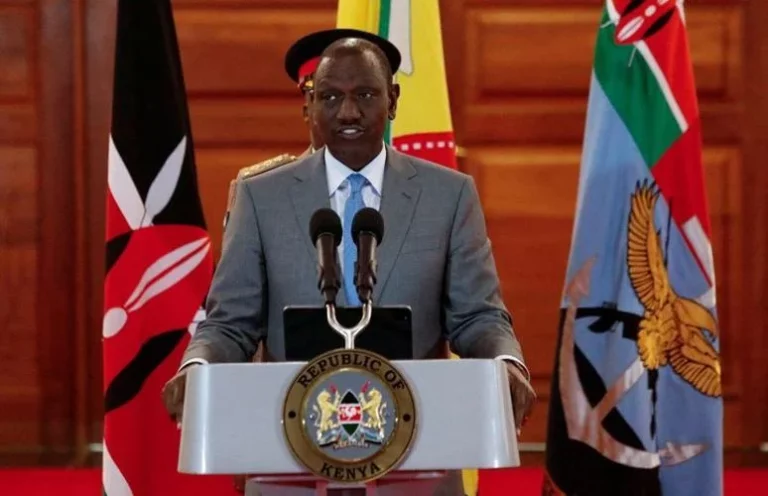
“Shoot in the leg”: Kenya’s president William Ruto ordered police forces to curb vandalism from protesters by incapacitating anyone trying to damage businesses.

The move comes as the situation in the country has been worsening, with anti-government protests rocking the capital and neighbouring areas.

At least 31 people were killed on Monday in the worst death toll of the protests so far, according to the country’s rights watchdog.

Kenyan police meanwhile said that 11 people died.

More than 500 were reportedly arrested during the Saba Saba protests on Monday, which marked the 35th anniversary of Kenya’s transition to multi-party democracy.

Several acts of vandalism and destroyed businesses were reported in Nairobi in the aftermath of the protests.

For president Ruto, speaking at the opening of a police station, the situation is “not acceptable”.

The Kenyan president added that he would use “whatever means necessary” to stabilise the country.

Africanews/Hauwa M.

UK Introduces eVisas for Nigerian Students, Workers


Effective from 15 July 2025, the United Kingdom will begin issuing electronic visas (eVisas) to most applicants seeking entry for study or work purposes.

This transition means that successful applicants will no longer receive a physical visa vignette (sticker) in their passports.

Instead, they will be granted a secure digital visa, accessible online via a UK Visas and Immigration (UKVI) account.

Applicants who submit their applications before this date will continue to follow the current process, which includes: submitting their passport at a Visa Application Centre (VAC), and eceiving a physical vignette sticker upon approval

The UK government said this development represents a significant milestone in its efforts to establish a modern, digital immigration system.

Visitor visa applicants, as well as dependants (e.g., spouses or children) of individuals applying for study or work visas, will continue to receive a physical vignette for the time being.

We’re making it easier and faster for Nigerians to travel to the UK. From 15 July 2025, most people applying for study or work visas will receive a digital eVisa instead of a visa sticker in their passport“, said Gill Lever (OBE), Chargé d’Affaires at the British High Commission in Abuja.

This is a further big step toward a fully digital UK immigration system—making the process more secure, more efficient, and more convenient for students, professionals, and families.

She, however, noted that if an individual applies as a dependant—like a spouse or child of someone who is studying or working in the UK—or if applying for a visitor visa, such an applicant would still receive a visa vignette sticker in the passport for the time being.

The eVisas have already replaced Biometric Residence Permits (BRPs) for individuals granted leave for over six months.

Customers with a UKVI account can use the View and Prove service to securely share their immigration status with third parties, such as employers or landlords.

Insight

According to the UK Office for National Statistics (ONS), Nigeria submitted over 230,000 UK visa applications across all categories—a significant contribution, accounting for roughly 6% of global visit visa applications in 2024.

Between June 2023 and June 2024, approximately 225,000 applications were processed from Nigeria, including both approved and rejected cases.

However, March 2024 saw a 38% year-over-year drop in UK study visas to Nigerian students as compared to March 2023.

Powerfully linked, in 2024, Nigerian-sponsored student visas declined by 55% from 2023—one of the steepest among leading source nations.

The volume fell to roughly 18,900 sponsored student visas in 2024, placing Nigeria fourth among international student sources behind China, India, and Pakistan.

Over the 12 months to June 2024, total sponsored study visas dropped 13%, with Nigerian numbers plunging 46% relative to the previous year

Soludo’s Wife Urges Voters to Get PVCs

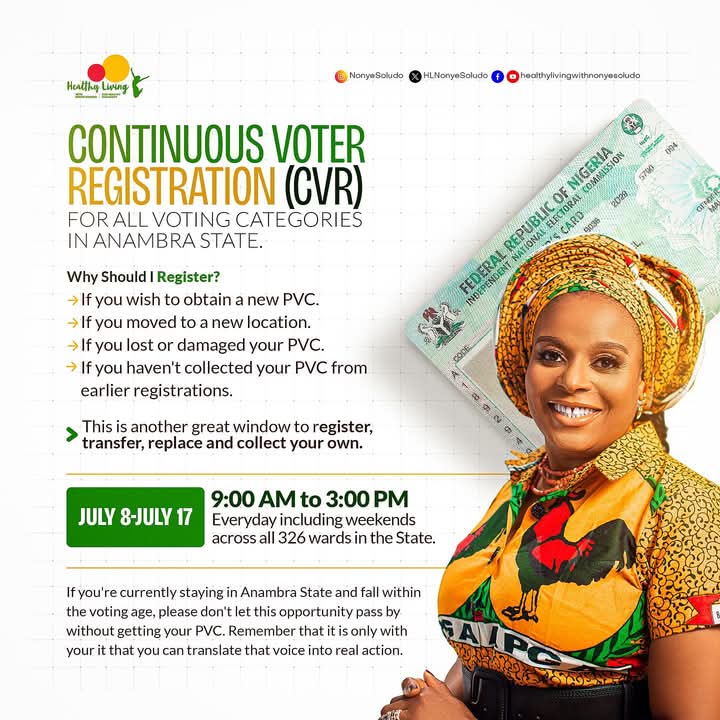
The Anambra State Governor’s wife, Dr Nonye Soludo, has issued a strong call to action, urging residents of the state to actively participate in the ongoing Continuous Voter Registration (CVR) exercise, which commenced this month and runs until July 17.

In a statement released recently, Dr. Soludo described the exercise as a vital civic duty, emphasising that obtaining a Permanent Voter Card (PVC) is the first and most crucial step toward influencing leadership and driving meaningful change in the state.

“The Independent National Electoral Commission (INEC) has officially kicked off the much-awaited Continuous Voter Registration (CVR) for all voting categories in Anambra State,” she stated.

The registration will hold daily across all 326 political wards from 9:00 a.m. to 3:00 p.m., including weekends.

Dr. Soludo explained that the exercise was open to individuals who need new PVCs, have relocated, misplaced or damaged their cards, or are yet to collect theirs from previous registration rounds.

She encouraged eligible residents to take advantage of what she described as a “great window” to register, update, or retrieve their voting credentials.

“Don’t let this opportunity pass you by,” she urged. “If you are staying in Anambra and are of voting age, ensure you’re not left behind. This is your right and your responsibility.”

She reiterated that the PVC was the only legitimate tool through which citizens can express their political will.

“It is only with your PVC that you can translate your voice into real action. Don’t disenfranchise yourself. Find time to do what’s right. Get that PVC,” she appealed.

Dr. Soludo concluded her message with a prayer: “May Anambra continue to rise.”

Her remarks have resonated particularly with young and first-time voters, sparking renewed enthusiasm as the state prepares for its November 8, 2025, gubernatorial election.


Confidence Okwuchi

Kwara Agency Inspects Pharmacies To Ensure Environmental Safety

0

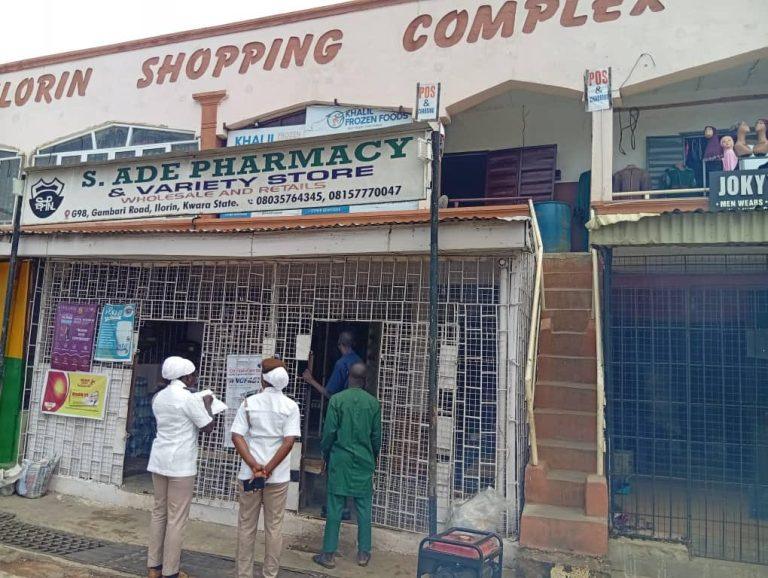
The Hospital and Pharmacy Unit of the Kwara State Environmental Protection Agency (KWEPA) has conducted a comprehensive inspection of pharmacies across the Ilorin metropolis as part of its ongoing regulatory efforts to uphold environmental health standards and protect public safety.

The exercise focused on assessing sanitary conditions, waste disposal methods, and general environmental management practices within the pharmaceutical premises.

Led by Mr Jamiu Isiaka, on behalf of the General Manager of KWEPA, Mr Jide Aina, the inspection team visited numerous outlets, conducting detailed evaluations of their compliance with approved environmental guidelines.

Read Also: Lagos To Host 7th National AIDS Council – NACA

Several pharmacies were commended for maintaining high standards of hygiene and environmental responsibility. Others were issued official notices and advised to address specific deficiencies.

Establishments found in violation of environmental safety standards received stern warnings, with the Agency stressing that persistent non-compliance would attract appropriate sanctions.

Mr Isiaka reiterated the Agency’s unwavering commitment to safeguarding public health, emphasising the need for all healthcare-related businesses to operate within the bounds of environmental regulations.

KWEPA reaffirmed its dedication to creating a cleaner, safer, and healthier Kwara State and assured residents that regular inspections would continue to ensure sustained compliance across the health sector.


NASS Urged To Pass Law Criminalizing Unexplained Weath 

The Chairman of the Economic and Financial Crimes Commission (EFCC), Ola Olukoyede, has appealed the National Assembly to urgently pass a law criminalising unexplained wealth.

He said Nigeria cannot win the anti-corruption war without legal backing to hold public officers accountable for assets far beyond their legitimate earnings.

Speaking during the National Conference on Public Accounts and Fiscal Governance,  organised by the Public Accounts Committees of the Senate and House of Representatives in Abuja, Olukoyede described the magnitude of public sector corruption as disturbing.

He also revealed that the EFCC had only just begun examining the books of the Nigerian National Petroleum Company (NNPC) Limited, and what had emerged so far was mind-boggling, yet only a fraction of the rot.

“In the last three weeks, we started a commission-wide investigation into the extractive industry, particularly the oil and gas sector. What we have discovered is mind-boggling.

“And we have only just opened the books. So much more corruption is to be unraveled. If this is what we’re seeing at the surface, imagine what lies beneath,” he said.

The EFCC Chairman said this discovery underscores how deeply embedded fiscal misgovernance is across the system, calling fiscal rascality and mismanagement of public resources a core driver of Nigeria’s economic woes and security challenges.

“There is a very strong connection between the mismanagement of our resources and insecurity. When you look at banditry, kidnapping, terrorism, trace it back, and you will find a pattern of corrupt practices and diversion of funds that were meant to improve people’s lives,” he said.

Olukoyede, who previously served as Secretary to the EFCC before his confirmation as Chairman, lamented the legal bottlenecks hindering the Commission’s ability to prosecute suspicious cases.

He recounted how investigations into public officers often stall because the law still requires a “predicate offence” — a specific crime such as theft or fraud — before assets can be seized or charges filed.

“Help me pass the Unexplained Wealth Bill. I’ve been begging for the past one year. This same bill was thrown out in the last Assembly. If we don’t make individuals accountable for what they have, we’ll never get it right.

“Someone has worked in a ministry for 20 years. We calculate their entire salary and allowances. Then we find five properties — two in Maitama, three in Asokoro. Yet we’re told to go and prove a predicate offence before we can act. That is absurd,” he said.

The proposed legislation, he explained, would make it a strict liability offence for any individual to possess assets grossly beyond their known and legal income sources.

“Once you are living beyond your means, you should be held to account. Until we do this, there will always be an escape route for the corrupt,” he said.

Tracking Illicit Assets 

Mr. Olukoyede painted a grim picture of the global dimensions of Nigeria’s looted wealth, revealing that the Commission was currently tracking illicit assets across multiple jurisdictions, from America and Turkey to the most unexpected locations like Iceland.

“Last month alone, I visited four or five countries chasing Nigeria’s stolen assets. An ambassador even told me they discovered an estate in Iceland owned by a Nigerian. Iceland of all places!” he said.

The EFCC boss admitted that no anti-graft agency, no matter how efficient, can recover more than half of what has been looted.

“There is no amount of capacity I can build, no level of effort I can put in, that will enable me to recover even half of what has been stolen from Nigeria because the custodians of those assets in foreign countries don’t want to let go. And they won’t,” he said.

He did not spare those foreign governments either. He called them out for enabling corruption by keeping stolen funds under various pretexts.

He added that under international law, the custodian of stolen assets is just as guilty as the original thief.

“I told them at the United Nations Forum last December that if you are holding onto Nigeria’s stolen assets, we see you as an accessory after the fact. They grumbled, but I didn’t care,” he said.

The EFCC Chairman criticized the widespread culture of impunity in Nigeria’s public service, where those already under prosecution are often celebrated, and compliance with financial laws is flouted with impunity.

“We are doing this work. We see people who have stolen our money. We have shown you evidence. We’ve traced where the money went. We are already in court. Yet, they’re being celebrated all over the place. Does that show we’re serious?” he asked.

He said even calls for compliance are often met with subtle resistance, noting that over 700 federal Ministries, Departments, and Agencies (MDAs) continue to operate without adequate internal controls.

He questioned the National Assembly’s capacity to oversee them all and called for structural reforms that can prevent leakages before they happen.

“How many books can you check? How many files will you read? We need to build strong internal compliance systems that can proactively checkmate corruption,” he said.

Olukoyede said that corruption is stalling Nigeria’s economic potential.

He cited his own analysis, presented during his Senate confirmation, that showed 90% of stolen public funds in a single year ended up abroad.

That money, he said, could have built hospitals, schools, and supported millions of Nigerian students from primary to tertiary level.

“If we execute even 60% of our capital budget efficiently between 2025 and 2026, we will empower small and medium-scale industries. We’ll build infrastructure. We’ll be fine,” he said.

He emphasised that Nigeria has no business borrowing to survive, given the natural and mineral wealth it possesses.

“What we need is transparency in revenue generation and accountability in public expenditure,” he said.

Mr. Olukoyede called on political leaders to unite across party and ethnic lines to confront corruption head-on, describing the current administration as Nigeria’s “last best chance” to get it right.

“If we miss it under this administration, I pity Nigeria. Let’s put politics aside. Let’s put ethnicity aside. This is about rescuing the soul of Nigeria,” he said.

He urged members of the National Assembly and the public to ignore the inevitable backlash from vested interests and social media trolls.

Confidence Okwuchi

House of Representatives Proposes 3-tier Traditional Institutions In Nigeria

The Speaker of the House of Representatives, Mr. Abbas Tajudeen says the 10th National Assembly is currently working on proposals to bring about a three-tier traditional institutions in Nigeria through the ongoing alteration of the 1999 constitution.

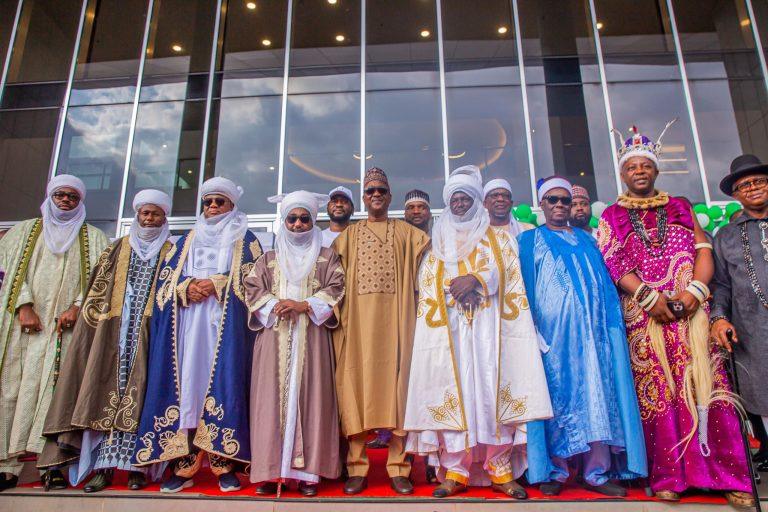
The Speaker stated this in Abuja during an interactive session with traditional rulers as part of activities for the 2025 Open NASS Week organised by the leadership of the House in collaboration with the Policy and Legal Advocacy Center (PLAC).

The United Nations Development Programme (UNDP) and the National Assembly Library Trust Fund (NALTF) provided support for the event.

Chairing the second session of the day after the first one featuring women/gender advocacy groups, Speaker Abbas informed the traditional rulers led by the Emir of Zazzau, Ahmed Nuhu Bamalli said the proposed three tiers of traditional institutions would cut across federal, state, and local governments to complement the efforts of the political class.

“Permit me just to give you an insight into what the National Assembly is deliberating on as far as traditional institutions are concerned. The 10th National Assembly is actively entertaining proposals to grant some constitutional recognition to traditional institutions. In so doing, there are proposals to have a three-tier traditional council structure as follows: 

“We should have a National Council of Traditional Rulers; it will be an apex body to advise the President on issues of national unity, security, and cultural affairs. 

“The second tier will be the State Council of Chiefs to be constitutionally recognized by state governments regarding issues of customary laws, peacebuilding, and development. “And then Local Government Traditional Council to formally engage with local governments, especially on security, peacebuilding, and community development,” he said.

The Speaker stated further that “these proposals are based on the unimplemented Section 8 of the 1989 draft constitution, which provided for a local government traditional council presided over by traditional rulers.”

Speaker Abbas also noted that one important issue that has often been ignored is that of financial autonomy for the traditional institutions.

He said the incidence of having to go cap-in-hand to state governors or local government chairmen puts the traditional institutions in serious disadvantage, saying financially guaranteed traditional institutions would function better for all in terms of service delivery.

Also responding to concerns of political victimization and harassment by the political class, particularly during and after elections, Speaker Abbas said the legislature will strive toward achieving a constitutional protection for traditional rulers—to shield them from being coerced into partisanship by those in elective offices during campaign periods.

In a remark, Emir of Zazzau, Ahmed Nuhu Bamalli said traditional rulers were simply asking for the reinstatement of their previous leadership and administrative roles of peacebuilding, crime prevention, and culture preservation, among others.

He recalled that all pre-independence constitutions recognized the role of traditional institutions up to the 1963 Republican Constitution, after which the provisions were removed from subsequent amendments.

He noted that since the ommision, a lot has gone wrong due to the inability of state agencies to adequately relate to happenings in rural areas without the active involvement of traditional institutions.

Other royal fathers commended the Speaker for his efforts at ensuring that the traditional institutions in Nigeria are once again recognized constitutionally.

They noted that traditional rulers play critical roles in crisis management as well as crime prevention.


Confidence Okwuchi