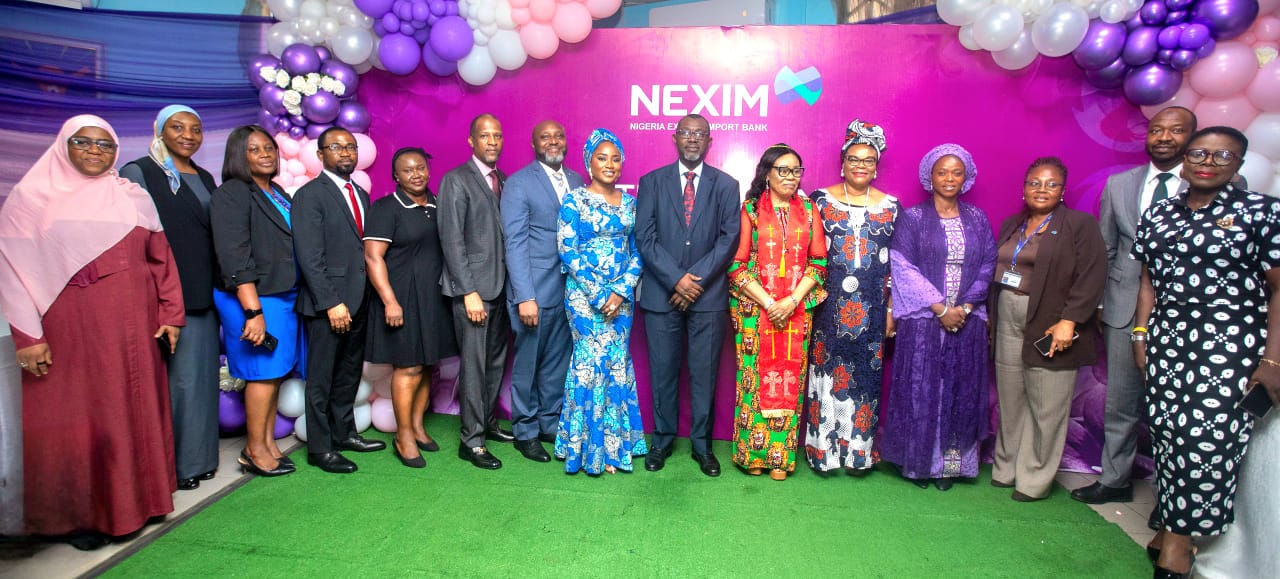
The Managing Director/Chief Executive Officer, Nigeria’s export financing institution, Nigeria Export Import (NEXIM) Bank, Mr Abba Bello, has placed women, ethics, and institutional values at the centre of the Bank’s development framework aimed at driving inclusive growth and strengthening national competitiveness.
Speaking at an event marking the 2026 International Women’s Month, Bello declared that the recognition, respect, and empowerment of women are not symbolic gestures but essential to societal stability and productivity.
Represented by Executive Director, Corporate Services, Mr Ibrahim Gaga, Bello said, “Every day we celebrate women. The woman is an integral part of your life.”

Stressing the structural importance of women, he said, “The role of the woman in society cannot be underestimated.”
Linking inclusion to performance outcomes and urging a shift in societal attitudes: he said, “When you put women in positions of authority, you find out that they deliver. They are meticulous; they are very careful. For all those men who think a woman is an object, please think again! You must respect and adore women.”
From policy to practice, Executive Director, Business Development, Stella Okotete, framed workplace values as the foundation for trust and sustainable growth.
“A workplace grounded in strong values does more than improve productivity; it builds trust.” she said,
Okotete drew a direct line between inclusion and development, stating, “When women support women, institutions grow stronger, communities become more stable, and nations progress faster,” while reaffirming NEXIM’s role in “empowering women not only within our organisation but also across Nigeria’s export value chain.”
Providing an enterprise lens, Chief Executive Officer of Kulu Abuja, Hauwa Abdulkareem, elevated collaboration as a strategic alternative to competition, challenging entrenched perceptions among women in the workplace.
Drawing from lived experience, she said, “Every single person who has helped me was a woman,” countering the narrative of rivalry and reinforcing collective advancement. She dismissed zero-sum thinking, stating, “There’s no competition; collaborate.”
Abdulkareem emphasised visibility and advocacy as growth tools, highlighting the power of referrals and support networks built on trust. She said women advanced her journey through “mentioning my name in rooms where I wasn’t”, a practice she urged other women to replicate.
Reframing workplace purpose, she charged, “If the answer is I’m going to work to get paid, then that’s totally wrong. What value am I giving today? What value am I getting today?”
Reinforcing collaboration as a solution pathway, she stated, “If we all support each other, there’ll be no hate.”
On governance and institutional culture, clergy and Legal Practitioner, Bishop Sally William Chinedu provided a three-pillar framework anchored on values, ethics, and active sisterhood, declaring, “The theme, give to gain, is not a corporate slogan. It is a spiritual, social, and professional law.”
On values, she emphasised accountability beyond optics, stating, “Values are what you do when no one is watching you,” underscoring integrity, fairness, and respect as non-negotiable foundations.
On ethics, she reframed compliance as strategic protection, noting, “Ethics is your reputation’s bodyguard”, and calling for transparency, accountability, and fairness even in difficult decisions.
On inclusion, Chinedu defined sisterhood as institutional responsibility, not sentiment: “Sisterhood is refusing to let another woman fall silent”, urging organisations to actively create space, amplify voices, and eliminate exclusionary behaviours.
Moving from principle to action, she outlined measurable steps for cultural transformation: “Refuse one small shortcut, speak up once for what is right, reach out to one female colleague.”
Earlier, in her welcome address, Manager Corporate Communications, Lohya Mamven, aligned the event with national development priorities, stating, “At NEXIMBANK, our strength lies in our inclusive culture.”
She reinforced the economic case for gender inclusion, noting, “Investing in women is not just a matter of fairness; it is the bedrock for sustainable development and economic prosperity”, adding, “When we give our time, our mentorship, we become a more prosperous society.”
Across all interventions, a clear and actionable policy direction emerged: embed strong values, enforce ethical accountability, and replace competition with collaboration as a driver of inclusive growth and institutional performance.
At the NEXIM Bank 2026 International Women’s Day, themed “Give to Gain: Shaping Women for Leadership and Legacy”, the message was not aspirational but operational: “Give to Gain” is being advanced as a governance model, one where everyday decisions shape culture, integrity builds trust, and collaboration unlocks the full potential of women in driving Nigeria’s economic future.