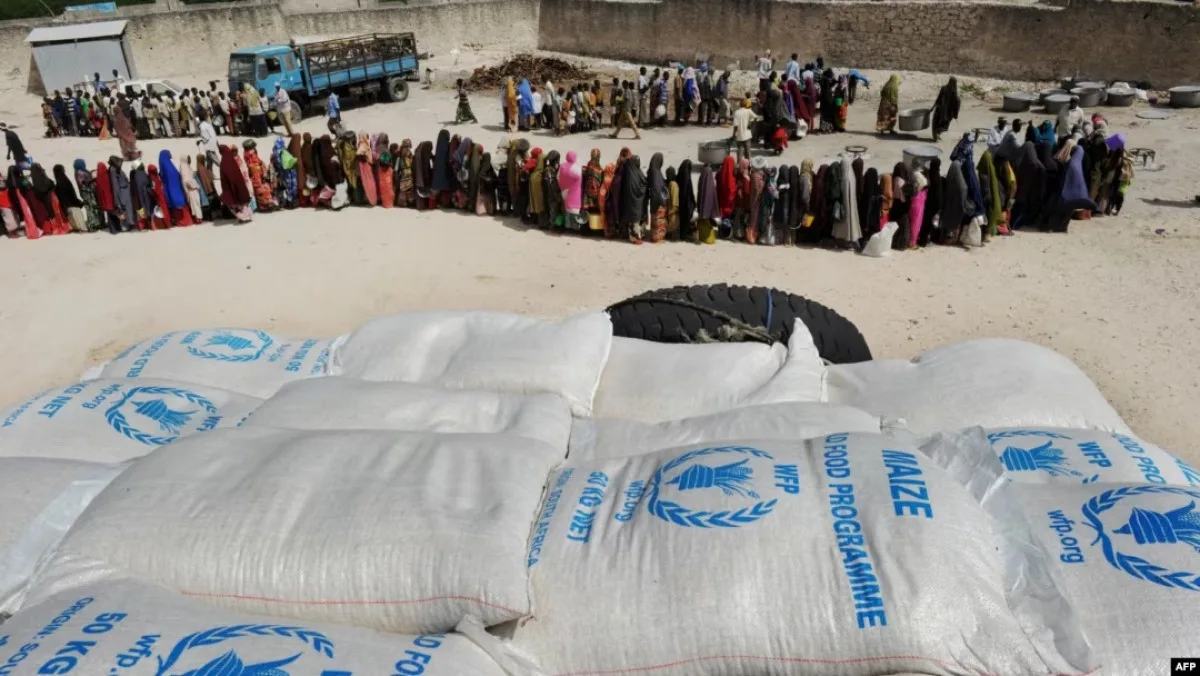
The United Nations World Food Program (WFP) has warned that 4.4 million people are at risk of a deepening hunger crisis in Somalia amid catastrophic funding shortfalls.
The warning follows the declaration of a national drought emergency, triggered by severe water shortages, crop and livestock losses, and large-scale displacement.
WFP Director of Emergency Preparedness and Response, Ross Smith said the humanitarian situation in Somalia is extremely worrying.
“I am here today to issue an alert: the world must pay attention to the millions of vulnerable women, men, and children suffering in Somalia. And sadly, we have been down this road before,” Smith said in a statement.
He warned that the WFP’s life-saving emergency food and nutrition assistance in Somalia is at imminent risk of grinding to a halt, with the UN agency’s resources expected to be depleted within weeks without urgent replenishment.
“The situation is deteriorating at an alarming rate. Families have lost everything, and many are already being pushed to the brink. Without immediate emergency food support, conditions will worsen quickly,” Smith said.
Somalia is facing one of the most complex hunger crises in recent years, driven by two consecutive failed rainy seasons, conflict, and a sharp drop in humanitarian funding.
A quarter of the population, 4.4 million people face crisis-levels of food insecurity or worse (IPC3+), including nearly one million women, men, and children experiencing severe hunger.
WFP is the largest humanitarian agency in Somalia, working alongside partners to support the majority of the country’s food security response.
In 2022, the longest drought in recorded history brought Somalia to the brink of famine. In response, with critical support from donors, partners and the government, WFP launched a robust scale up of life-saving assistance.
According to the UN, Somalia is facing one of the most complex hunger crises in recent years, driven by two consecutive failed rainy seasons, conflict, and a sharp decline in humanitarian funding.
AP