

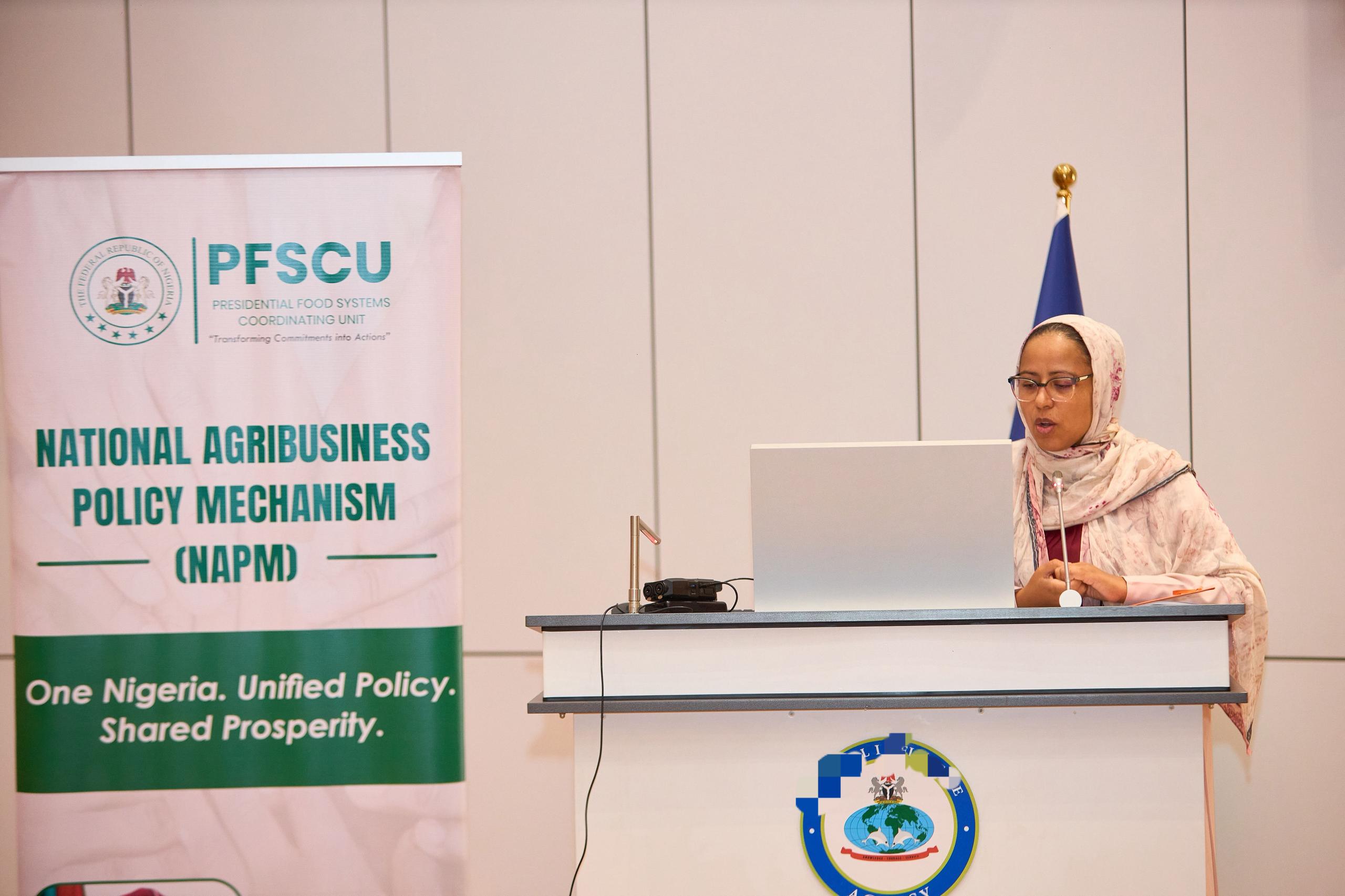
Nigeria is reinforcing a coordinated, data-driven agricultural planning framework as emerging insights from the National Agribusiness Policy Mechanism (NAPM) reveal shifting production patterns and increasing resilience within the nation’s food system.
This was highlighted at the opening of a three-day NAPM Stakeholders’ Planning and Validation Workshop held in Ado Ekiti, South-West Nigeria, where the Presidential Food Systems Coordinating Unit (PFSCU) convened federal and state stakeholders to review the outcomes of the 2025/2026 Dry Season and align priorities for the upcoming planting cycle.
In a press release signed by the Presidential Food Systems Coordinating Unit (PFSCU), the workshop represents a significant milestone in the implementation of the NAPM pilot, which was launched in May 2025 under the Renewed Hope Agenda.
Now in its final phase across 13 states, the initiative brings together Ministries, Departments and Agencies (MDAs), development partners, and private sector actors within a unified national planning framework aimed at improving food system coordination and outcomes.

In his remarks, the Ekiti State Commissioner for Agriculture and Food Security, Ebenezer Boluwade, emphasized the importance of the engagement in addressing current challenges and strengthening long-term resilience.
“The workshop provides a platform to refine and accelerate our collective efforts, stabilise existing challenges, and build a more resilient and sustainable agricultural system capable of responding effectively to Nigeria’s food security needs,” he stated.
Speaking on the broader implications, the Executive Secretary of the National Agricultural Development Fund (NADF) stressed the importance of a unified approach to food system delivery.
“The farmer in Ekiti, Borno, or Benue is less concerned about which institution delivers support. What matters is that food is available, affordable, and produced sustainably,” he said.
The assessment further highlights persistent structural challenges, with between 70 and 76 percent of farmers identifying access to finance as the primary constraint to increased production.
This underscores the urgent need to better integrate production data with financing mechanisms and input delivery systems to unlock productivity at scale.

Through the NAPM framework, the Federal Government is advancing a bottom-up planning model that begins with real-time data from farmers at the field level and aggregates upward into a cohesive national strategy.
By integrating production, imports, strategic reserves, and export planning into a unified food balance system, Nigeria is enhancing its capacity to ensure food availability, respond proactively to emerging risks, and build a more resilient agricultural economy.
Data validated during the session indicates a constrained but gradually improving production landscape. Although total cultivated land fell by 36 percent below projected levels largely due to limited access to capital and rising input costs—productivity per hectare increased across key crops, reflecting a shift toward more efficient and intensive farming practices.
Notably, maize production recorded a 14.97 percent increase, driven by improved agronomic practices and expanded cultivation in southern regions.
In parts of the South-West and South-East, maize accounted for over 70 percent of dry season farming activities, underscoring a significant shift in regional production dynamics and the need to align production decisions with demand realities.