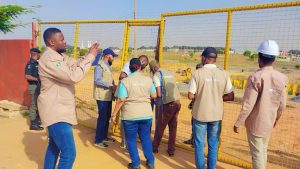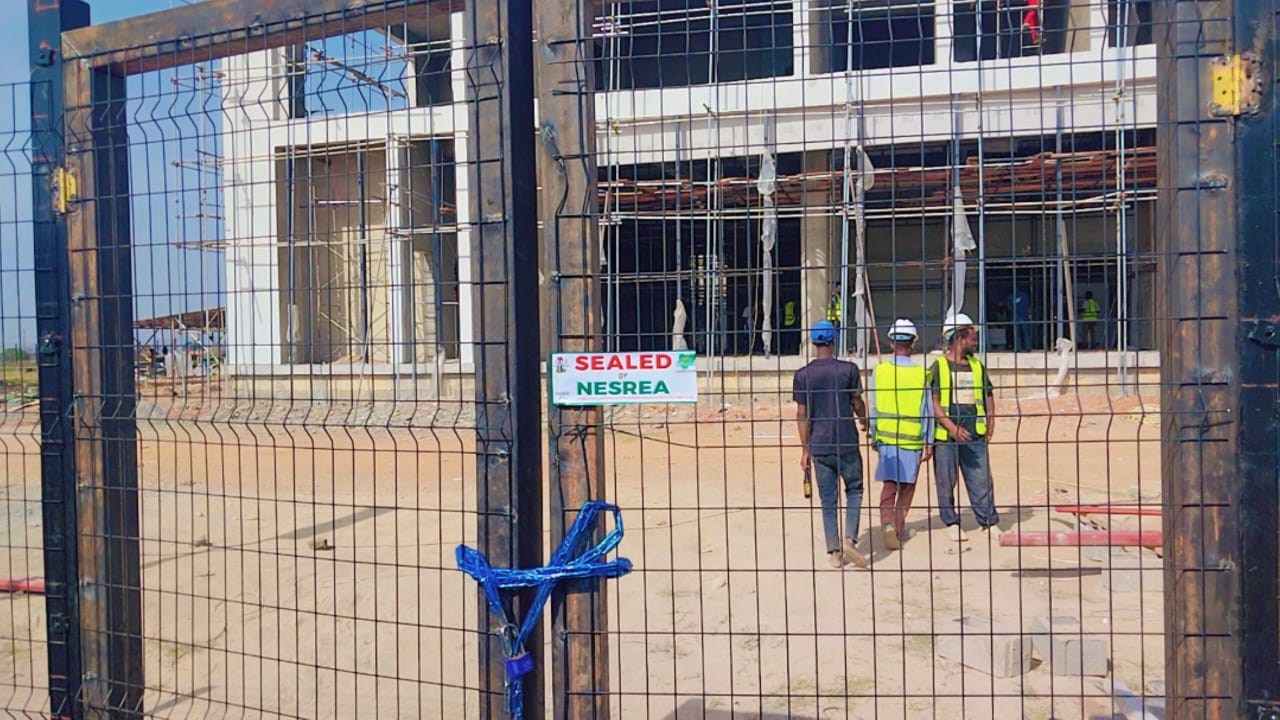
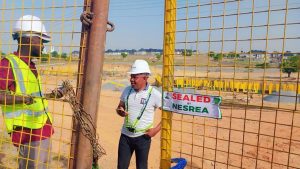
The National Environmental Standards and Regulations Enforcement Agency (NESREA) has taken enforcement action against 30 construction facilities across Abuja for violating environmental regulations.
The agency said the breaches were uncovered during routine inspections and compliance monitoring, noting that several of the affected facilities failed to submit required environmental documentation or respond to official compliance notices within stipulated timelines.
Briefing journalists after the inspection, the Director-General of NESREA, Prof. Innocent Barikor, said the enforcement action became necessary after repeated engagement efforts failed, stressing that the move was aimed at protecting public health and natural ecosystems.
He was represented by the Director of Environmental Quality Control, Mr Elijah Udofia, who said the action formed part of the agency’s ongoing mandate to ensure compliance with national environmental laws and safeguard Nigeria’s natural resources and communities.
“As part of our regulatory mandate, NESREA carried out enforcement actions on 30 facilities that violated national environmental regulations in the construction sector.
These violations were identified through routine inspections and compliance monitoring activities. In addition, these facilities demonstrated unwillingness to fully comply with regulatory requirements relating to environmental documentation and responsiveness to compliance engagements,” he said.
He added that NESREA would continue to enforce environmental regulations rigorously, particularly where non-compliance poses risks to the environment and public health.
“Environmental compliance is not optional. Where facilities fail to engage constructively or ignore clear regulatory directives, NESREA is compelled to move from engagement to enforcement,” he said.
According to him, beyond environmental violations, many operators also failed to submit required documentation and did not respond to official compliance notices within stipulated timelines.
The agency said such non-responsiveness constitutes a serious breach of regulatory obligations.
Rising concerns in construction sector
NESREA noted that the construction sector remains a critical driver of economic growth and infrastructure development in Nigeria but warned that disregard for environmental safeguards poses significant risks.
Common violations identified include poor waste management, construction on floodplains and ecologically sensitive areas, excessive dust emissions, unsafe handling of materials, and inadequate drainage systems leading to erosion and sedimentation. These issues, it said, not only degrade the environment but also threaten surrounding communities.
To address these risks, the Federal Government established the National Environmental (Construction Sector) Regulations, 2011, which outline strict environmental obligations for developers and contractors.
Prof. Barikor reiterated that the enforcement actions were aimed at halting or restricting non-compliant activities, compelling adherence to environmental standards, and ensuring corrective measures are implemented within specified timelines.
He affirmed that the actions were backed by the agency’s legal authority under the NESREA Act and relevant environmental regulations.
The agency issued a warning to developers, contractors and site managers across the country, stating that:
- Environmental documentation must be properly prepared and submitted
- Regulatory communications must be treated with urgency and transparency
- Environmental safeguards such as dust control, waste management and erosion prevention must be integrated into project execution from the outset
He stressed that compliance is not only about avoiding penalties but is also essential for project success, community relations and long-term sustainability.
NESREA added that its enforcement actions are based strictly on evidence, regulatory provisions and due process, not arbitrary decisions.
The agency also called for stronger collaboration between regulators, developers and communities to ensure environmentally responsible construction practices.