

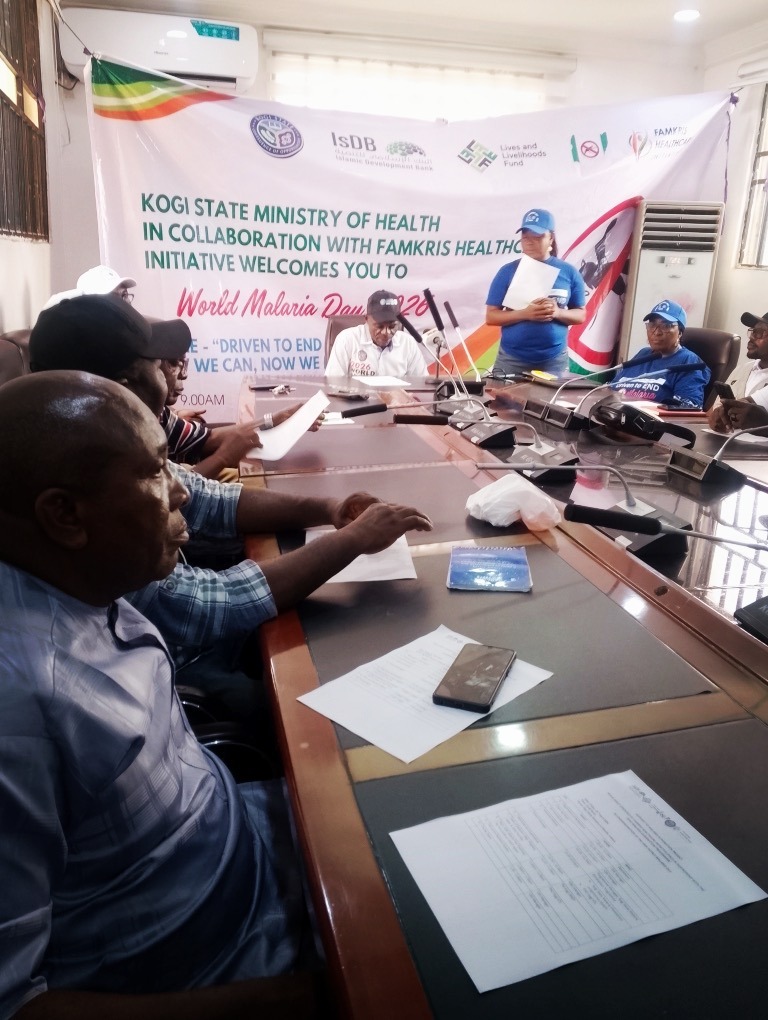
The Kogi State Ministry of Health has marked the 2026 World Malaria Day with renewed commitment, as the state recorded a significant decline in malaria prevalence over the past four years.
The celebration, themed “Driven to End Malaria: Now We Can, Now We Must,” highlighted progress made and the need to sustain efforts to eliminate the disease.
At a media parley organised by FarmKris Healthcare Initiative as part of the commemorative activities, stakeholders noted that malaria remains a major public health challenge in sub-Saharan Africa, with Nigeria continuing to bear a high burden.
According to the World Health Organisation World Malaria Report, Nigeria accounts for about 24 per cent of global malaria cases and roughly 30 per cent of malaria-related deaths.
However, data from the National Malaria Elimination Programme Indicator Survey showed that malaria prevalence in Kogi State declined from 16 per cent in 2021 to 8.9 per cent in 2025, a development attributed to sustained interventions and partnerships.
Andrew Okulu, State Programme Manager of the Malaria Consortium, said the organisation has played a key role in supporting elimination efforts across the state through the provision of essential commodities and insecticide-treated mosquito nets.
“Our collaboration with the Kogi State Government has been instrumental in ensuring that preventive tools reach the most vulnerable population, as widespread availability of mosquito nets and other commodities has significantly contributed to the reduction in malaria cases,” Okulu said, underscoring the impact of the partnership.
Salamatu Yahaya, Team Lead of FarmKris Healthcare Initiative, highlighted interventions such as training of healthcare workers, free malaria testing and treatment services, installation of incinerators for medical waste disposal, and grievance redress mechanisms to improve accountability.
Ake Stephen, Programme Manager of the State Malaria Elimination Programme, stressed the importance of community engagement, noting that trained health workers have been deployed across all wards to expand access to care.
“The state has made free malaria drugs available in primary healthcare facilities and our personnel are well-trained to handle cases effectively, but residents must also take responsibility by maintaining clean environments, sleeping under mosquito nets and seeking proper medical testing because not every fever is malaria, so accurate diagnosis is essential,” Stephen emphasised.
The World Malaria Day event brought together health workers, government officials and development partners, all reaffirming their commitment to ending malaria as a public health threat in Kogi State.