

The Nigerian Government and the European Union (EU) have reaffirmed their commitment to strengthening cooperation across key sectors, including security, trade, education, and technology.
The renewed partnership is aimed at addressing emerging global challenges and promoting sustainable development.
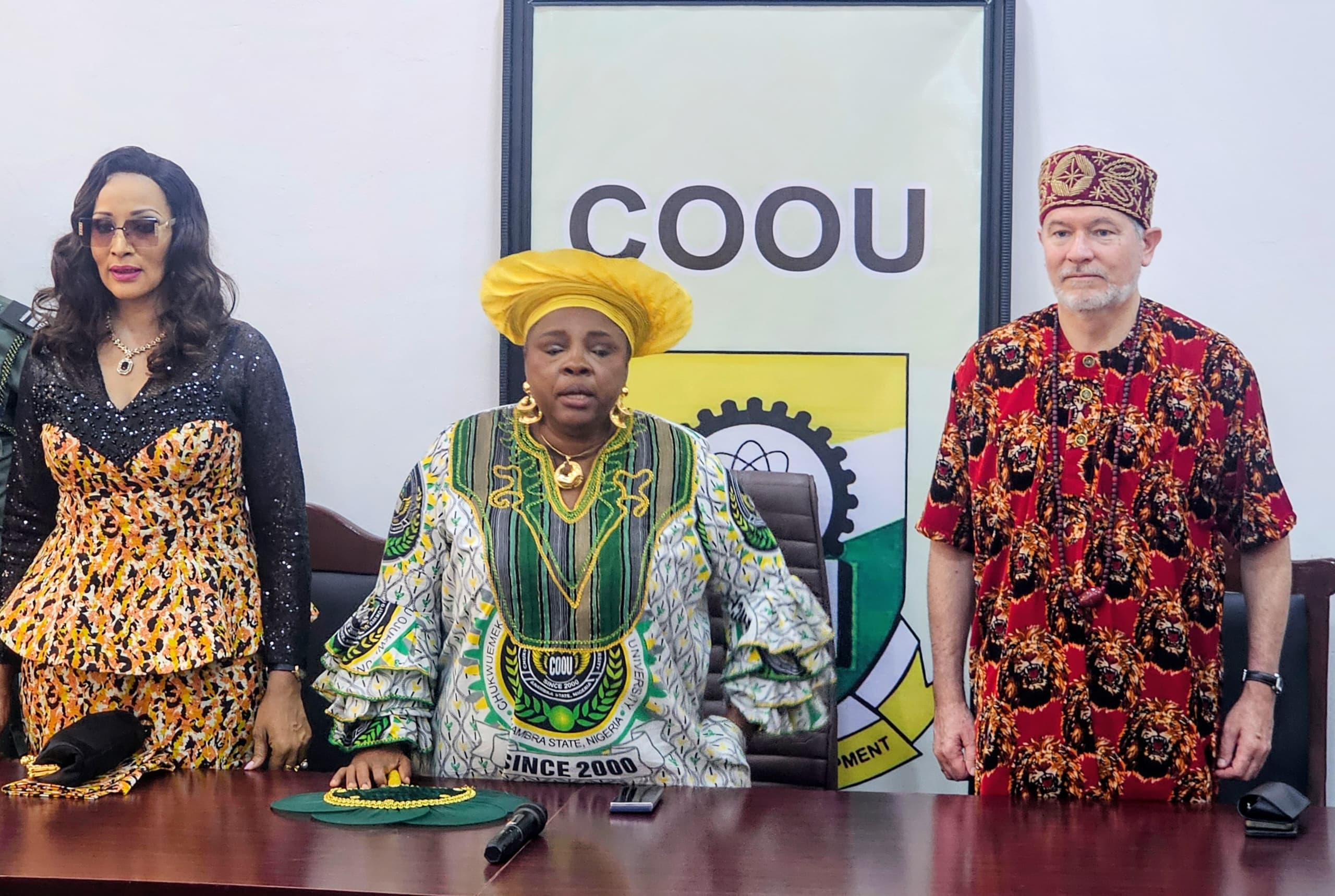
The Minister of State for Foreign Affairs, Ambassador Bianca Odumegwu-Ojukwu made this known during the 4th Dim Odumegwu Ojukwu Memorial Lecture, where the European Union Ambassador to Nigeria and ECOWAS, Mr. Gautier Mignot, delivered a keynote address titled “Sustainable and Climate Resilience Future: Beyond Rhetorics.”
This was made known in a statement issued by the Special Assistant on Communication and New Media, Office of the Minister of State for Foreign Affairs, Magnus Eze.
Speaking at the event, Ambassador Odumegwu-Ojukwu highlighted the growing importance of strategic international partnerships in an increasingly interconnected world facing complex challenges such as insecurity, economic instability, climate change, and shifting geopolitical dynamics.
She emphasised that diplomacy remains central to navigating these issues effectively.
According to the Minister, the presence of the EU Ambassador underscored the strength and steady evolution of Nigeria-EU relations, noting that “the partnership has continued to deliver tangible benefits in areas such as governance, capacity building, and security cooperation.”
Odumegwu-Ojukwu reaffirmed Nigeria’s commitment to playing a leading role on the global stage, particularly within the framework of the Economic Community of West African States (ECOWAS) and across the African continent.
She said that Nigeria’s Foreign policy remains guided by the principles of mutual respect, non-interference, strategic collaboration, and the protection of national interests.
The minister also linked the theme of the lecture to the environmental legacy of the late Dim Chukwuemeka Odumegwu-Ojukwu, saying his “lifelong commitment to nature, especially tree planting reflected a deep understanding of ecological balance long before climate action gained global prominence.”
She described trees as “silent guardians of our air, our soil, and our future,” echoing the late leader’s environmental ethos.
Calling for renewed national commitment, Ambassador Odumegwu-Ojukwu urged Nigerians to build a country anchored on justice, unity, and shared prosperity.
She stressed the importance of investing in education, empowering young people, and strengthening institutions as key pillars of sustainable development.
Addressing graduating students at the event, Ambassador Odumegwu-Ojukwu encouraged them to uphold the values of their institution and to recognize that while academic knowledge provides a foundation, character, resilience, and integrity would ultimately define their paths.
The Minister further emphasised the need to strengthen collaboration between academia and policymakers, stressing that “universities must continue to function as think tanks capable of generating ideas and research to inform government policies, particularly in foreign relations, economic diplomacy, and national development strategies.”
The Ministry of Foreign Affairs, she added, remains open to such partnerships in its efforts to enhance Nigeria’s global image.
In his remarks, EU Ambassador Gautier Mignot described Ambassador Odumegwu-Ojukwu as a strong advocate of Nigeria-EU relations.
Mignot acknowledged that while climate action may be costly, the consequences of inaction would be far more severe.
The memorial lecture, held as part of the Founders’ Day celebration of Chukwuemeka Odumegwu Ojukwu University (COOU), was organised to honour the legacy of the late Igbo leader and former Biafran Head of State, after whom the institution is named.