

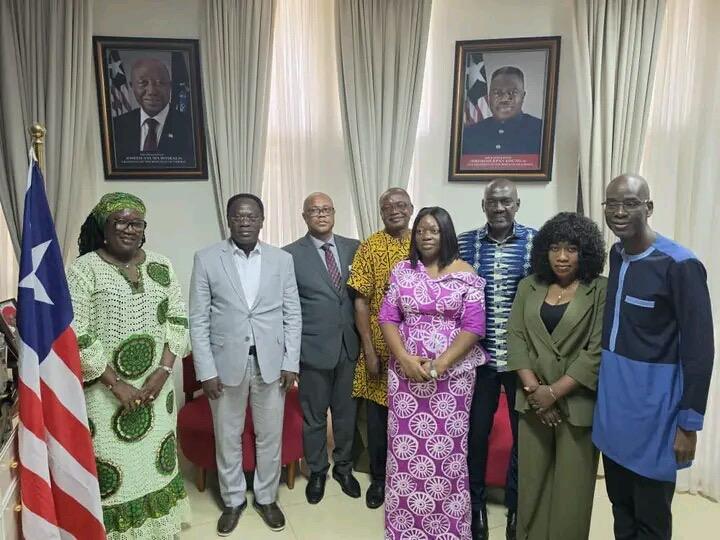
The West African Health Organisation (WAHO) has intensified high-level engagement with national authorities in the Republic of Liberia, advancing a coordinated agenda to improve maternal and child health indicators and mobilise innovative domestic resources for universal health coverage.
The meetings were held in Monrovia, Liberia, with the Minister of Health, Dr Louise Mapleh Kpoto, the Chairperson of the Senate Committee on Health, Senator Debah Varpilah, and the Speaker of the House of Representatives, Richard Nagbe Koon.
The Director General of WAHO, Dr Melchior Aïssi, delivered a consistent advocacy message focused on strengthening legislative frameworks for maternal and child health and accelerating domestic resource mobilisation for health systems.
The WAHO advocated aligning ECOWAS Member States with international standards by reviewing maternity leave legislation, with a view to adopting provisions guaranteeing 6 months of maternity leave to enable exclusive breastfeeding, in line with the recommendations of the World Health Organisation.
“This measure, endorsed at the regional level, is recognised as one of the most effective interventions to reduce child morbidity and mortality, improve cognitive development and strengthen long-term health outcomes”.
The Liberian lawmakers acknowledged the urgency of strengthening legal frameworks to better protect mothers and newborns, particularly in addressing persistent challenges such as child stunting and early childhood nutrition.
The Senate Committee on Health expressed commitment to reviewing and advancing relevant legislative instruments, including ongoing draft bills and complementary initiatives aimed at improving maternal and child health outcomes.
On health financing, the WAHO Director General strongly advocated for the establishment of a dedicated national health fund, to be financed through the application of a modest levy on selected high-consumption domestic products.
This proposed mechanism is designed to generate sustainable and predictable resources to support priority health interventions, particularly at the community level, and to accelerate progress towards universal health coverage.
This proposal aligns with regional recommendations encouraging Member States to establish innovative domestic financing mechanisms, including earmarked levies and dedicated budget lines for community health activities and frontline emergency care services.
The dialogue further underscored the strategic importance of community health systems as a cornerstone of universal health coverage, with emphasis on prevention, early detection and strengthened outreach through community health workers.
Dr Aïssi also highlighted with satisfaction progress on the ECOWAS-supported cross-border health Centre between Liberia and Sierra Leone, with plans to upgrade the facility into a regional referral hub, including expanded maternal and neonatal services.
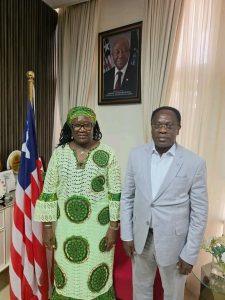
The mission concluded with a coordination meeting with the Acting ECOWAS Resident Representative in Liberia and members of the Steering Committee overseeing WAHO’s financial support to Liberia. The session focused on enhancing alignment, oversight of implementation, and the impact of regional health interventions at the country level.