

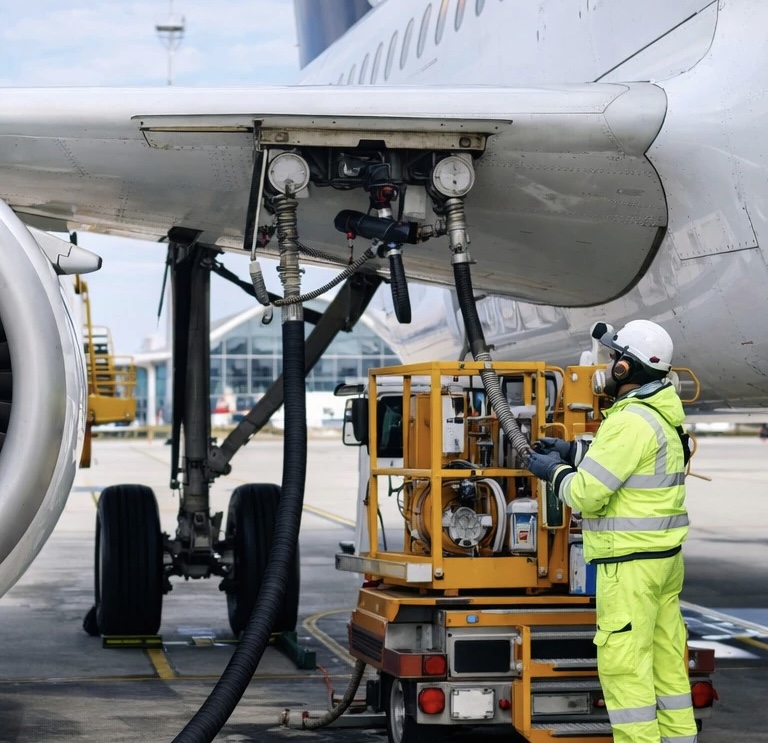
Stakeholders in Nigeria’s aviation sector have called on the Federal and State Governments to urgently intervene in the rising cost of aviation fuel, warning that the development could disrupt the successful airlift of pilgrims for the 2026 Hajj.
The group, operating under the aegis of Concerned Aviation Stakeholders, said the sharp increase in the price of Jet A1 fuel poses one of the most serious logistical and financial challenges to Hajj operations in recent times.
In a statement issued on Sunday, the President of the group, Alhaji Bukalti Gamawa, noted that the escalating cost of aviation fuel was already threatening the ability of airlines to transport thousands of Nigerian pilgrims to Saudi Arabia.
He explained that most airlines engaged for the Hajj exercise rely on leased aircraft to meet capacity demands, saying that the surge in fuel prices has significantly eroded their profit margins.
According to him, “Many airlines may be forced to operate at break-even or even at a loss after covering lease and operational costs. If urgent action is not taken, some may be unable to commence or sustain operations.”
Gamawa stressed that although government subsidies for Hajj operations have been withdrawn, there was need for emergency measures such as pricing regulation, foreign exchange support, or strategic fuel supply arrangements to avert a crisis.
He warned that without swift and coordinated intervention from government, regulators, airlines, and fuel marketers, the 2026 Hajj could witness unprecedented fare increases or even operational failure.
Providing further insight, he noted that Jet A1 fuel, which sold for about ₦1,000 per litre during contract negotiations, now sells for as high as ₦3,000 per litre across major airports, representing a 200 percent increase.
This, he said, has placed airlines under intense financial pressure.
“For a single flight consuming about 70,000 litres of fuel, costs have risen from ₦70 million to as much as ₦196 million, creating an additional burden of over ₦100 million per flight,” he explained.
Gamawa also highlighted the challenge of rising fuel costs in Saudi Arabia, where prices have increased from about 68 cents to $1.40 per litre, further compounding the financial strain on return flights.
He added that while local interventions may ease the burden on outbound flights, airlines must still procure fuel at international market rates in foreign currency for return journeys.