

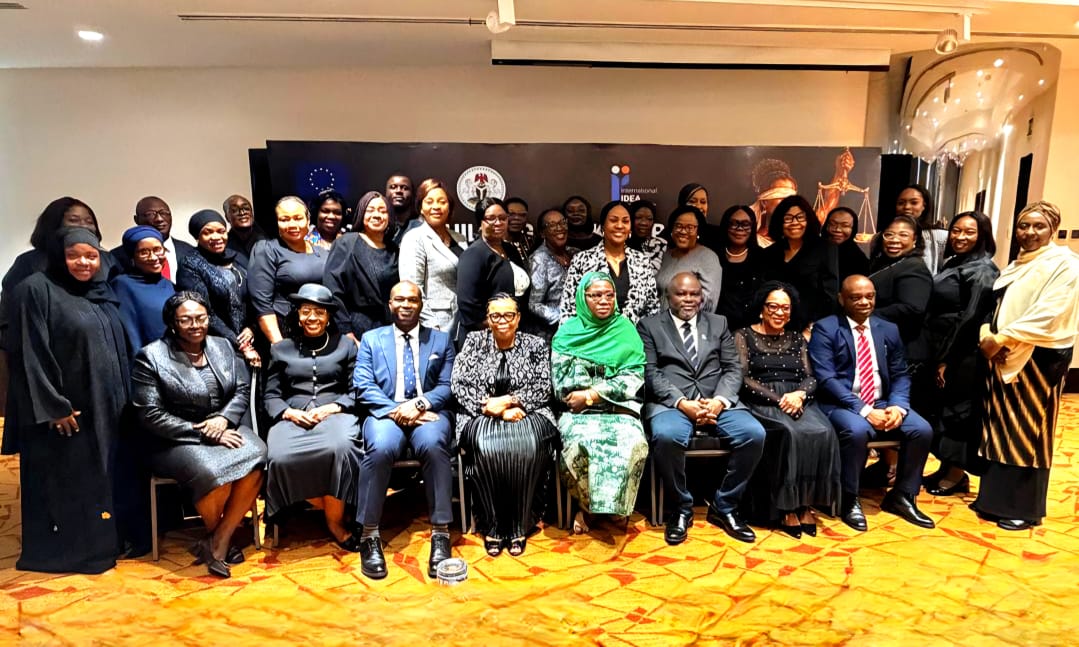
Nigeria’s Attorney-General of the Federation and Minister of Justice, Prince Lateef Fagbemi, has urged Judges and family Court Magistrates to shift toward trauma-informed adjudication of sexual offences by aligning courtroom practice with scientific understanding of trauma and existing legal frameworks.
Delivering a keynote address at a 3-day “Capacity Building Workshop For Judges On Sexual Offences And Trauma-Informed Justice” in Lagos, Minister Fagbemi’s call for a decisive practical shift underscores the urgency of adjudication reforms.
“Sexual violence is not merely a violation of law. It is a profound assault on human dignity — one that leaves scars extending far beyond the courtroom,” he stated.
Represented by the Attorney General and Commissioner of Justice Oyo State, Abiodun Aikomo, Fagbemi noted that while Nigeria has strengthened its legal architecture through statutes such as the Violence Against Persons (Prohibition) Act 2015 and the Administration of Criminal Justice Act 2015, critical gaps persist in judicial interpretation and courtroom management.
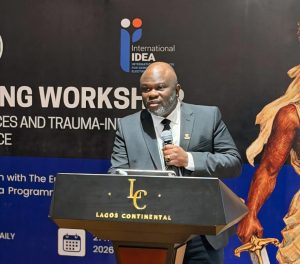
“The tools exist. The gap, in significant measure, lies in how we, as justice actors, understand trauma, evaluate evidence, and manage our courtrooms,” he said.
Fagbemi placed strong emphasis on trauma science, warning against misinterpretation of survivor behaviour in court.
“A survivor who freezes during testimony is not being uncooperative. A victim who delays reporting is not fabricating stories. A witness who cannot recall dates in chronological sequence is not being inconsistent,” he stated.
He further grounded this in neurobiological understanding of trauma responses.
“These are neurobiological responses to trauma – manifestations of what science now understands as the fight, flight, freeze, or fawn response,” he noted.
The Attorney-General stressed that such reactions must not be mistaken for dishonesty.
“They are not indicators of unreliability; they are evidence of the very trauma that brought the individual before the court,” he emphasised.
He cautioned that misreading these responses could distort justice outcomes.
“When we misunderstand these responses, the consequences are grave. We risk misreading the evidence,” he said.
Fagbemi clarified that trauma-informed justice does not compromise fairness or due process.
‘Trauma-informed justice does not mean being “soft on crime”. It does not mean abandoning impartiality. Trauma-informed justice is not a departure from fairness. It is the fullest expression of it,” he stressed.
In her welcome address, the Ministry’s Head of the Sexual and Gender-Based Violence Unit, Yewande Gbola-Awopetu, highlighted the judiciary’s central role in shaping public trust.

“Justice is not only about legal outcomes, but also about the processes through which those outcomes are achieved,” she said.
She added that judicial conduct directly impacts public confidence in the justice system.
“Every ruling, every courtroom interaction, and every evidentiary decision contributes to either reinforcing or eroding public confidence in the justice system — particularly for survivors of sexual offences.”
Also speaking, Senior Programme Manager at the International Institute for Democracy and Electoral Assistance (International IDEA), Dr Mufuliat Fijabi, outlined the policy objectives of the EU-supported programme.

“The ending sexual and gender-based violence programme of International IDEA with support from the European Union is aimed at achieving three significant outcome areas,” she said.
She listed them as strengthening legal protections, expanding access to survivor services, and driving norm change toward zero tolerance for sexual and gender-based violence.
“It is important to note that it is a crime against humanity. It is an act of violation of the fundamental human rights of survivors,” she stated.
The workshop, convened by the Ministry’s SGBV Unit in collaboration with International IDEA’s Ending Sexual and Gender-Based Violence Programme and The Rule of Law and Anti-Corruption (RoLAC) Programme, is funded with support from the European Union.
It is designed to deepen judicial capacity in trauma-informed care, forensic interviewing, and management of vulnerable witnesses.
The workshop reinforces a policy-driven judicial reform agenda aimed at embedding trauma-informed principles within Nigeria’s justice delivery system.