

The Economic Community of West African States (ECOWAS) Commission has convened an advocacy and sensitisation workshop in Banjul, The Gambia, under its regional programme for the provision of assistive devices to children with disabilities.
The initiative has brought together government authorities, organisations of persons with disabilities and development partners to strengthen national ownership and promote inclusive, people-centred service delivery in line with the vision of an “ECOWAS of the People.”
The opening session outlined a clear policy and operational direction for the programme, focusing on improved access and coordinated implementation.
READ ALSO: ECOWAS Hosts Workshop On Disability Support In Gambia
In his remarks, the Principal Programme Officer for Social Affairs at the ECOWAS Commission, Dr Fernando Jorge Alves D’Almada, stated that the initiative is anchored on the ECOWAS Regional Action Plan on Disability Inclusion (2022–2030) and supports broader social inclusion goals under Vision 2050.
“Children with disabilities continue to face structural barriers, including stigma, exclusion from education systems and limited access to essential services.
“Assistive devices constitute a critical enabler for enhancing mobility, autonomy and full participation in society,” he stressed.
The Gambian Minister of Gender, Children and Social Welfare, Mrs Fatou Kinteh, represented by the Director of Social Welfare, Mr Alaye Barra, reaffirmed the government’s commitment to inclusion.
“The Government remains firmly committed to advancing the rights, dignity and inclusion of persons with disabilities,” he affirmed.
The intervention highlighted that access to assistive devices is essential for equitable opportunities and called for stronger national systems for identification, assessment and provision, supported by existing frameworks such as the Persons with Disabilities Act 2021.
For his part, the President of the Gambian Federation of the Disabled, Mr Muhammed Krubally, emphasised the need for inclusive and participatory approaches.
“Access to appropriate assistive devices is critical to enabling children with disabilities to participate actively in society
“There is need for strengthened collaboration to ensure responsive and sustainable solutions,” Krubally urged.
Participants, including organisations of persons with disabilities, government institutions and development partners, reviewed the programme framework, shared national experiences and identified priority assistive devices required at the country level.
Deliberations highlighted the need for improved data systems, clearer technical specifications and stronger coordination mechanisms to ensure effective implementation.
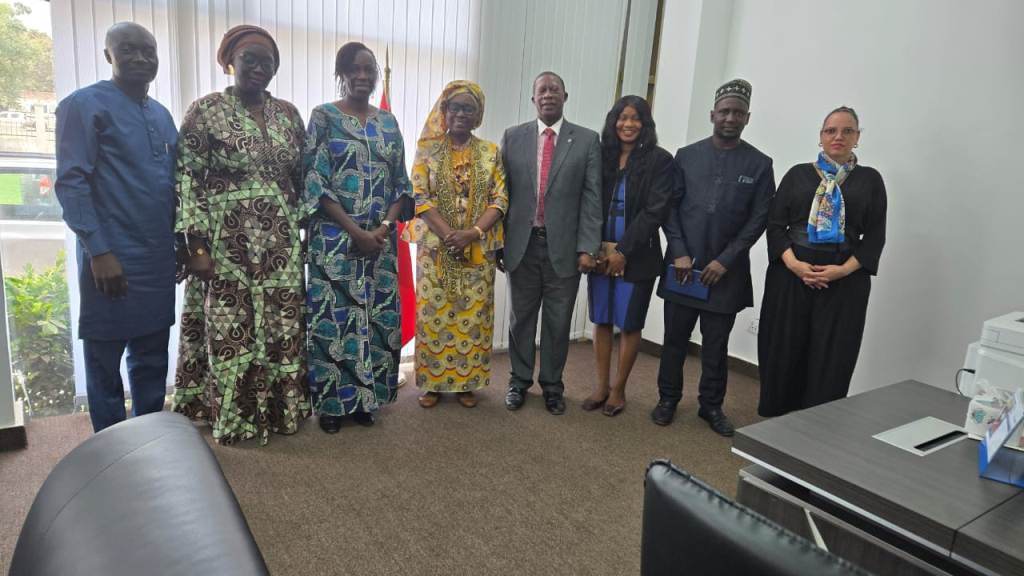
The ECOWAS delegation also paid a courtesy visit to the Minister of Gender, Children and Social Welfare of The Gambia, where discussions focused on aligning the regional initiative with national priorities and institutional frameworks.
The Banjul engagement marks a key step in scaling up the ECOWAS programme for assistive devices across Member States, with further engagements planned in Dakar, Senegal.
The Commission stated that the initiative forms part of broader efforts to strengthen social protection systems, deepen regional cohesion and ensure that no child is left behind in the integration process.
It added that ongoing programmes are designed to eliminate barriers to full integration and enable the region’s estimated 300 million citizens to take ownership of the vision of transitioning from an ECOWAS of States to an “ECOWAS of the People: Peace and Prosperity to All,” by 2050.