
, for securing a landmark agreement with the Republic of Turkey to train 200 Nigerian Special Forces personnel.)
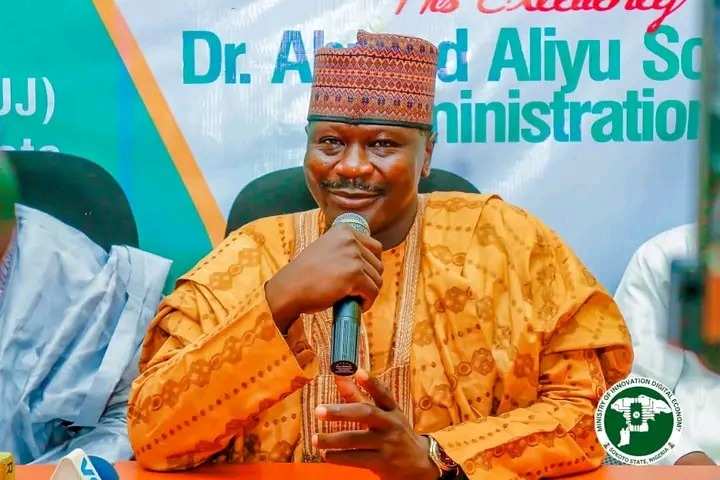
The Sokoto State Government has commended the Minister of Defence, Christopher Musa, for securing a landmark agreement with the Republic of Turkiye to train 200 Nigerian Special Forces personnel, describing it as a major boost to national security efforts.
In a statement signed by the Special Adviser to the Governor on Security Matters, Colonel Ahmed Abdul Usman (Rtd) he disclosed that the initiative aimed at strengthening Nigeria’s fight against insurgency, banditry, and other asymmetric threats.
He noted that modern security challenges, particularly those driven by non-state actors, require highly specialised skills, advanced tactical training, and adaptive operational frameworks.
According to the Special Adviser, investing in elite Special Forces training would significantly enhance the operational effectiveness of the armed forces.
He stressed that security experts have long advocated the expansion of well-trained Special Forces units to tackle unconventional warfare, including the need to fully operationalise the Nigerian Army Special Forces Brigade in Makurdi.
Usman Further explained that the evolving nature of insurgency and banditry demands intelligence-driven operations, precision, and unconventional strategies beyond traditional military approaches.
He warned that failure to adopt such measures could result in continued loss of personnel and limited success in the field.
The Sokoto State Government therefore, called for the immediate reactivation and strengthening of the Makurdi-based Special Forces Brigade to provide a structured framework for the training, deployment, and coordination of elite forces nationwide.
While applauding the training agreement, Usman emphasised that capacity building must go hand in hand with improved welfare for security personnel.
“A well-motivated force is a more effective force,” he stressed.
The Special Adviser highlighted the need for adequate remuneration, modern equipment, psychological support, insurance coverage, and better living conditions to boost morale and performance, urging the Federal Government to sustain momentum through continuous training, stronger inter-agency collaboration, investment in intelligence and surveillance technologies, and prioritisation of personnel welfare.
He reaffirmed the state government’s commitment to supporting initiatives aimed at restoring peace and security, expressing confidence that, with the right mix of training, strategy, and welfare, Nigeria can overcome its current security challenges.