

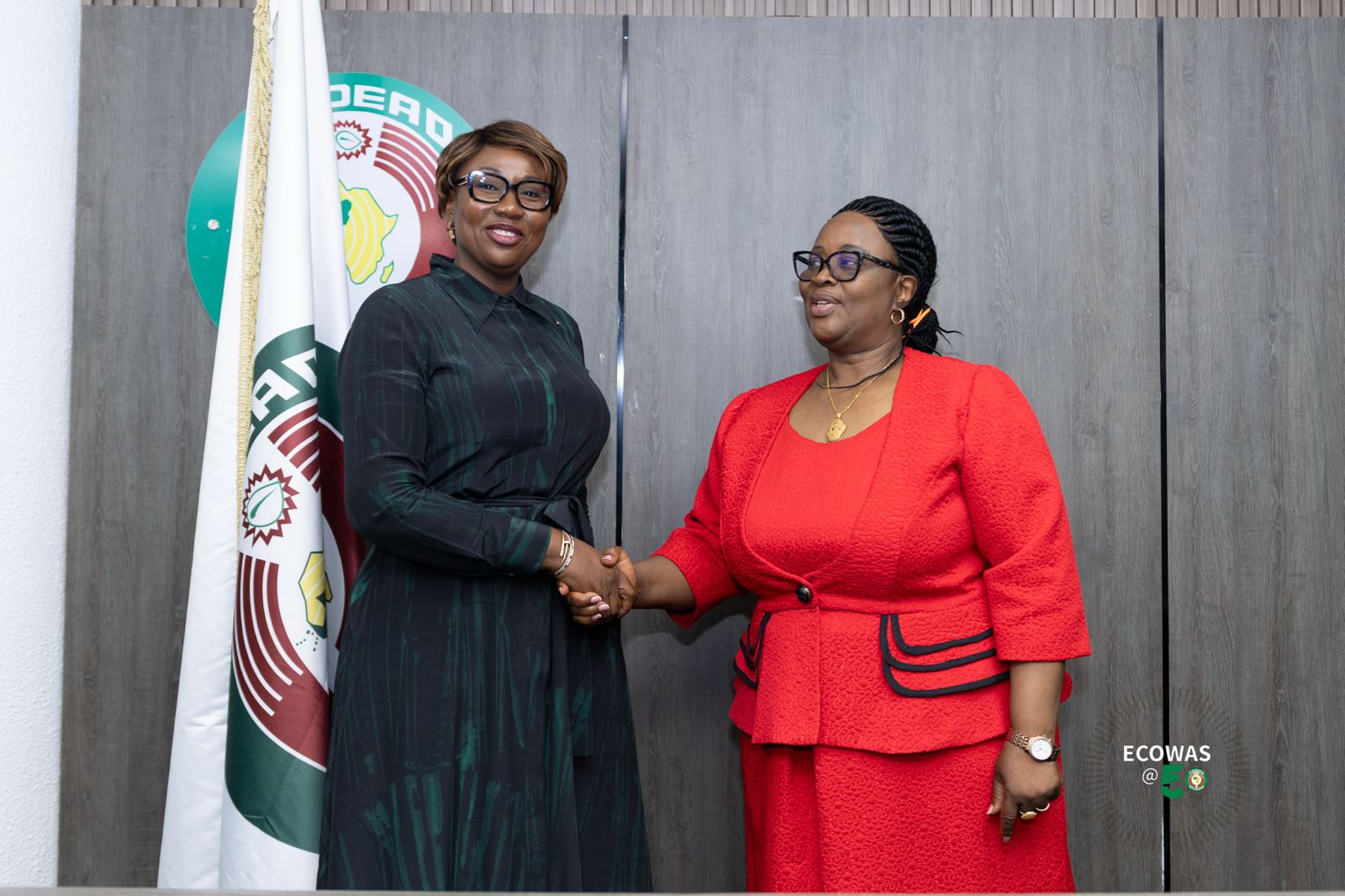
The Vice President of the ECOWAS Commission, Madame Damtien Tchintchibidja, has held a strategic meeting with the UN Women Country Representative to Nigeria and ECOWAS, Mrs. Beatrice Eyong, at the ECOWAS Commission Headquarters in Abuja to advance Women’s Leadership and Inclusive Governance Across West Africa
During the meeting, Mrs. Eyong sought the Commission’s support which is:“to further deepen collaboration in promoting women’s participation in leadership roles and politics, as well as advancing gender equality through concrete actions and targeted strategies”.
She emphasized the importance of strengthening partnerships to drive impactful and sustainable outcomes for women across the region.
She also highlighted the United Nations’ “Side by Side” campaign for an inclusive Nigeria, which advocates for increased representation of women at decision-making levels across all tiers of government.
“The campaign calls for the nomination and reservation of special seats for women in Nigeria’s Parliament at both national and regional levels, as a means of encouraging greater political participation”.
The sensitization efforts have been carried out in 24 States across Nigeria and the proposed Bill is expected to be presented before the National Assembly in the coming weeks.
READ ALSO: ECOWAS Court Unveils Plan to Boost Justice Delivery
Director of the ECOWAS Gender Development Centre in Senegal, Mrs. Sandra Oulate Fattoh, underscored the ongoing collaboration and workplan between the Centre and the UN Women Country Office in Dakar, particularly in key areas such as climate change, the care economy, and the Women, Peace and Security agenda.
She emphasied on optimism about expanding cooperation with the UN Women in Nigeria and in other member states.
The meeting reaffirmed the shared commitment of ECOWAS and UN Women to advancing gender equality and strengthening women’s leadership as a cornerstone for inclusive governance and sustainable development in the region.
The ECOWAS commission is implementing critical and strategic programmes that will deepen cohesion and progressively eliminate identified barriers to full integration. In this way, the estimated 300 million citizens of the community can ultimately take ownership for the realization of the new vision of moving from an ECOWAS of States to an “ECOWAS of the People: Peace and Prosperity to All”, by 2050.