

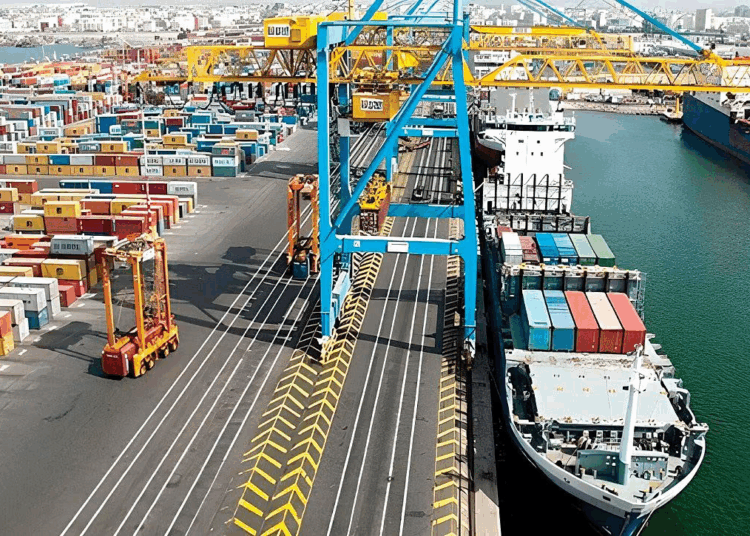
Stakeholders in Nigeria’s maritime industry have called for the adoption of a smart port system to enhance operational efficiency.
The call was made at the 6th edition of the JournalNG Port Industry Town Hall Meeting held in Lagos on April 24, 2026, with the theme, “Towards a Regime of Smart Ports in Nigeria.”
The Publisher of JournalNG Magazine and convener of the town hall meeting, Ismail Aniemu, said that adopting a smart port regime would enhance port efficiency, reduce human bottlenecks, and create new employment opportunities in the maritime sector.
Speaking on the 2026 focus, he emphasised that smart ports represent the future of port operations globally, driven largely by technology and automation.
“A smart port is tech-driven. It relies on robotics, artificial intelligence, and other modern tools that limit human interface and enhance operational efficiency,” he said.
He explained that transitioning to a smart port system would significantly reduce delays associated with manual processes, while improving transparency and productivity across the maritime value chain.
Addressing concerns from labour unions over potential job losses, Aniemu dismissed such fears, noting that technological advancement would instead create more specialised roles for skilled professionals.
“We don’t need to be afraid. When we discuss smart ports, unions often think workers will lose their jobs. No. If we migrate to a smart port system, it will create more jobs for smart people,” he stated.
He expressed confidence in the ability of Nigerian professionals to adapt and excel within a technology-driven port environment.
While referencing the 24-hour port system discussed at the previous edition, Aniemu noted that foundational elements such as round-the-clock financial transactions and institutional coordination already exist and can support the transition to a smarter, more efficient port ecosystem.
He stressed, however, that beyond infrastructure and technology, the mindset of operators remains a key determinant of success.
Cost Reduction
On his part, the Director General of the International Maritime Institute of Nigeria, Rear Admiral Thaddeus Udofia (Rtd.), identified persistent challenges such as congestion, cargo clearance delays, manual processes, and fragmented systems as major constraints affecting efficiency and increasing the cost of doing business.
Udofia, represented by the Executive Director, Finance, Captain David Ajiboye, said that a smart port regime would reduce logistics costs and enhance trade efficiency.
He described the shift towards smart ports as central to Nigeria’s economic future, noting that ports across the world are rapidly evolving through the deployment of technology, automation, and data-driven systems.
Also, the Registrar of the Council for the Regulation of Freight Forwarding in Nigeria, Kingsley Igwe, said Nigeria could reduce total port and logistics costs by 14 percent and improve operational efficiency by up to 60 percent if the country fully adopts smart port systems.
He explained that although global benchmarks indicate a 14 percent reduction in port operational costs in ideal environments, Nigeria could achieve similar savings if it transitions to smart port operations.
He also stressed the need for round-the-clock port operations, noting that delays caused by limited working hours increase logistics costs and storage charges for cargo owners.
Trade Competitiveness
The Head of Research at the Sea Empowerment and Research Center, Eugene Nweke, underscored the urgency of transitioning Nigeria’s seaports into smart ports, warning that failure to embrace digital transformation could widen the nation’s competitiveness gap in global trade.
“A smart port is not merely aspirational; it is urgent, inevitable, and foundational to Nigeria’s economic competitiveness,” he stated.
Citing global data from the United Nations Conference on Trade and Development, Nweke noted that over 80 percent of international trade by volume is transported by sea, placing ports at the centre of economic growth and trade facilitation.
Nweke outlined three critical pillars required to drive a successful smart port ecosystem, including digital infrastructure and integration, automation and intelligence, and human capital development.
Industry observers say the push for smart ports, if fully implemented, could position Nigeria as a competitive maritime hub in the region while improving ease of doing business at the nation’s seaports.