

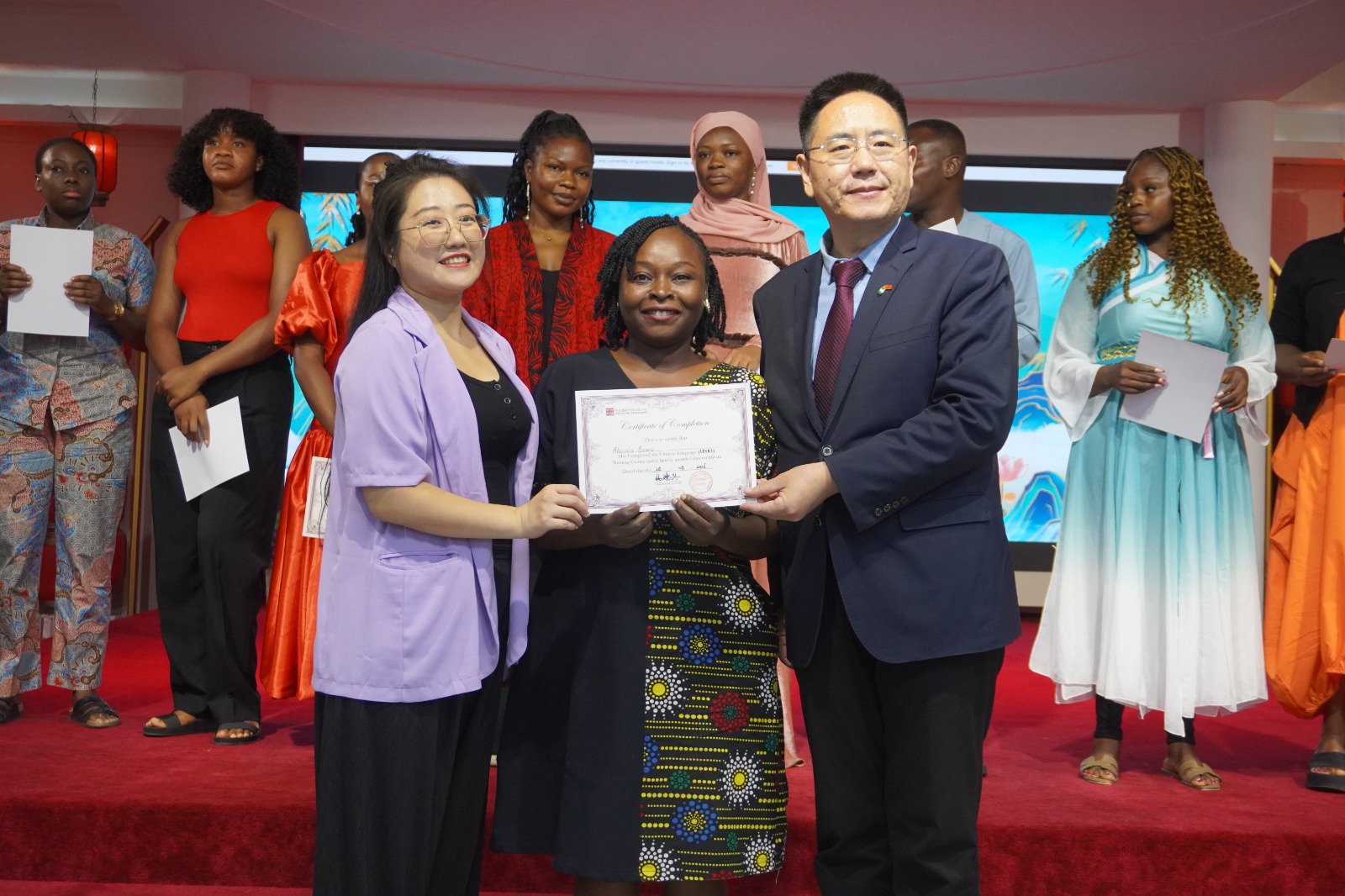
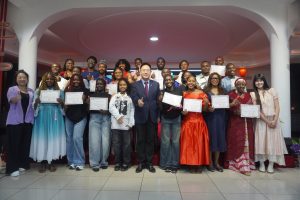
China has graduated over 40 Nigerian students from its 2026 Chinese Language Programme Phase I, a move that strengthens cultural exchange and deepens bilateral relations between the two countries.
The graduation reflects growing global connections shaping education and expanding opportunities for Nigerian students through foreign language acquisition.
The ceremony was held at the China Cultural Centre in Abuja, where participants highlighted the role of language in fostering cultural understanding and personal development.
READ ALSO: China Launches Mandarin-Language Radio Programme on FRCN
The Cultural Counsellor of the Chinese Embassy in Nigeria and Director of the Cultural Centre, Mr Yang Jianxing, described the Chinese language as a bridge to global engagement and understanding of China.
“Chinese is one of the most widely spoken languages in the world, carrying the genetic link of 5,000 years of Chinese civilisation. Within the language, there are stories, wisdom, and experiences passed down through generations. It embodies cultural heritage and serves as a common cultural treasure of all humankind,” Jianxing explained.
He urged the graduates to embrace discipline and continuous learning, stressing the importance of sustained effort.
“There is a saying: ‘If you do not study hard when you are young, you will regret it when you are old.’ This reflects the importance of discipline and effort. What you have gained today is not just a certificate. Your understanding of the Chinese language, culture, and society has just begun. Keep your ambitions alive and continue to grow,” he advised.
READ ALSO: Stakeholders Highlight Language Role Between China-Nigeria Ties
Highlighting the strategic value of cross-cultural knowledge, Jianxing noted that Nigerian students stand to benefit from exposure to both Chinese and Western systems.
“Nigerian students have the advantage of learning from both Chinese and Western cultures. By bringing these together, you can create something unique and powerful for your future. It is a crucial shortcut to gaining a comprehensive understanding of China and realising one’s dreams through participation in mutually beneficial cooperation between China and Nigeria,” he stated.
According to the Cultural Counsellor of the Chinese Embassy in Nigeria and Director of the Cultural Centre, the programme aligns with the 15th anniversary of diplomatic relations between China and Nigeria and the China-Africa Year of People-to-People Exchanges.
“I hope that more Nigerian friends will learn Chinese, understand China further, and enhance exchanges so that we can elevate the China-Nigeria comprehensive strategic partnership to a new level,” he projected.
For the graduates, the programme marked a transformative experience. One of them, Blessing Ihiala, said that learning Chinese required immersion in both the language and the culture.
“When I first started, I thought Chinese was very difficult, but with guidance from my teachers, I discovered it is actually very interesting. You cannot learn Chinese without learning the culture. The writing system is meaningful and often comes from pictures, which makes it logical and fascinating. I saw someone writing Chinese characters and became interested,” she reflected.
Another graduate, Israel Igor, emphasised mindset and preparation in overcoming challenges.
“People believe Chinese is difficult, but nothing is difficult if you give your best. Success depends on how prepared you are,” he stressed.
Igor further said that the language opens global pathways.
“Chinese is shaping the modern world, from technology to artificial intelligence. Learning it exposes you to global opportunities and a wider community,” he noted.
Also speaking, Chinese language teacher Qui Nan disclosed that 42 students graduated across Levels 1 to 3 of the HSK programme.
“They have worked very hard to reach this stage,” she commended.
The Chinese language teacher explained that the programme progresses from basic communication to advanced fluency, while praising Nigerian students for their dedication.
“Compared to students in other countries, Nigerian students are very hardworking. Many of them study even late at night. Language is a bridge. Through learning Chinese, we can strengthen communication and understanding between Nigeria and China,” she observed.
The event featured drama, dance and musical performances by students, showcasing the rising interest in Chinese language education in Nigeria and its role in strengthening cultural and educational ties.
For the graduates, the milestone represents not just academic success but a gateway to broader global engagement and opportunities.