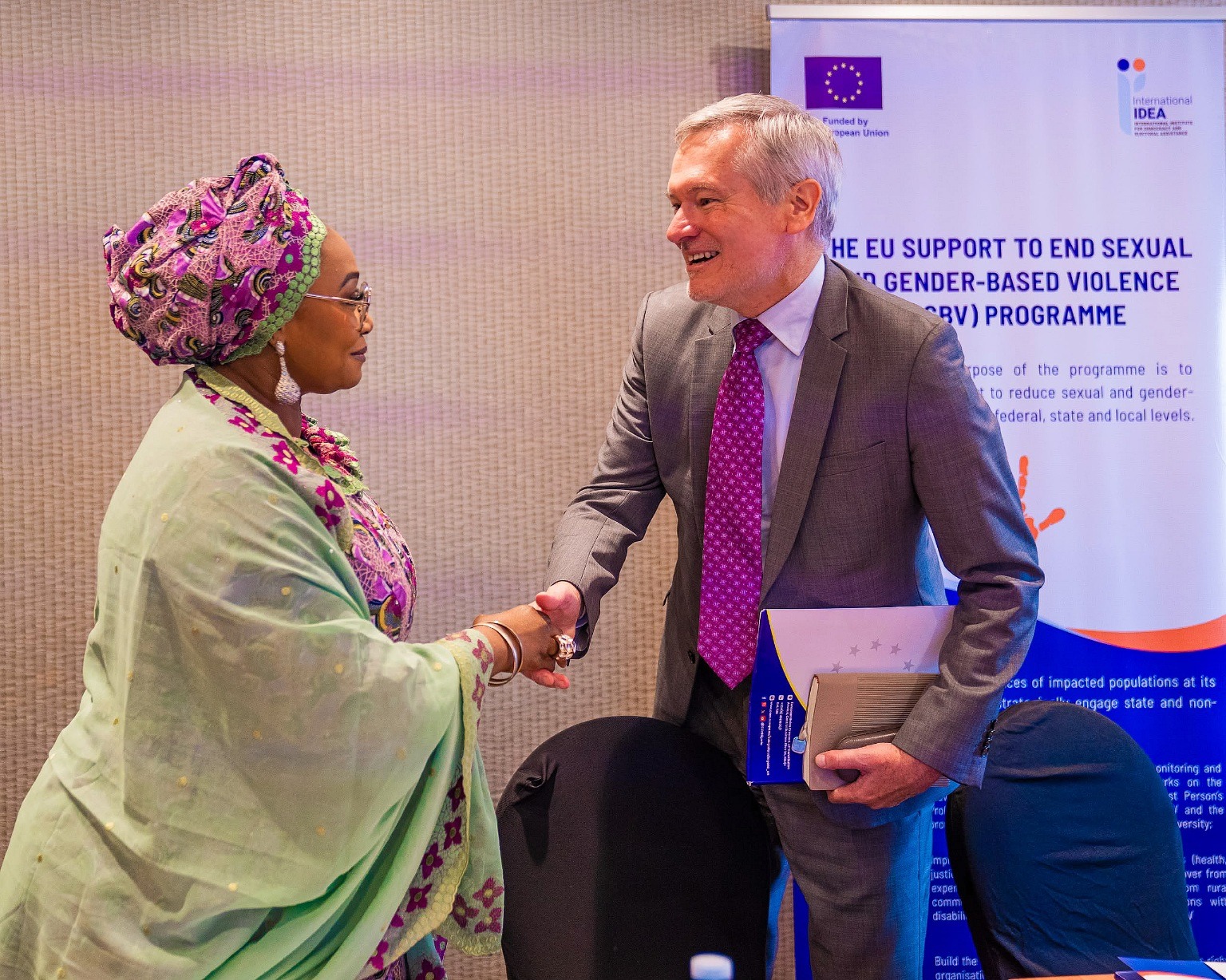
The Minister of Women Affairs and Social Development, Hajiya Imaan Sulaiman-Ibrahim, has reaffirmed the Federal Government’s commitment to strengthening institutional responses to sexual and gender-based violence (SGBV).
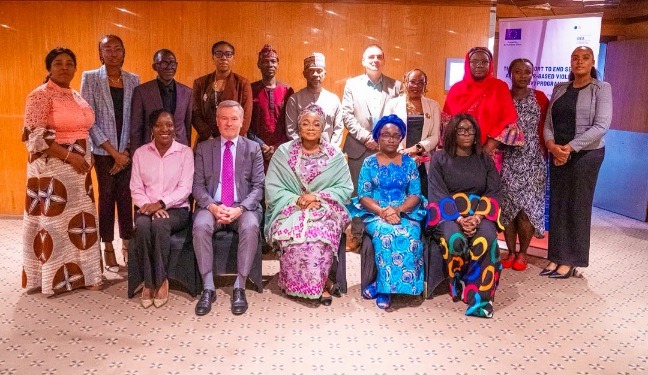
She said this at the inauguration of the Programme Steering Committee for the European Union, which supports the Ending Sexual and Gender-Based Violence (ESGBV) Programme in Abuja.
Hajiya Ibrahim said the committee would serve as a strategic policy platform to deepen collaboration among government institutions, development partners and sub-national actors in eliminating SGBV and expanding survivor-centred services nationwide.
“This intervention comes at a critical juncture in our national efforts to eliminate all forms of sexual and gender-based violence, ensuring that every woman, girl, child, and vulnerable person in Nigeria can live in dignity, safety, and absolute security.”
The Minister said the initiative aligns with President Bola Ahmed Tinubu’s Renewed Hope Agenda and highlighted findings from the National Gender Profile showing that about 30 per cent of women aged 15 to 49 have experienced physical violence, while one in four has suffered sexual violence.
She noted that the country’s 54 Sexual Assault Referral Centres remain insufficient, calling for expanded coverage and stronger institutional coordination.
“This is precisely why the ESGBV Programme is so vital. This initiative must not operate as an isolated project; rather, this programme must structurally support the Federal Government to scale up our national response.
She also confirmed that the Child Rights Act has been domesticated in all 36 states, while the Violence Against Persons (Prohibition) Act has been adopted in 35 states, with ongoing legislative reforms.
Calling for accelerated implementation, she urged partners to support the Survivors’ Support Fund.
“This Fund will be instrumental in expanding immediate access to comprehensive medical, psychosocial, legal, economic, and reintegration services for survivors, enabling them to transition from victims to thrivers,” she said.
Formally inaugurating the committee, which she co-chairs, she urged members to uphold transparency and measurable impact.
“Together, let us ensure that this programme delivers a definitive impact, strengthens our national systems, protects survivors, prevents future violence, and contributes meaningfully to a Nigeria where freedom from fear is a reality for all.”
The European Union Ambassador to Nigeria and ECOWAS, Gautier Mignot, said the Steering Committee would provide strategic oversight, policy direction and accountability for implementation across Oyo, Benue, Kaduna and the FCT.
“The Steering Committee has a particularly important role to play. It is expected to help guide the overall strategic direction of the programme, review and approve annual workplans, and ensure that implementation remains consistent with relevant national frameworks, institutional mandates and shared commitments on ending sexual and gender-based violence,” he said.
Reaffirming the EU’s commitment, he stated:
“The European Union remains committed to supporting Nigeria in these efforts. We look to this Committee to provide the leadership required to keep the programme focused on results, attentive to evidence and responsive to emerging challenges.”
The Attorney-General of the Federation, Lateef Fagbemi, represented by the Head of the Sexual and Gender-Based Violence Response Unit, Yewande Gbola-Awopetu, described the committee as the apex governance mechanism for Nigeria’s SGBV response.
Citing gaps in conviction rates, forensic capacity and survivor support as systemic failures undermining justice delivery, he reaffirmed Justice Ministry’s support, stressing shared accountability.
“This Ministry does not approach the ESGBV Programme as a beneficiary. We approach it as a co-owner. The programme’s success is Nigeria’s success. Its failures, should there be any, would be our collective failure. That is the standard of accountability I expect from every member of this Committee.”
The inauguration underscores strengthened collaboration among the government, the EU and partners to enhance survivor-centred justice systems, prevention frameworks and protection services in Nigeria.