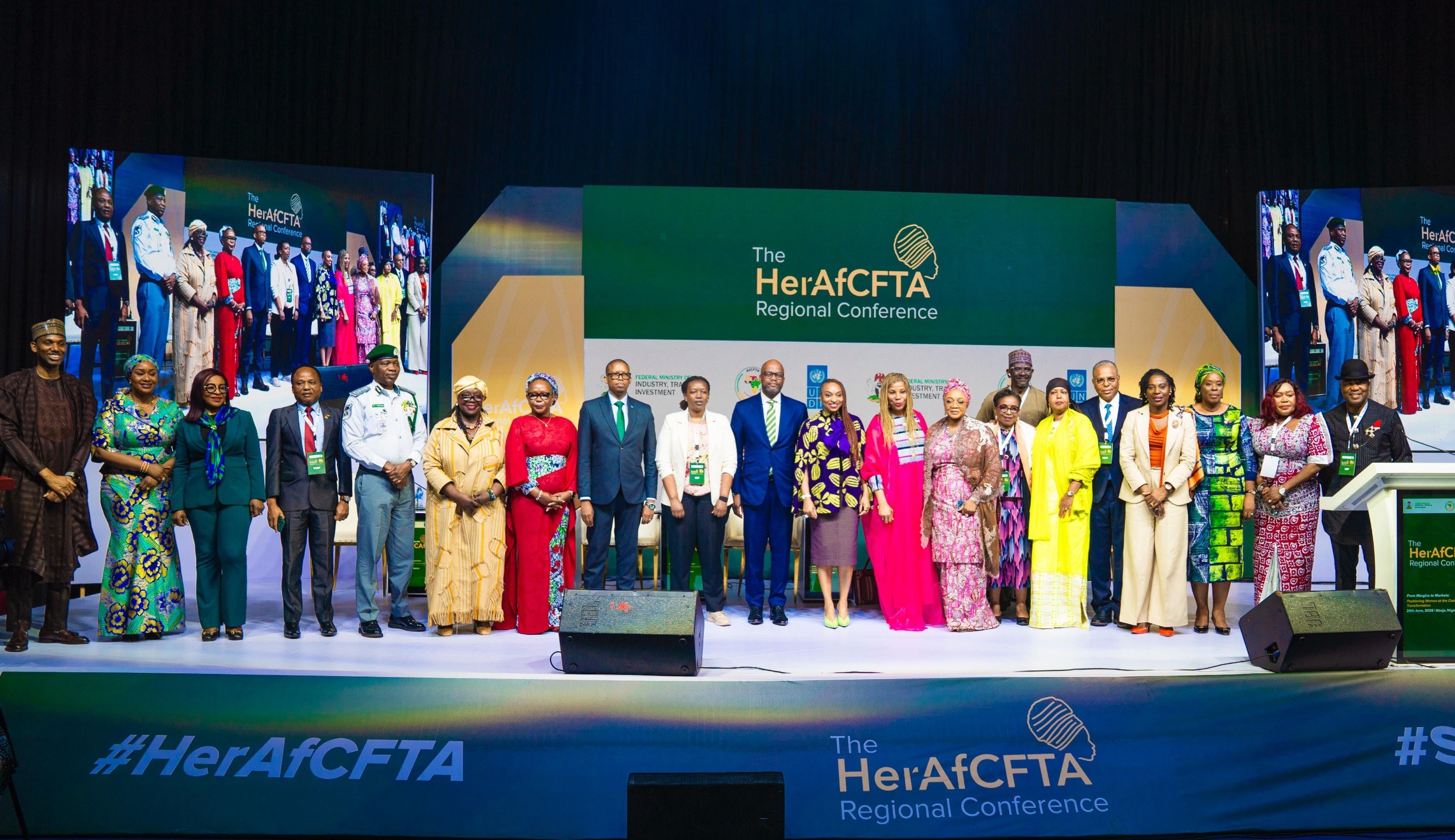
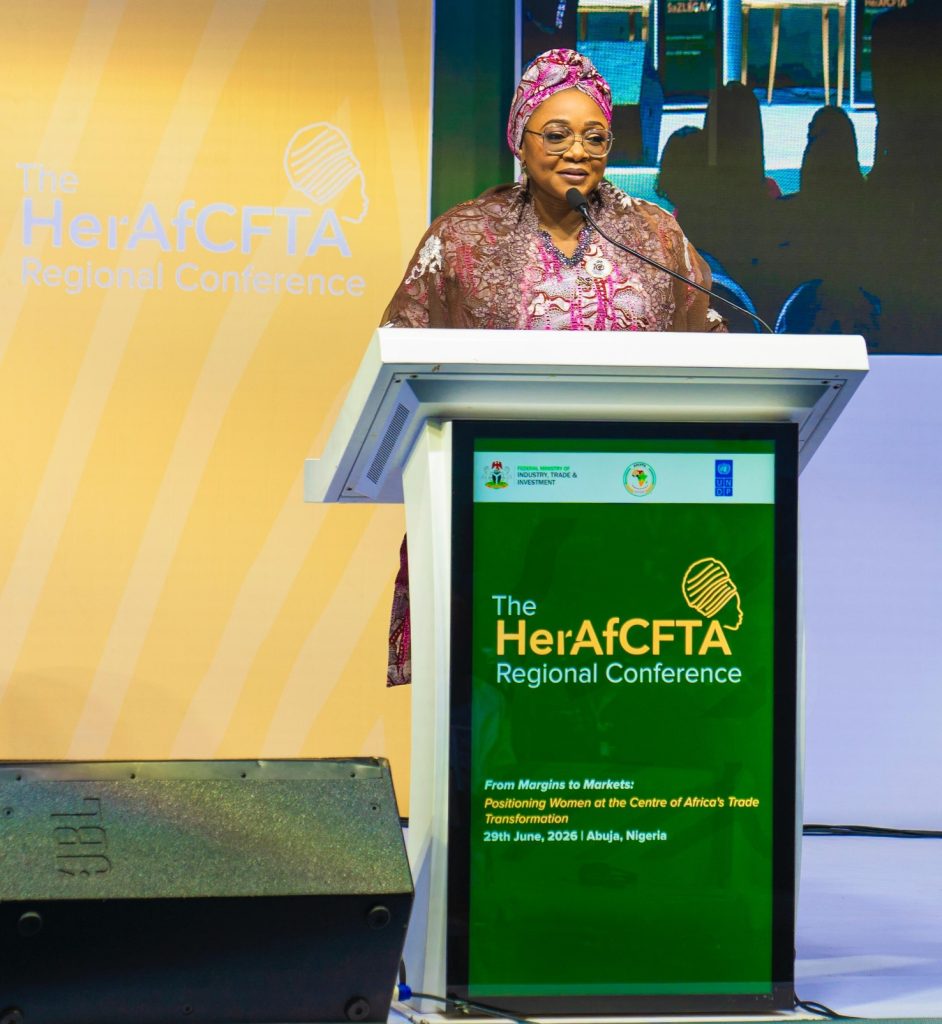
The Minister of Women Affairs and Social Development, Hajiya Imaan Sulaiman-Ibrahim, has called for deliberate policies to place women at the centre of Africa’s trade transformation, saying they remain the continent’s most underutilised trade asset.
Speaking at the HerAfCFTA (African Continental Free Trade Area) Regional Conference in Abuja, the Minister said, “Africa’s most underutilised trade asset is not a mineral, a port, or a payment system. It is the woman who already crosses our borders to trade, every single day, with no protection, no finance, and no place in our data.”
She noted that women have sustained African commerce for generations, adding that “The AfCFTA is our chance to bring them into the light.”
Sulaiman-Ibrahim said the African Continental Free Trade Area presents significant opportunities for inclusive growth but stressed that “Trade agreements designed without deliberate, targeted measures do not close gender gaps; they widen them.”
READ ALSO: Nigeria Intensifies AfCFTA Implementation Ahead of WTO Conference
She welcomed the AfCFTA Protocol on Women and Youth in Trade, while cautioning that “a protocol adopted but not yet ratified is a promise, not a guarantee.”
Structured Market
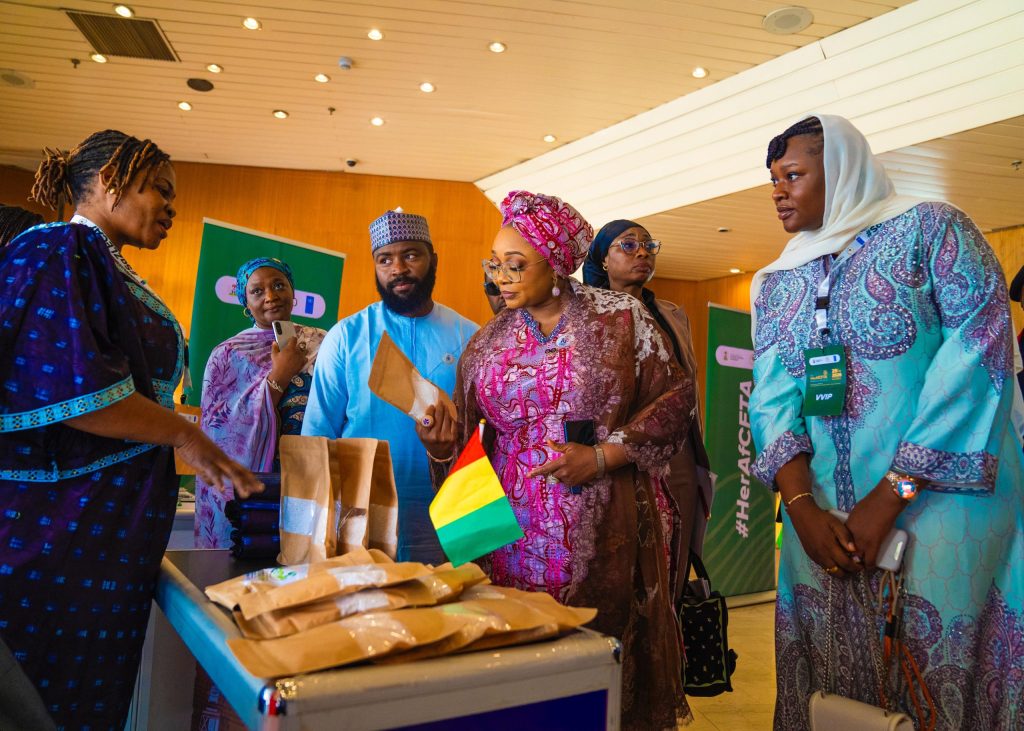
While thanking development partner UNDP for the support, the Minister said, “You’ve seen from the exhibition, you’ve seen what women are doing on their own.
Women need access to capital; we need access to a structured market. We also need to be protected around the borders. We need to also think about the structure that was supported.”
The Minister identified formalisation, stronger participation in regional value chains, and digital and financial inclusion as key pathways to expanding women’s role in intra-African trade.
She also backed improved gender-disaggregated trade data, saying, “We cannot resource what we refuse to measure. It’s no news that women are the ones making things happen.
We are driving the economy; we are driving the continent. So supporting women is not charity, it’s not a social obligation, it’s an economic imperative. Our continent will not grow without the right support for the women.”
Highlighting interventions under the Renewed Hope Agenda, Sulaiman-Ibrahim said the Nigeria for Women Programme had organised more than 560,000 women into over 26,000 savings and enterprise groups in its first phase, with plans to reach 4.5 million more women.
Affirmative Procurement
She also said the Affirmative Procurement Policy would direct a deliberate share of public procurement to women-owned enterprises.
“To achieve Mr President’s vision of a one trillion dollar economy, when women are supported, we are going to improve our investment outcomes. Our education outcomes, when women are supported. So women, we’re ready,” she said.
The Minister urged governments and stakeholders to remove barriers confronting women traders, declaring, “The women of Africa are not asking to be carried into this market – they have been carrying it all along.”
She added that what they were asking the government to do was to lower the barriers, write the rules with women in mind, count their work honestly, and finance their ambition fairly.