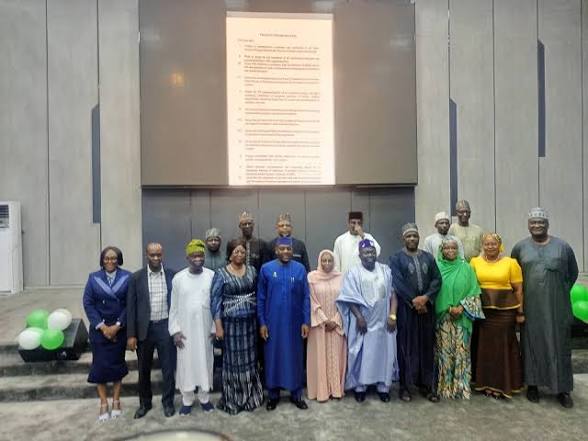
The Nigerian Government, through the Ministry of Education, has inaugurated a 14-member committee to supervise, monitor and fast-track the implementation of special school projects being executed by the Universal Basic Education Commission (UBEC).
The initiative aims to address the challenge of out-of-school children across the country.
Speaking at the inauguration in Abuja, the Minister of Education, Dr Tunji Alausa, said the UBEC Ministerial Implementation and Monitoring Committee for Smart Schools, Bilingual Schools and Alternative Schools marks another important step in the government’s efforts to transform basic education in Nigeria.
He said the projects were designed to achieve specific national objectives.
According to him, Smart Schools will prepare Nigerian children for the digital economy through technology-enabled teaching and learning, while Bilingual Schools will promote linguistic inclusion, improve learning outcomes and strengthen national integration.
He stated that Alternative Schools are intended to provide quality education for vulnerable children, particularly girls, out-of-school children and other underserved groups.
READ ALSO: EU, UNESCO, Education Ministry Launch Committee to Build Teachers’ Capacity
The Minister, however, expressed concern over the pace of implementation, noting that the projects had not achieved their intended objectives despite the substantial investment by the government.
He said many children remained out of school, stressing that the government’s responsibility extends beyond constructing classrooms.
“Our responsibility is to ensure that every educational investment made by government translates into meaningful learning opportunities for Nigerian children,” he said.
Dr Alausa urged committee members not to see their assignment as merely monitoring construction sites, but ensuring that the schools become fully functional institutions where children learn, teachers teach and communities thrive.
He charged the committee to oversee every stage of the projects, from conception to completion, handover, staffing, pupil enrolment and the delivery of measurable learning outcomes.
In her remarks, the Executive Secretary of UBEC, Aisha Garba, described the Smart Schools, Bilingual Schools and Alternative Schools as some of the Nigerian Government’s most significant investments in the basic education sector.
Expand Access
She said the projects would expand access to quality education, promote digital and innovative learning, provide educational opportunities for out-of-school children and other vulnerable learners, and strengthen the delivery of inclusive basic education nationwide.
Garba urged the committee to carry out its assignment with professionalism, objectivity and a shared commitment to excellence.
“I am confident that, working together, we will accelerate the completion, commissioning, operationalisation and sustainability of these projects and ensure that they deliver lasting educational benefits for Nigerian children,” she said.
Responding on behalf of the committee, its chairman, Professor Rashid Aderinoye, thanked the Nigerian Government for the opportunity to serve and pledged that members would work diligently for the benefit of Nigerian children and the country as a whole.