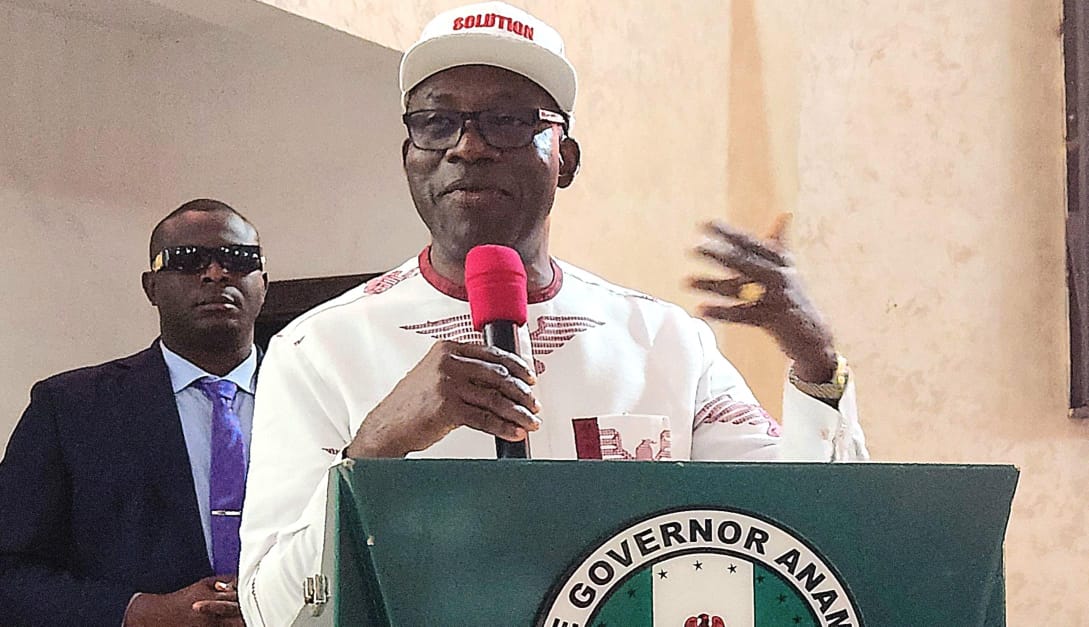
Anambra State Governor, Professor Chukwuma Soludo, has declared an environmental emergency over worsening flooding, gully erosion and indiscriminate sand mining, while announcing plans to formally recognise autonomous communities as the fourth tier of government in the state.
Speaking during a meeting of the Anambra State Traditional Rulers’ Council at the Light House, Awka, Governor Soludo described environmental degradation as the state’s greatest existential threat and called for immediate collective action to protect communities from escalating ecological disasters.
He directed the immediate desilting of drainage systems across the state and ordered an end to indiscriminate sand mining, warning that both practices are accelerating flooding and severe gully erosion.
READ ALSO: Anambra State Holds Meeting To Commemorate World Earth Day
“Flooding and gully erosion remain Anambra’s number one existential threat,” the governor said, noting that the state, already Nigeria’s second-smallest by landmass, is steadily losing territory to erosion.
“While Lagos is expanding its landmass, Anambra is shrinking. Entire communities are being swallowed by erosion, and even if we devote the state’s entire budget for the next 10 years, it will not be enough to adequately address the scale of the problem,” he said.
Governor Soludo blamed much of the environmental damage on human activities, including the obstruction of waterways, indiscriminate waste disposal and the diversion of residential runoff onto roads, practices he said damage infrastructure and worsen flooding.
He also identified uncontrolled sand mining as a major contributor to erosion, saying the removal of sand destabilises the terrain and increases the risk of land collapse.
The governor urged traditional rulers to lead environmental protection campaigns in their communities by ensuring drainage channels remain free of refuse, discouraging illegal sand mining and promoting responsible waste management.

On governance reforms, Soludo announced plans to introduce a Community Administration Law that will formally recognise autonomous communities within the state’s administrative framework following a recent Supreme Court judgment on community administration.
According to him, the proposed legislation will include an official schedule of communities within each local government area and provide legal clarity on community governance, helping to resolve longstanding disputes surrounding the operations of town unions.
He explained that while town unions currently perform governance functions in many communities, they are voluntary associations, a situation that has resulted in multiple competing unions in some communities.
“When we are done, autonomous communities will become the fourth tier of government in Anambra State,” the governor declared.
Soludo said the reform would strengthen grassroots administration and provide a more structured framework for community governance across the state.
Reflecting on his administration’s progress, the governor said Anambra had moved beyond the security challenges that characterised the beginning of his first term and assured residents that his government remained focused on delivering sustainable development.
“We will continue to deliver on the mandate given to us. The new Anambra is on the rise, and we remain on course,” he said.
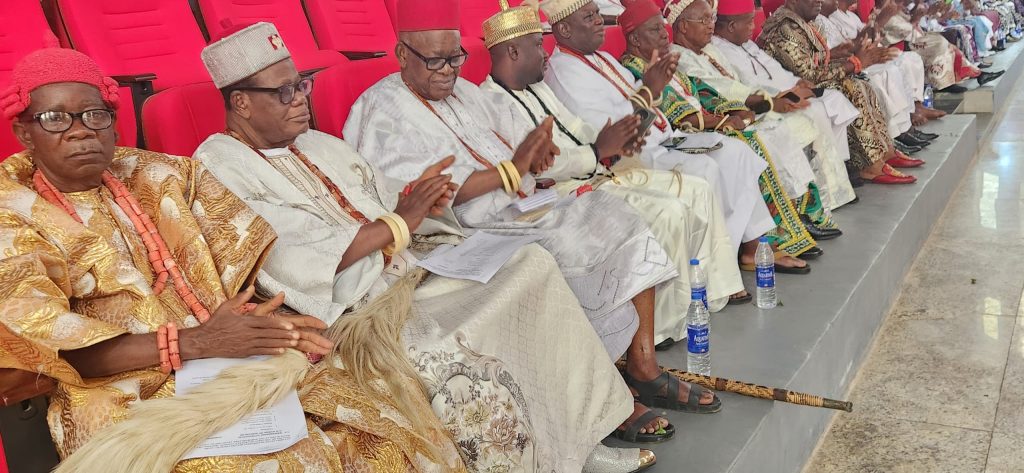
The meeting was attended by the Chief of Staff to the Governor, Dr. Ben Nwankwo; the Commissioner for Local Government, Chieftaincy and Community Affairs, Barrister Vin Ezeaka; the Chairman of the Anambra State Traditional Rulers’ Council, Igwe Chidubem Iweka, alongside other traditional rulers and senior government officials.