Nigeria has reaffirmed its commitment to humanitarian diplomacy and closer collaboration with the International Federation of Red Cross and Red Crescent Societies (IFRC) to enhance disaster response, community resilience and protection of vulnerable populations across the country.
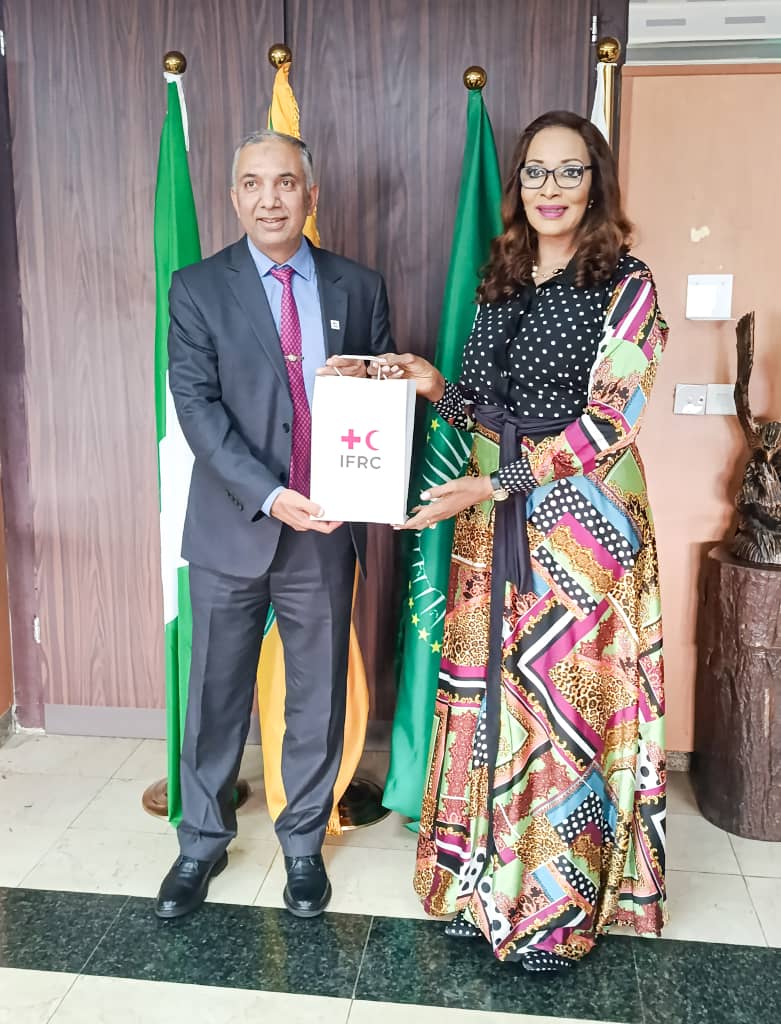
The commitment was made by Nigeria’s Minister of Foreign Affairs, Ambassador Bianca Odumegwu-Ojukwu, while receiving the Letter of Commission from the Head of Delegation of the International Federation of Red Cross and Red Crescent Societies, Dr. Ghulam Mohammmed Awan, in Abuja.
According to a statement by the spokesperson of the Ministry of Foreign Affairs, Kimiebi Ebienfa, Ambassador Odumegwu-Ojukwu congratulated Dr. Awan on his appointment and expressed confidence that his tenure would deepen the Federation’s engagement with Nigeria and the wider West African region.
READ ALSO: Nigeria’s Foreign Minister Leads Delegation to AU Executive Council
She assured him of the ministry’s continued support in facilitating the humanitarian mandate of the IFRC.
“The Red Cross has, over generations, earned global respect through its commitment to humanity, neutrality, impartiality and voluntary service,” the minister said.
She commended the contributions of the Nigerian Red Cross Society and the global Red Cross Movement in providing humanitarian assistance to victims of disasters, conflicts, disease outbreaks and other emergencies.
Drawing from her personal experience, the minister recalled the long-standing presence of the Red Cross in communities across Nigeria, noting that its humanitarian and charitable activities had inspired generations of young people to embrace compassion, volunteerism and community service.
She also praised the courage and dedication of Red Cross volunteers who continue to provide life-saving assistance in difficult and often dangerous conditions.
“The neutrality of the Red Cross remains one of its greatest strengths, enabling it to assist solely based on need, irrespective of political, ethnic or religious considerations,” she stated.
Ambassador Odumegwu-Ojukwu further expressed satisfaction that humanitarian workers and volunteers in Nigeria continue to enjoy the confidence and cooperation of local communities, making it easier to deliver assistance to those in need.
Responding, Dr Ghulam Muhammed Awan thanked the minister for the warm reception and reaffirmed the IFRC’s commitment to supporting Nigeria’s humanitarian response architecture.
He explained that the Federation continues to strengthen community-based disaster preparedness and emergency response through its extensive network of volunteers operating at national, state and community levels.
“The Federation’s effectiveness is built upon its internationally recognised humanitarian principles of humanity, neutrality, impartiality and independence, which enable volunteers to assist all persons in need without discrimination,” Dr. Awan said.
He described Nigeria as a strategic country within the federation’s West and Central Africa operations and expressed optimism that cooperation with the federal government would continue to expand in disaster risk reduction, climate resilience, public health, emergency preparedness and humanitarian capacity development.