The Ministry of Marine and Blue Economy has intensified efforts to accelerate the implementation of the National Policy on Marine and Blue Economy by seeking stronger collaboration between the federal government, state governments, private sector and development partners.
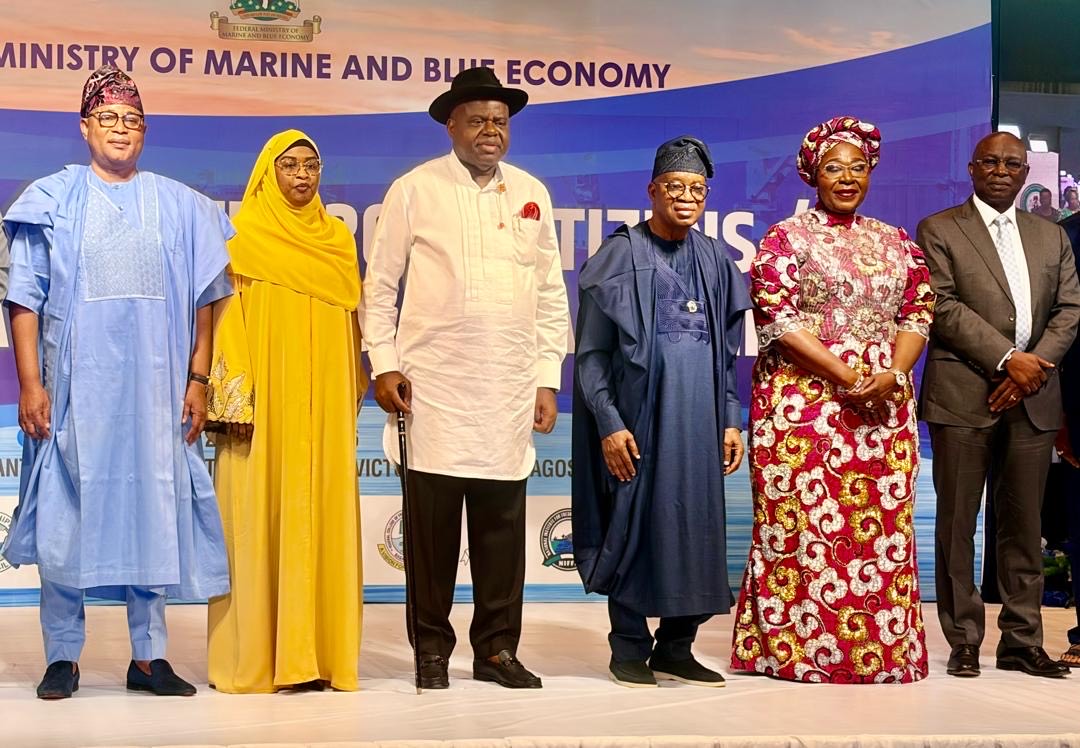
This formed the focus at the Second Quarter 2026 Citizens’ and Stakeholders’ Engagement of the Federal Ministry of Marine and Blue Economy, held in Lagos.
Minister of Marine and Blue Economy, Dr. Adegboyega Oyetola, described sub-national participation as critical to unlocking the sector’s vast economic potential.
He said Nigeria had moved beyond policy formulation and must focus on implementation capable of delivering measurable economic benefits.
The gathering, themed “From Policy to Action: Mobilising Sub-National Governments for Effective Implementation of Nigeria’s National Policy on Marine and Blue Economy,” had in attendance government officials, diplomats, development partners, industry leaders, academics and representatives of state governments.
The minister said the National Policy on Marine and Blue Economy had provided a strategic framework for harnessing Nigeria’s oceans, inland waterways, fisheries and coastal resources, but stressed that its success depended on coordinated action across all levels of government.
“Many of the country’s blue economy assets are located within states and communities, making sub-national governments indispensable partners in driving investment, creating jobs, improving food security and promoting environmental sustainability.
However, reforms under the government’s Renewed Hope Agenda had strengthened stakeholder engagement, attracted investment, improved maritime safety and enhanced the competitiveness of Nigeria’s ports,” he said.
Oyetola continues, “The 2025 Container Port Performance Index by the World Bank and S&P Global Market Intelligence ranked Tin Can Island Port as the tenth most improved port globally and Lagos Port Complex, Apapa, as the twelfth most improved between 2020 and 2025.
The ongoing port modernisation and plans to develop new deep-seaports in states including Akwa Ibom, Bayelsa, Cross River, Lagos and Ondo will strengthen Nigeria’s position as West Africa’s preferred maritime hub,” the minister noted.
Bayelsa State Governor, Duoye Diri, while delivering a keynote address, commended the establishment of the Federal Ministry of Marine and Blue Economy, describing it as a strategic step towards diversifying Nigeria’s economy.
He said Bayelsa followed suit by creating its own Ministry of Marine and Blue Economy in June 2024 to drive the blue economy component of the state’s A-S-S-U-R-E-D Prosperity Agenda.
“Bayelsa State Ministry has commenced major fish production at the Bayelsa Aquaculture Village in Yenegwe, where an operational hatchery was breeding high-quality catfish fingerlings and juveniles to boost food security and create jobs.
The state has expanded its marine transport fleet and is aggressively pursuing the development of the proposed Agge Deep Seaport as the next maritime gateway for the Niger Delta,” he opined.
Aliko Dangote, who was represented by the Managing Director of Dangote Port Operations, Simeon Akin Omole, said industrial transformation required policy consistency, quality infrastructure, access to finance and investor confidence.
He identified infrastructure-led industrialisation, value-chain development and stronger public-private partnerships as the three pillars needed to unlock the sector’s enormous potential.
“The federal government’s approvals for major deep seaport projects in various parts of the country would stimulate industrial clusters incorporating agro-processing, petrochemicals, shipbuilding, cold-chain logistics and maritime technology, while also boosting Nigeria’s competitiveness,” he noted.
He further identified the fisheries value chain as a major investment opportunity, noting that despite rising domestic production, Nigeria still imported fish worth nearly one billion dollars annually due to a significant supply deficit.
All the participants pledged continued support for the successful implementation of Nigeria’s marine and blue economy agenda.