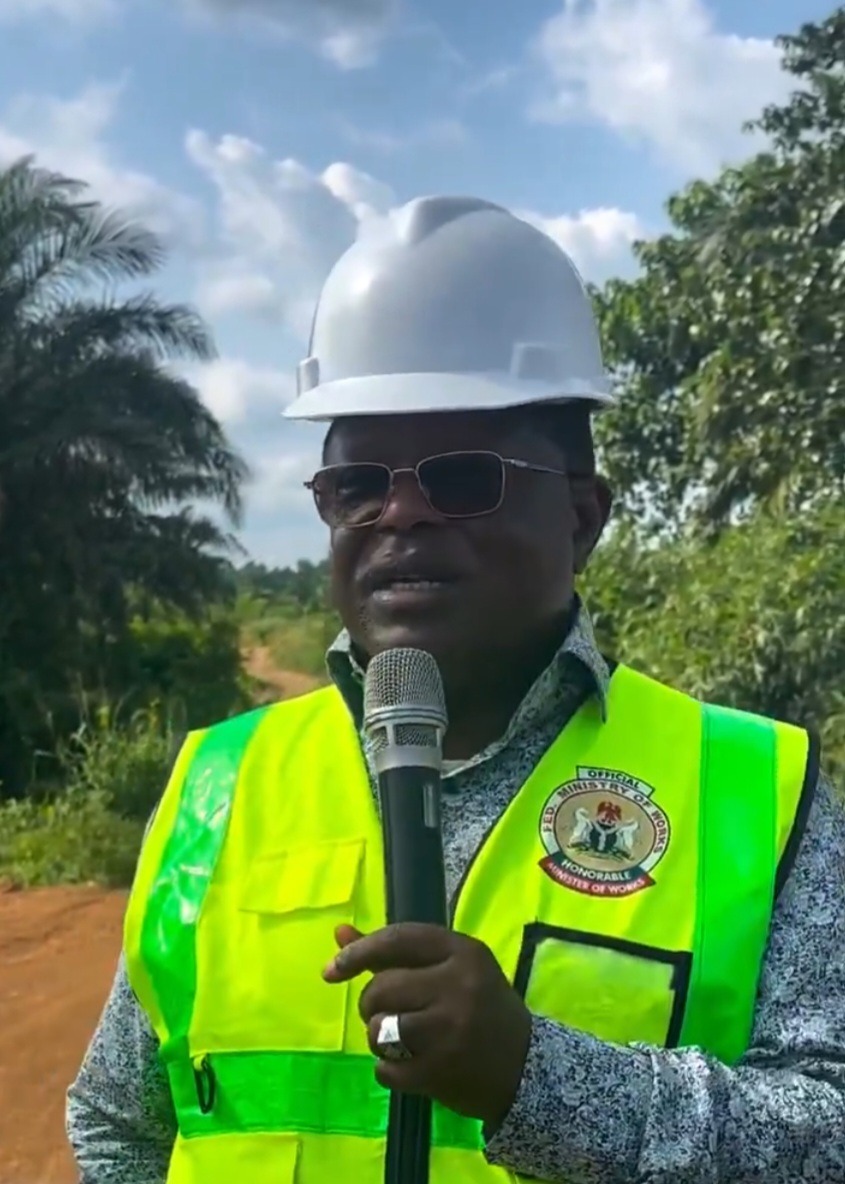
Nigeria’s Minister of Works, Senator David Umahi, has said that the ongoing Calabar–Ebonyi–Benue–Kogi–Nasarawa–Abuja Superhighway, one of President Bola Tinubu’s flagship legacy infrastructure projects, will boost security, the economy, and employment opportunities for all Nigerians.
Umahi said it would also reduce travel time between Ebonyi State and Abuja to about three hours upon completion.
Umahi stated this while addressing journalists during an inspection of ongoing construction works at Kilometre 118 of Section One of the superhighway in Ebonyi State.
ALSO READ: Wike: 70% of Completed FCT Projects Were Abandoned
He described the highway as a transformative national infrastructure project designed to improve connectivity between the South-South, South-East and North-Central regions, while stimulating economic activities and easing the movement of people and goods.
According to him, the first section of the project stretches about 123.5 kilometres from Cross River through Ebonyi to the Benue boundary, while the second section, measuring 168 kilometres, has been awarded and will run through Benue, parts of Enugu, Kogi and terminate at Wote in Nasarawa State before linking Abuja.
He explained that the highway connects seamlessly with other ongoing federal road projects, including the Lagos-Calabar Coastal Highway and the Makurdi–Ninth Mile Road, creating a strategic transport corridor across the country.
“If you are in Ebonyi, you will get to Abuja in about three hours. From the South-South, you can get to Abuja in about six hours when these projects are completed,” he said.
The minister commended the contractor handling the project, Infouest Nigeria Limited, for the quality and pace of work, noting that construction was progressing simultaneously from multiple fronts to accelerate delivery.
He disclosed that work was advancing from both the Onueke axis and Ishieke Junction, while additional construction teams would soon commence earthworks on different sections of the alignment.
Umahi also praised H-Link Construction Company for the ongoing flyover project at Onueke, saying the contractor had demonstrated commitment despite payment delays.
He revealed that the Federal Government had approved the rehabilitation of the worst seven-kilometre section of the 19-kilometre Edembe Road in Izzi Local Government Area, with work expected to commence in August.
The minister appealed to the Ebonyi State Government to facilitate the removal of structures affected by the project’s right-of-way, particularly around the Enugu-Abakaliki Road corridor, to pave the way for the construction of dual carriageways and flyovers.
He expressed confidence that the state government would provide the necessary support, recalling similar cooperation during the Onueke flyover project.
Responding to questions on whether road users would be able to use completed sections before the entire project is finished, Umahi said construction would continue simultaneously on different segments without disrupting progress.
“The first carriageway is already under construction while the second carriageway has been designed. Different engineering teams will handle different sections simultaneously,” he explained.
On concerns over insecurity in parts of Benue State where the highway passes, the minister assured Nigerians that adequate security arrangements had been made to protect workers and the project.
He said President Tinubu had directed security agencies to ensure that construction was not disrupted by criminal elements.
The minister used the occasion to defend the Tinubu administration’s infrastructure drive, insisting that ongoing road projects across the country were clear evidence of the government’s commitment to national development.
According to Umahi, borrowing to finance critical infrastructure is an investment in Nigeria’s future because improved transportation networks would drive economic growth, enhance productivity and attract investment.
He maintained that President Tinubu’s legacy projects, including the Calabar–Abuja Superhighway, Lagos-Calabar Coastal Highway and Sokoto-Badagry Superhighway, would redefine Nigeria’s road infrastructure and boost national integration.