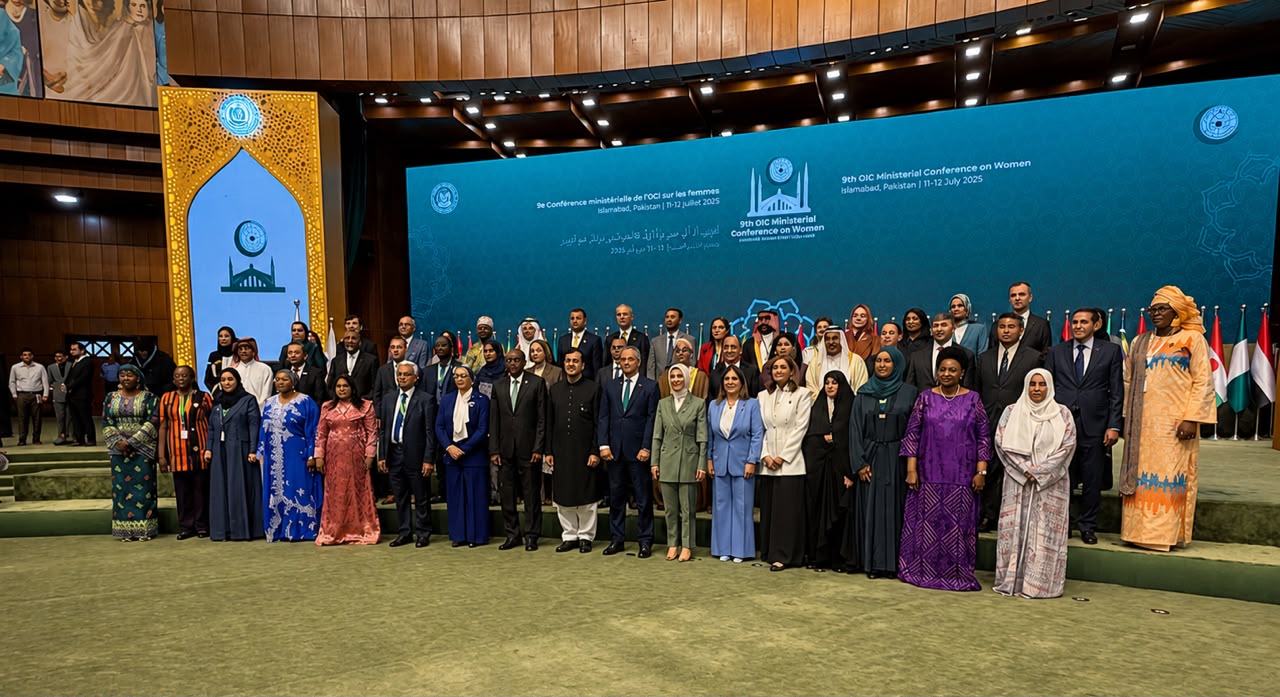
Nigeria has called on member states of the Organisation of Islamic Cooperation (OIC) to move beyond declarations and place women’s empowerment at the centre of national development, economic transformation and peacebuilding.
The call was made at the 9th OIC Ministerial Conference on Women in Islamabad, Pakistan, where ministers and delegates from the organisation’s 57 member states gathered to discuss strategies for advancing women’s socio-economic and political empowerment.
Delivering Nigeria’s national statement, the Minister of Women Affairs and Social Development, Hajiya Imaan Sulaiman-Ibrahim, said women’s empowerment is “no longer a side conversation to be held after the serious business of statecraft is done. It is now serious business.”
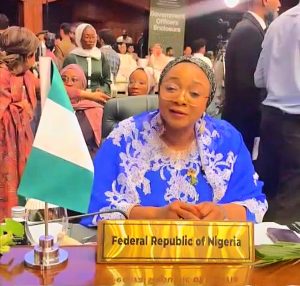
Speaking on the conference theme, “Socio-Economic and Political Empowerment of Women in the OIC Countries: Challenges and Way Forward”, the minister stressed that sustainable development cannot be achieved while limiting the potential of half of a nation’s population.
“Any OIC member state that sidelines its women is not protecting a tradition; it is forfeiting half of its future,” she declared.
Sulaiman-Ibrahim highlighted Nigeria’s ongoing reforms under the administration of President Bola Ahmed Tinubu, including the revised National Gender Policy, the National Women’s Economic Empowerment Policy, the Third National Action Plan on Women, Peace and Security (2025–2030), the Nigeria Gender Profile and Roadmap to Equality 2030, affirmative procurement for women-owned enterprises, and expanded investments in digital inclusion, entrepreneurship, and social protection.
READ ALSO:Women Affairs Minister Arrives in Pakistan for OIC Conference
She said Nigeria’s evidence-based reforms demonstrate that gender equality is not merely a social obligation but an economic imperative, urging greater collaboration among OIC member states to implement the OIC Plan of Action for the Advancement of Women and strengthen the Women Development Organisation (WDO).
“Let us leave Islamabad not with satisfaction, but with resolve to remove the barriers that hold our women back, to invest boldly in their capabilities, and to build societies across the Islamic world in which every woman and every girl can realise the full measure of her God-given potential,” she said.
Pakistan’s Prime Minister, Shehbaz Sharif, reaffirmed his country’s commitment to advancing women’s economic empowerment through education, financial inclusion, entrepreneurship, and stronger legal protections.
Represented by the Chairman of the Senate, Syed Yousaf Raza Gillani, the Prime Minister urged member states to transform their collective commitments into measurable outcomes.
“Empowering women is not merely a development priority; it is both an Islamic obligation and an economic necessity,” he said.
Reflecting on Pakistan’s legislative and social reforms, Gillani noted that “Legislation and policy actions alone do not define a nation’s progress. Education and healthcare remain the foundations of sustainable empowerment.”
Assuming the chairmanship of the conference, Pakistan’s Federal Minister for Human Rights and Federal Minister for Law and Justice, Azam Nazeer Tarar, pledged to lead with inclusivity and partnership.
“The true success of this Conference will not be measured by the declarations we adopt. It will be measured by the opportunities we create after we return home,” he said.
Executive Director of the Women Development Organisation, counsellor Sarah Ismail Al Shoura, also called for stronger cooperation among member states.
“The true value of this Conference will not be measured solely by the resolutions we adopt today, but by our collective ability to translate those decisions into meaningful action,” she said.
In a statement delivered on behalf of the OIC Secretary-General, Hissein Brahim Taha, Assistant Secretary-General Ambassador Tariq Ali Bakheet reaffirmed the organisation’s commitment to advancing women’s empowerment.
“The success of this conference will not be measured solely by the quality of our discussions but by our collective resolve to translate its outcomes into concrete actions,” he said.
The opening statements by various speakers underscored a shared conviction that the empowerment of women is both an Islamic imperative and a prerequisite for sustainable development.
Participants called for moving beyond commitments to measurable action by expanding women’s access to education, economic opportunities, leadership, justice, and digital inclusion, while reaffirming solidarity with women affected by conflict, occupation, displacement, and humanitarian crises.
The ceremony also featured remarks by Mr Mohammad Naciri, Chief of Staff of UN Women, who reiterated the United Nations’ commitment to supporting member states in advancing gender equality and women’s empowerment through inclusive policies, partnerships, and evidence-based interventions.
The opening ceremony underscored the collective commitment of OIC member states and development partners to advancing women’s empowerment as a key driver of sustainable development, economic growth, and social progress.