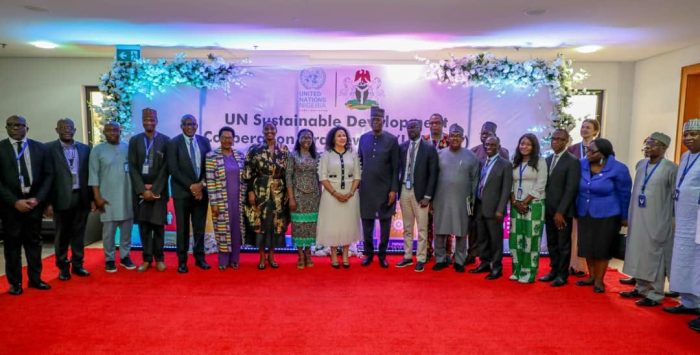
The United Nations has called for stronger implementation of the United Nations Sustainable Development Cooperation Framework (UNSDCF) to accelerate Nigeria’s development and keep the country on course to achieve the Sustainable Development Goals (SDGs) by 2030.
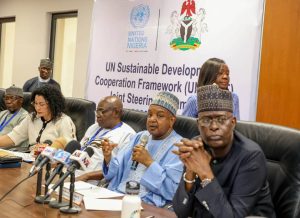
Speaking at the Joint Steering Committee Meeting of the UNSDCF 2023–2027 in Abuja, the UN Resident and Humanitarian Coordinator in Nigeria, Mohamed Malick Fall, described the Cooperation Framework as the cornerstone of the partnership between the United Nations and the Federal Government, aligning UN support with Nigeria’s national development priorities.
Fall said that with fewer than four years remaining until the 2030 deadline, the focus must shift from planning to implementation to ensure programmes deliver measurable results for Nigerians.
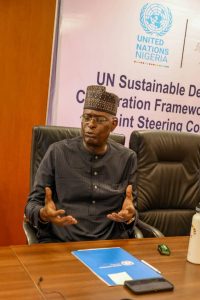
“The Cooperation Framework is the master document that shapes our relationship with the Government. It is built on the foundation of taking the Government’s priorities and aligning the work of the United Nations with them,” he said.
He observed that although conflicts, climate change, economic shocks and declining development assistance have slowed global development, Nigeria has the potential to turn its challenges into opportunities through innovation, stronger institutions and effective partnerships.
Fall urged governments, development partners and the private sector to deepen collaboration through innovative financing, technology and stronger coordination to accelerate progress towards the SDGs.
He also called for greater domestic resource mobilisation and increased private sector participation to bridge funding gaps and support sustainable development.
Minister of Budget and Economic Planning, Senator Atiku Bagudu, reaffirmed the Federal Government’s commitment to the Cooperation Framework, describing it as a shared instrument that reflects Nigeria’s development aspirations and the collective support of the United Nations.
Bagudu said the government’s ongoing macroeconomic reforms were creating a more stable investment environment capable of attracting private capital to complement public financing for development.
He noted that achieving the SDGs would require resources beyond what governments and development partners alone could provide, stressing the need to mobilise private investment and innovative financing.
According to him, Nigeria’s ambition of building a one-trillion-dollar economy by 2030 aligns with efforts to reduce poverty, create jobs and improve the quality of life of its citizens.
Also speaking, the Minister of Humanitarian Affairs and Poverty Reduction, Dr Bernard Doro, reaffirmed the ministry’s commitment to ensuring that no Nigerian is left behind through stronger humanitarian coordination and poverty reduction initiatives.
He highlighted the One Humanitarian, One Poverty Response System (OHOPRS) as a platform for integrating humanitarian action, social protection and poverty reduction under a unified national framework.
Doro said the National Poverty Intelligence Lab would strengthen evidence-based planning by providing real-time multidimensional poverty data to improve programme targeting and accountability.
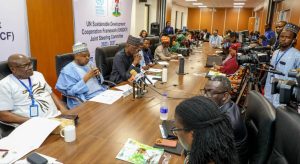
The meeting reviewed progress made under the United Nations Sustainable Development Cooperation Framework 2023–2027 and identified priority actions for accelerating implementation in line with Nigeria’s National Development Plan and the 2030 Agenda.
The Minister of State for Budget and Economic Planning, Dr Doris Anite, and the Senior Special Assistant to the President on SDGs, Princess Adejoke Orelope-Adefulire, also stressed that stronger collaboration between the Federal Government, the United Nations, development partners, civil society organisations and the private sector would be critical to mobilising resources, strengthening institutions and delivering inclusive growth that improves the lives of Nigerians.