The Nigerian Government has commenced validation of the nation’s first National Agricultural Land and Soil Management Policy (NALSMP), leveraging ward-level soil data to help farmers reduce production costs, increase yields and build resilience against climate change.
The policy is expected to be finalised within the next six to eight months.
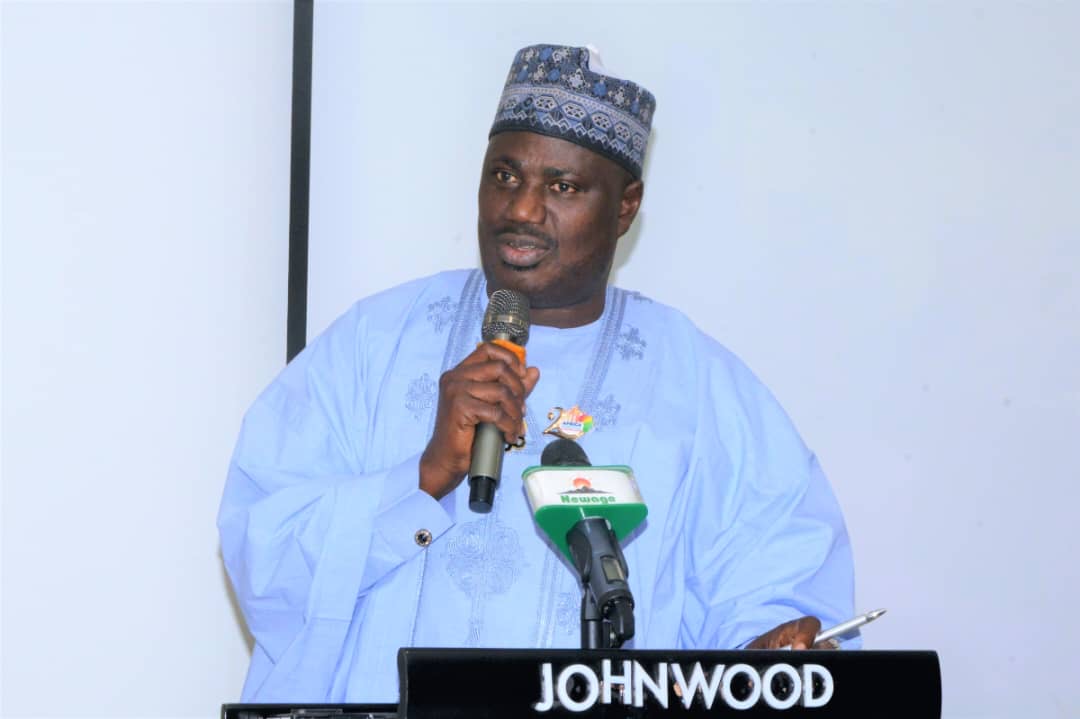
Declaring open a three-day National Consultation Stakeholders’ Workshop in Abuja, the Minister of State for Agriculture and Food Security, Senator Aliyu Sabi Abdullahi, said the consultation comes at a critical time as the country grapples with food security challenges, rising input costs and increasing climate-related disruptions.
According to him, Nigeria’s food system faces mounting pressure from population growth, escalating production costs and more frequent climate shocks.
READ ALSO: Nigeria Moves to Tackle Marine Pollution with Landmark Policy
“Nigeria’s food system faces significant challenges. The population is increasing, input costs are escalating, and climate-related disruptions are becoming more frequent. Central to these issues is our soil,” he said.
Abdullahi stressed that healthy soil remains fundamental to reducing food prices and strengthening the resilience of farms against droughts and floods.
“Healthy soil is key to lowering food prices and making our farms more resilient to droughts and floods. Without intentional measures, the advancements we achieve in seeds, mechanisation and financing will be compromised,” he added.
The Minister said the workshop would focus on validating policy actions that are practical for farmers to implement, aligning the responsibilities of federal, state and local governments in land and soil governance, and integrating soil health into climate adaptation strategies under the Agro-Climatic Resilience in Semi-Arid Landscapes (ACReSAL) project.
He explained that healthy soils rich in organic matter retain moisture during dry spells and reduce run-off during periods of heavy rainfall, thereby improving agricultural productivity and climate resilience.
Abdullahi also said the policy would create opportunities for private-sector investment in soil restoration through incentives for soil testing, organic fertilisers, and digital advisory services to ensure sustainability beyond government funding.
He noted that data generated from the Nigeria Soil Information System (NiSIS) and the Nigeria Farmers Soil Health Scheme (NFSHS) would enable personalised recommendations on soil pH, organic matter and fertiliser application for farmers at local government and ward levels.
The Minister further disclosed that fertiliser subsidies would be linked to soil health data to ensure government interventions are targeted and effective.
He urged farmers to adopt sustainable practices such as cover cropping, crop rotation, organic inputs and minimum tillage to preserve soil health and improve productivity.
Abdullahi also called on state governments to integrate soil health into agricultural development plans, while urging researchers, development partners and the private sector to support implementation through innovation, investment and capacity building.
“This policy must be applicable across all regions of Nigeria. It will be ineffective if it remains merely a document in Abuja,” he stressed.
Highlighting ongoing government efforts, the Minister cited the rollout of NiSIS, integration of NFSHS into the ECOWAS Regional Fertiliser Hub, collaboration with the Bill & Melinda Gates Foundation and the deployment of modern soil laboratory equipment to 15 states.
He reaffirmed the Federal Government’s commitment to strengthening soil testing nationwide and collaborating with the Federal Ministries of Environment and Water Resources on land restoration initiatives under ACReSAL.
“The soil does not deceive. When we nurture it, it sustains us. Conversely, when we mistreat it, it hits back with diminished yields, flooding and poverty,” Abdullahi stated.
In his welcome address, the Permanent Secretary in the Ministry, Dr Marcus Olaniyi Ogunbiyi, described healthy soils as the foundation of sustainable agriculture.
“Healthy soils are the bedrock of sustainable agriculture. They support crop productivity, regulate water, store carbon, conserve biodiversity and sustain millions of farming families,” he said.
Ogunbiyi noted that participants would undertake a comprehensive clause-by-clause review of the draft policy and validate its strategic pillars, including protection, restoration, governance, financing and data management.
He said the consultation would also define the complementary roles of the Federal Government, state governments, local government councils, development partners and other stakeholders, while developing a practical roadmap for policy approval, implementation and domestication across the federation.
The Permanent Secretary urged participants to remain focused on developing a practical and nationally owned framework capable of restoring soil health, enhancing agricultural productivity and strengthening food security.
Representatives of ACReSAL, OCP Africa, IFDC, AGRA, Sasakawa Africa Association, FAO, IFAD, the World Bank, NiMet, farmers’ associations, women and youth groups, academia and the private sector participated in the workshop.