New Zealand has confirmed its first case of the deadly H5N1 bird flu after a migratory brown skua found on a beach near Wellington tested positive, Biosecurity Minister Andrew Hoggard announced on Wednesday.
The detection follows the virus’s arrival in Australia last month, making New Zealand the latest country affected by the highly pathogenic strain. Since 2021, H5N1 has spread widely among wild birds and mammals, killing millions of animals while infecting poultry, dairy farms and some farmworkers.
Despite the discovery, Hoggard said there was no evidence the virus was spreading among wild birds or poultry in New Zealand.
“There is no evidence of any mass mortality in wildlife or transmission between wild birds in New Zealand. There has been no detection in poultry,” Hoggard said in a statement.
He noted New Zealand could experience a pattern similar to Australia, where 14 confirmed or presumed H5 bird flu cases had been recorded as of Wednesday.
READ ALSO: India records first human death from bird flu
Authorities have spent months preparing for the virus by working with the poultry industry to strengthen biosecurity measures and response plans.
“We’re going to be doing more surveillance, more testing, but by and large it’s carrying on with the same work with the industry we’ve been doing so far,” Hoggard said at a press conference.
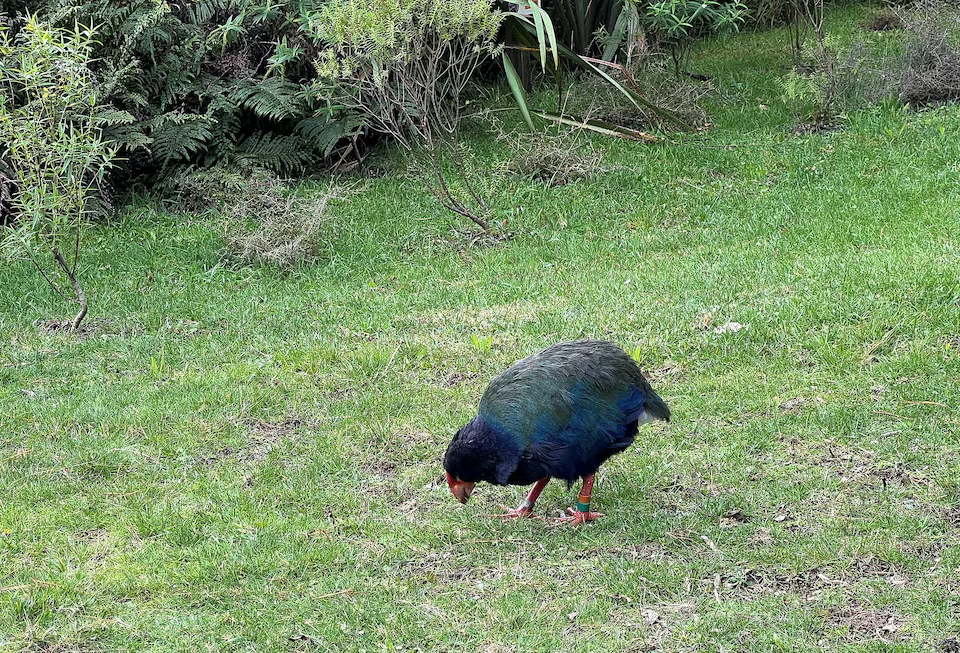
Experts are particularly concerned about New Zealand’s unique birdlife, much of which evolved without land mammals. Many native species are flightless, nest on the ground and are already threatened by habitat loss and introduced predators, making them especially vulnerable if the virus spreads.
To help protect endangered wildlife, health officials have begun vaccinating 300 breeding birds from five of the country’s rarest species, including the flightless takahe and kakapo. Hoggard said vaccine trials last year showed no adverse side effects, although its effectiveness against H5N1 remains uncertain because the birds had not been exposed to the virus.
Massey University wildlife health professor Brett Gartrell warned the outbreak could have devastating consequences for New Zealand’s biodiversity.
“We are incredibly worried about New Zealand’s biodiversity because our birds have never had to deal with anything like this before,” Gartrell said.
“If it spreads quickly in New Zealand, we could be in trouble,” he said.