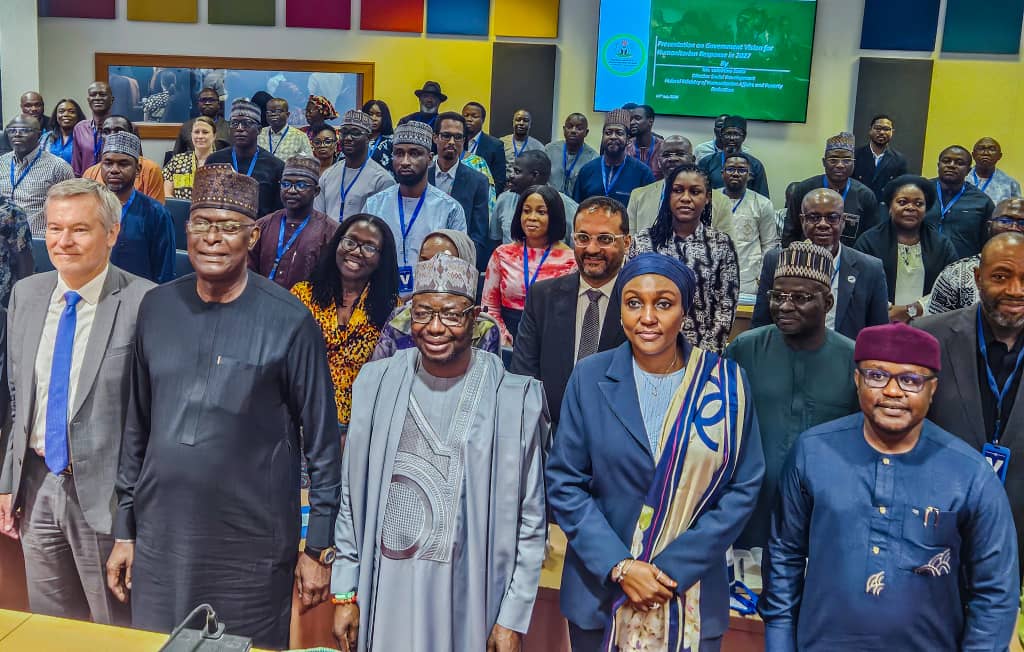
The Nigerian Government in collaboration with humanitarian stakeholders have convened to seek a way for Nigeria to assume leadership and financial responsibility in the humanitarian space.
Minister of Humanitarian Affairs and Poverty Reduction Dr. Bernard Doro while declaring the workshop open said the move became necessary given the changing global humanitarian landscape which necessitated the humanitarian transition process.
READ ALSO:Nigeria, Sant’Egidio Deepen Peacebuilding Cooperation
He said the two-day transition workshop will also demonstrate Nigeria’s growing capacity to finance and coordinate humanitarian action in line with international standards and national priorities.
According to him, it is not just an administrative handover of coordination functions from the United Nations to Government; it is the operationalisation of a Nigerian-owned system, built to outlast the natural rise and fall of donor cycles.
“This transition should not be viewed as the withdrawal of international support, but rather as the natural progression towards a government-led coordination system that reflects Nigeria’s constitutional responsibility to protect its citizens while benefiting from continued technical partnership with the United Nations”.
Dr. Doro further noted that the Ministry will continue to provide strategic leadership in coordinating humanitarian preparedness, response and recovery efforts across the country, while ensuring that humanitarian principles continue to guide every intervention.
He emphasised that, a central pillar of this new reality is domestic resource mobilization anchored in accountability, inclusiveness, transparency, evidence-based planning and effective coordination.
“We can no longer coordinate humanitarian action as though international financing will fill every gap. Government at federal and state level must therefore increase its own budgetary commitment to humanitarian response and social protection, and we must work together to unlock innovative, sustainable domestic financing mechanisms, including the National Social Registry and NASSP Scale-Up structures under OHOPRS, private sector partnerships, and diaspora and philanthropic contributions, so that our response system is not hostage to external funding cycles”.
The Minister, therefore called on development partners to support the initiative not only with resources, but with the technical expertise to build the domestic financing structures.
The Director General, National Emergency Management Agency, NEMA, Mrs Zubaida Umar reaffirmed the Agency’s commitment to supporting the transition in line with its statutory mandate of coordinating disaster management and humanitarian response across the country.
She described the workshop as a timely platform for developing a joint action plan that will strengthen a nationally led, sustainable and people-centred humanitarian system in Nigeria.
According to her, the humanitarian transition aligns with NEMA’s statutory mandate and reaffirmed the Agency’s commitment to providing strategic leadership in disaster management through effective coordination, anticipatory action, strengthened preparedness, reliable data, sustainable partnerships and collaboration across all levels of government.
“The workshop has provided opportunity for stakeholders to jointly develop practical strategies for strengthening federal and state institutions, improving coordination mechanisms, enhancing preparedness and ensuring that humanitarian interventions remain accountable, inclusive and responsive to the needs of vulnerable populations”.
Also speaking, the United Nations Resident Coordinator in Nigeria, Dr. Mohamed Malik Fall, assured participants that the humanitarian transition does not signify the withdrawal of the United Nations from Nigeria.
He said it represents a strategic transformation aimed at enabling Nigerian institutions to take greater leadership in humanitarian interventions, while the United Nations system continues to provide technical expertise, capacity building and other critical support.
The workshop brought together representatives of Federal and State Government institutions, United Nations agencies, development partners, civil society organisations and other key stakeholders to deliberate on strategies for strengthening nationally led humanitarian action and ensuring a smooth, coordinated transition towards sustainable and locally driven humanitarian response in Nigeria.