
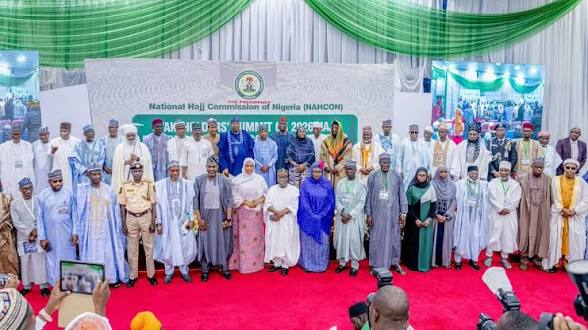
The National Hajj Commission of Nigeria (NAHCON) has unveiled a comprehensive reform agenda aimed at improving the 2027 Hajj, with a focus on pilgrims’ welfare, accountability, and the digitalisation of operations.
The commission announced the plan on Wednesday at the Stakeholders’ Summit on the 2026 Hajj Review and NAHCON Reform Agenda in Abuja.
The summit, themed “Repositioning Nigeria’s Hajj Industry as a Model of Service Excellence,” brought together government officials, traditional rulers, scholars, state pilgrims’ boards, and private operators to review the 2026 exercise and outline plans for 2027.
NAHCON Chairman and Chief Executive, Ambassador Ismail Abba Yusuf, said the 2026 Hajj recorded improvements in airlift coordination, visa processing, medical services, and stakeholder engagement.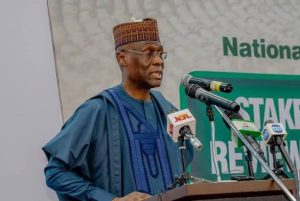
ALSO READ: FCT Minister Rallies Support for Comprehensive NAHCON Reforms
He, however, acknowledged lapses in medical screening, catering, and accommodation that affected some pilgrims.
“The 2026 Hajj achieved tremendous milestones like orderly airlift, improved visa processing, better medical services and closer coordination with stakeholders. But we must also confront the failures exposed, from medical screening circumvention to lapses in catering and accommodation,” Yusuf said.
He said the commission would no longer tolerate poor service delivery from providers.
“Let every service provider, both foreign and local, take heed. The era in which contractual failures carried no consequences is over. Pilgrims must receive relief for every poor service rendered. Performance will henceforth determine patronage,” he stated.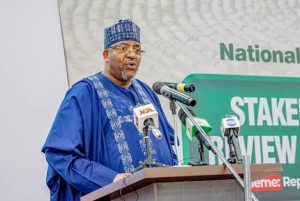
Yusuf also stressed the need for Nigeria to align with Saudi Arabia’s Vision 2030, which has fully digitised Hajj operations, to remain competitive.
“We must jettison our analogue habits and improvised planning or risk being priced out and pushed to the margins. Nigeria cannot afford to be a spectator to this transformation,” he warned.
He added that preparations for the 2027 Hajj had begun, noting that Saudi authorities require all registrations to be completed by September 2026.
“We must plan—not in 2027,” he said.
The Sultan of Sokoto, Muhammadu Sa’ad Abubakar III, represented by the Emir of Dutse, Muhammad Hameem Nuhu Sanusi, commended NAHCON’s transparency and called for stricter supervision of contractors.
He described Hajj administration as a sacred responsibility that requires diligence and sincerity.
In his keynote address, former JAMB Registrar, Professor Is-haq Oloyede, advocated a restructuring of Nigeria’s Hajj management system.
He recommended that NAHCON focus on regulation, standard-setting, and compliance monitoring, while leaving operational duties to licensed private operators and state pilgrims’ welfare boards.
Participants at the summit called for greater transparency, stricter oversight, improved professionalism, and wider use of technology to reposition Nigeria’s Hajj industry.

