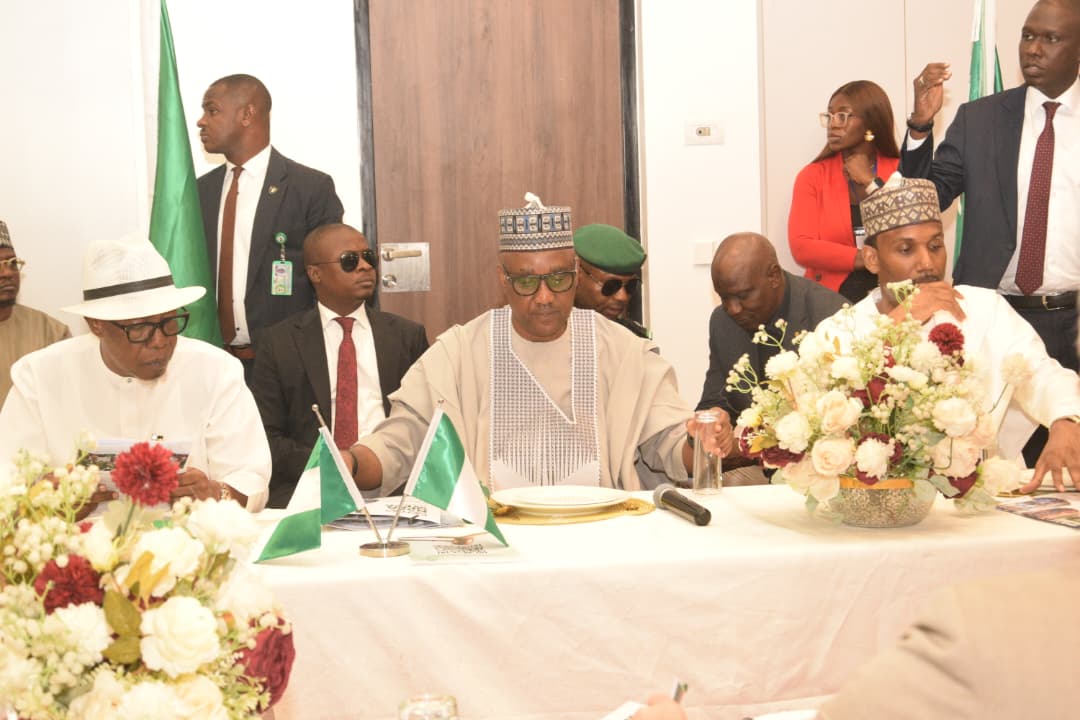
The Speaker of the House of Representatives, Abbas Tajudeen, has pledged that the National Assembly will repeal obsolete laws hindering business growth as part of its legislative agenda to improve Nigeria’s competitiveness, attract investment and accelerate economic transformation.
Speaker Abbas said that the House would also guarantee greater regulatory certainty, reduce the cost of doing business, expand access to finance and strengthen oversight of public institutions implementing economic reforms.
He made the commitments at the Legislative Business Breakfast Meeting held as part of activities marking the 2026 National Assembly Open Week, in Abuja.
Declaring the House’s determination to make Nigeria’s economy more competitive, Abbas made five commitments;
“First, on regulatory clarity and legislative predictability, we commit that laws affecting business will be stable, transparent, and made with your input, so that no investor is ever ambushed by a rule they could not foresee.
“Second, on the cost of doing business, we will build on the tax reforms to harmonise levies across all tiers of government, so that one enterprise is not taxed to exhaustion by federal, state and local authorities at the same time.
“Third, on access to finance, we will strengthen, through law and through oversight, the institutions that lend to the real economy, and press for financing that actually reaches the small and medium enterprises that employ most of our people.
“Fourth, on competitiveness, we will repeal the obsolete laws that frustrate enterprise, and legislate to support local manufacturing, agriculture, and our readiness for the continental market.
“And fifth, on delivery, we will use our oversight not to harass the private sector, but to hold public agencies to account for implementing these reforms faithfully and courteously.”
The Speaker said “the commitments followed extensive engagement with business leaders and reflected the House’s determination to respond to concerns raised by the organised private sector.”
He explained that he deliberately chose to speak after other participants because Parliament must first understand the challenges confronting businesses before making laws.
Speaker Abbas began his address by affirming that President Bola Ahmed Tinubu’s economic reforms were designed to empower businesses and stimulate private sector-led growth.
He said; “The reforms of President Bola Ahmed Tinubu were not undertaken for the benefit of government. They were undertaken for you. Governments do not create wealth. They create the conditions in which wealth can be created, and it is you, the entrepreneurs, the manufacturers, the farmers, the traders and the investors of Nigeria, who turn those conditions into factories, into harvests, into exports and into jobs.
“The President has made it plain that his agenda is private-sector-led. That places you not at the margins of the Renewed Hope Agenda, but at its very centre. And a Parliament that understands this will measure its own success by one test above all, whether the laws it makes help you to invest, to grow and to employ.”
The Speaker acknowledged the economic pressures facing businesses, saying manufacturers and investors had drawn attention to soaring borrowing costs, declining credit to industry, foreign exchange challenges, rising production costs, unstable electricity supply, multiple taxation, port inefficiencies, insecurity and policy uncertainty.
He said; “Let me first prove to you that we heard you clearly. You told us, as the Manufacturers Association of Nigeria has told the whole nation, that borrowing has become prohibitively expensive, and that credit to the manufacturing sector actually shrank by close to two trillion Naira last year, starving industry of the money it needs to grow.
“You told us that the liberalisation of the exchange rate, though necessary, has raised the cost of the machinery and raw materials you must import. You spoke of power that remains unstable despite higher tariffs, forcing factory after factory to run on costly diesel. You spoke of multiple taxation, of too many agencies collecting too many levies at the same gate despite the recently passed tax laws. And you spoke of the difficulty of clearing goods through our ports, the drag of insecurity on farms and supply lines, and the uncertainty that comes when policy shifts without warning.
“These are not idle complaints. They are the honest testimony of the men and women who create our jobs, and this House has heard them.”
While admitting that recent reforms had imposed hardship on Nigerians, Speaker Abbas maintained that they were necessary to restore macroeconomic stability after years of delayed decisions.
The Speaker insisted that Parliament had not merely endorsed the reforms but had driven them through legislation.
He said; “And let me be clear that this Parliament has not been a bystander to reform. We have been its legislative engine, and our record is one of concrete action.”
Speaker Abbas said that India’s government also consults chambers of industry before finalising the national budget.
“The lesson is the same everywhere: that an economy grows faster when those who legislate and those who invest remain in continuous conversation, and Nigeria will learn it too,” he said.
The Chairman of the House of Representatives Committee on Commerce, Mr. Ahmed Munir, reaffirmed the commitment of the 10th National Assembly to aligning its legislative agenda with the needs of the organised private sector to improve Nigeria’s business environment and drive economic growth.
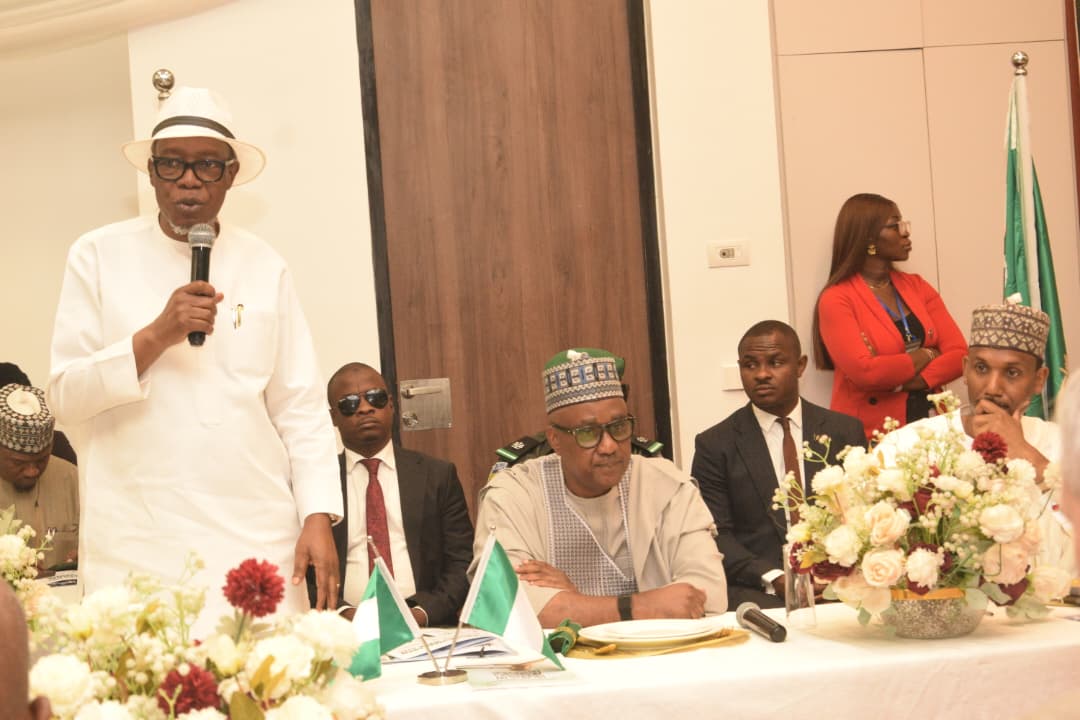
Munir said the legislature was working to ensure that commercial laws reflected the realities of the marketplace and supported investment, competitiveness and innovation.
He said the National Assembly could no longer make laws in isolation and was committed to working closely with businesses to eliminate bureaucratic bottlenecks, improve regulatory certainty and create a more predictable environment for enterprises to thrive.
According to him, “the House, under the leadership of Speaker Abbas Tajudeen, is focusing on reforms aimed at streamlining regulations, strengthening infrastructure, supporting the digital economy and harmonising tax legislation to reduce the burden of multiple taxation on businesses.”
Munir said lawmakers were also counting on active collaboration from the private sector, urging business leaders to provide industry insights and constructive feedback that would help shape more effective legislation.
The Minister of Industry, Trade and Investment, Dr. Jumoke Oduwole underscored the importance of legislative support in driving Nigeria’s economic reforms, saying “the quality of laws enacted by the National Assembly will significantly influence investment, enterprise growth and the country’s global competitiveness.”
She said a strong legislative framework was critical to providing certainty for investors, strengthening policy implementation and supporting long-term private sector growth.
She noted that the Nigerian Government’s drive to promote investment, industrialisation, export expansion and private sector development depended largely on effective collaboration between the executive and the legislature.
She highlighted key reforms undertaken by the Tinubu administration, including foreign exchange reforms, fuel subsidy removal, the enactment of the Investments and Securities Act, and new fiscal and tax policies.
She described them as measures aimed at creating a more conducive regulatory environment for investors, improving productivity and generating employment.
The Minister also appealed for the continued support of the 10th National Assembly in advancing critical economic legislation, including bills on intellectual property, the domestication of the African Continental Free Trade Area (AfCFTA), and other reforms designed to strengthen Nigeria’s investment and business climate.
She reaffirmed the Ministry ‘s commitment to working with the legislature to deepen investor confidence and support sustainable economic growth.
The Executive Director of the Policy and Legal Advocacy Centre (PLAC), Mr. Clement Nwankwo, identified insecurity and excessive taxation by government agencies as two of the biggest obstacles to investment and business growth in Nigeria.
He commended the leadership of the House of Representatives for sustaining the National Assembly Open Week initiative and creating a platform for dialogue between lawmakers and the private sector.
He stressed the need for greater attention to issues affecting the business environment, noting that recent inflation figures released by the National Bureau of Statistics showed that food inflation remained particularly high.
According to him, “worsening insecurity has prevented many farmers from cultivating their land and disrupted the movement of agricultural produce across the country, with adverse consequences for businesses and the wider economy.”
He called on the House Committees on Commerce and other relevant committees to strengthen their oversight of government agencies to ensure that businesses were not subjected to excessive taxation and other practices that hinder growth.
He urged the National Assembly to use its oversight powers to protect businesses, promote a more investment-friendly environment and support enterprise development as part of efforts to accelerate economic growth.