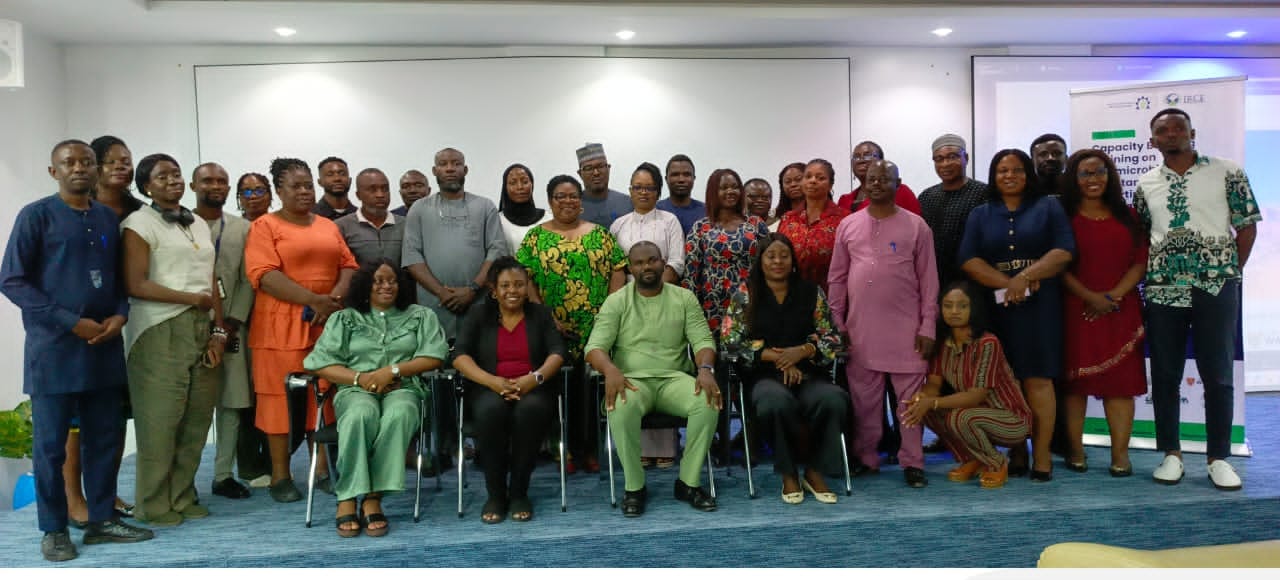
The Institute of Human Virology Nigeria (IHVN), in collaboration with the Nigeria AMR Media Alliance (NAMA), is training journalists to strengthen reporting on antimicrobial resistance (AMR), as experts warn that the growing threat is undermining modern medicine and requires urgent national attention.
The two-day training, organised under the Antimicrobial Stewardship Education Programme (A-STEP), aims to improve evidence-based reporting on AMR while promoting responsible antibiotic use.
The A-STEP project is a pre- and post-intervention study evaluating educational strategies to reduce over-the-counter dispensing of antibiotics by pharmacists and patent medicine vendors in Nigeria.
Representing the Chief Executive Officer of IHVN, Dr Patrick Dakum, the organisation’s Senior Manager, Research and Evaluation, Dr Nnekelu Eriobu, says journalists are indispensable in translating scientific evidence into information that Nigerians can understand and act upon.
She notes that although researchers continue to generate evidence on antimicrobial resistance, its impact depends largely on effective public communication.
“You can have all the science, but if journalists are not carrying the information and getting the message to the public, then the science is almost useless. We are depending on the media to make AMR visible and ensure people understand the danger,” she says.
Dr Eriobu explains that antimicrobial resistance occurs when medicines used to treat bacterial, viral or parasitic infections no longer work effectively, leaving patients sicker despite taking medication.
She warns that the crisis has serious health, social and economic consequences, including prolonged illness, higher healthcare costs, reduced productivity and preventable deaths.
She stresses that addressing AMR requires coordinated action involving healthcare professionals, pharmacists, patent medicine vendors, veterinarians, farmers, policymakers, environmental stakeholders and the media.
“AMR is a multifaceted problem. It is not just about pharmacists or doctors; everyone has a role to play, and one of the biggest challenges is lack of knowledge. That is why journalists are important in taking this message to communities in a language people understand,” she adds.
Also speaking, Assistant Professor and Global Health Researcher at the University of Waterloo, Canada, Dr Charity Oga-Omenka, who is the Principal Investigator of the A-STEP project, says available studies indicate that nearly 70 per cent of Nigerians obtain antibiotics without a prescription, a practice that significantly contributes to antimicrobial resistance.
She explains that the project focuses on improving antimicrobial stewardship among private healthcare providers, including pharmacists, patent medicine vendors and physicians, while encouraging the public to seek proper diagnosis before taking antibiotics.
“The public must understand that demanding antibiotics without a prescription is doing more harm than good. Proper diagnosis, including laboratory tests where necessary, helps doctors prescribe the right medicine and reduces the development of resistance,” she says.
Dr Oga-Omenka describes AMR as a collective challenge that cannot be solved by individuals alone, likening it to climate change. She calls for stricter enforcement of regulations restricting over-the-counter sales of antibiotics, greater public education and stronger collaboration among government agencies, healthcare providers, researchers and the media.
She also cautions against the indiscriminate use of unregulated traditional medicines whose ingredients and dosages have not been scientifically standardised.
Chair of the Nigeria AMR Media Alliance, Ojoma Akor, says journalists have a critical responsibility to combat antimicrobial resistance through accurate, evidence-based reporting that informs the public, influences policy and promotes responsible antibiotic use.
She commends IHVN and the A-STEP project for investing in journalists’ capacity to strengthen AMR reporting.
“We are not merely observers of events. We are agenda setters, advocates for accountability and trusted sources of information. Through accurate, evidence-based and compelling reporting, we can help shape public understanding and promote responsible antibiotic use,” she says.
Akor urges journalists to become champions of responsible AMR reporting, stressing that sustained collaboration between the media, researchers and policymakers will help elevate antimicrobial resistance to a national priority and safeguard the effectiveness of life-saving medicines for future generations.
In her virtual presentation, Associate Professor and Canada Research Chair in Communicable Disease Epidemiology, Dr Giorgia Sulis, Co-Principal Investigator of the A-STEP project, describes antimicrobial resistance as one of the greatest threats to modern medicine, warning that growing resistance to antibiotics is already compromising the treatment of common infections and putting life-saving medical procedures at risk.
“AMR is not a problem of the future; it is with us now. When antibiotics stop working, many of the medical advances we take for granted, from safe surgery to cancer treatment and intensive care, become increasingly risky,” she says.
Dr Sulis explains that while antibiotics remain life-saving medicines, their misuse and overuse create conditions that allow resistant bacteria to survive and spread.
She stresses that antimicrobial resistance is a One Health issue involving humans, animals and the environment, requiring coordinated action across all sectors.
She notes that nearly five million deaths were associated with bacterial antimicrobial resistance globally in 2019, while Nigeria recorded an estimated 227,000 AMR-associated deaths in 2021.
The training brings together journalists from across Nigeria to strengthen evidence-based reporting on antimicrobial resistance, reinforcing the media’s role in supporting national efforts to promote responsible antimicrobial use and preserve the effectiveness of life-saving medicines.