

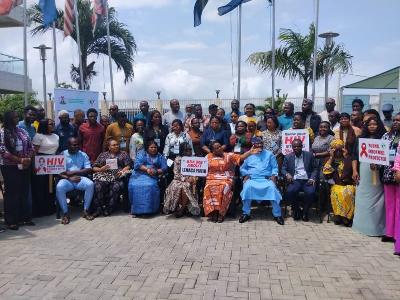
The National Agency for the Control of AIDS, NACA, and the World Health Organisation, WHO, have called for increased adoption of HIV prevention options, including long-acting injectable PrEP, oral medication, condoms and abstinence, as Nigeria intensifies efforts to reduce new infections.
The call was made in Lagos during a two-day training for media personnel on Pre-Exposure Prophylaxis (PrEP) and Post-Exposure Prophylaxis (PEP).
The NACA Director-General, Dr. Temitope Ilori, said; “the agency was piloting Lenacapavir (LEN-PrEP), a six-month injectable HIV prevention option, alongside existing methods to provide Nigerians with wider choices beyond daily medication.”
Ilori said Nigeria recorded about 45,000 new HIV infections in 2025, noting that although infections had declined over the years, recent trends showed a worrying increase, particularly among young people.
She expressed concern over declining condom use among young Nigerians and encouraged sexually active people to practise safer sex, know their HIV status and make use of available prevention services.
Nigeria currently offers daily oral PrEP and injectable cabotegravir (CAB-LA), administered every two months, while LEN-PrEP, which is administered every six months, is being piloted in selected states.
Ilori said; “LEN-PrEP was currently available free of charge at designated health facilities in the pilot locations, with government working alongside development and international partners to expand access.”
She noted that HIV had no cure but could be prevented and effectively managed, adding that people living with HIV have access to free antiretroviral medicines at government health facilities.
The NACA chief also highlighted the U=U message, meaning “Undetectable Equals Untransmittable,” and encouraged people living with HIV who are receiving treatment to remain consistent with their medication to prevent transmission.
She said Nigeria’s HIV prevalence was estimated at 1.3 per cent, indicating that more than 98 per cent of the population was not living with the virus.
The PrEP Focal Person at the National AIDS, Viral Hepatitis and STIs Control Programme (NASCP), Mr. Olakunle Taiwo, stressed the need for accurate and accessible information on HIV prevention.
Taiwo said; “effective communication was essential to correcting misconceptions about PrEP and helping people make informed decisions based on their lifestyle, health needs and individual circumstances.”
He warned that misinformation could discourage people from accessing HIV prevention services, urging journalists and social media practitioners to ensure that information shared with the public was factual, clear and evidence-based.
The WHO Technical Officer for HIV, Viral Hepatitis and STI, Dr. Oluwafunke Odunlade, explained that PrEP prevents HIV from establishing infection when used correctly.
She emphasised that individuals must test negative for HIV before starting PrEP, noting that the medicines were designed for prevention and not treatment.
Odunlade said; “healthcare providers should assess individuals and recommend the most appropriate PrEP option for them.”
She said that oral PrEP could also benefit people living with Hepatitis B, while injectable options could be useful for people who may find it difficult to adhere to daily medication.
The WHO official advocated integrated healthcare services that allow patients to receive screening for HIV, Hepatitis B, tuberculosis and malaria during the same visit, saying such an approach could improve efficiency and convenience.
The Director of Health and Social Care at the National Orientation Agency (NOA), Dr. Ayiola Abiodun-Olufemi, reaffirmed the agency’s commitment to supporting NACA in taking HIV prevention messages to communities across the country.
Abiodun-Olufemi said NOA would work with the media and other stakeholders to ensure that information on PrEP reached people in urban centres, rural communities and underserved areas.

Representing implementing partners, Mr. Taofeek Adeleye, Senior Prevention Programme Manager at AHF Nigeria, said partners were using a combination of HIV prevention strategies to improve awareness and access to PrEP, particularly among young people.
He said interventions included school health clubs, community engagement, condom promotion, PrEP and PEP, as well as public education on HIV transmission and prevention.
Adeleye stated that combining different prevention approaches was necessary because individuals have different circumstances and levels of risk, adding that no single method could meet everyone’s prevention needs.
He also called for stronger government support, community participation and partnerships to create an enabling environment for Nigerians to access appropriate HIV prevention services.
The stakeholders urged journalists and social media practitioners to use their platforms to dispel myths, tackle stigma and discrimination, and promote accurate information on HIV transmission, testing, treatment and prevention.
They stressed that sustained collaboration among government agencies, development partners, healthcare providers, communities and the media would be essential to consolidating Nigeria’s progress towards HIV epidemic control.

