For years, Kwara’s sporting fortunes appeared to be on a steady decline. Facilities deteriorated, competitions disappeared and the state increasingly relied on athletes from outside to represent it at major events.
Today, the picture is markedly different.
Seven years after the administration of Governor AbdulRahman AbdulRazaq came into office, Kwara is witnessing a renewed push to reposition sports through investment in infrastructure, grassroots development, athlete welfare and competitive sports.
The transformation has not happened overnight. It began in 2019, when the administration inherited a sports sector facing years of neglect.
Kwara United, one of the state’s prominent football clubs, was struggling for relevance, while the George Agbazika Innih Stadium Complex in Ilorin had fallen into disrepair. The state had also gone 15 years without organising its Sports Festival.
For a state with a strong sporting tradition, the situation presented a major challenge.
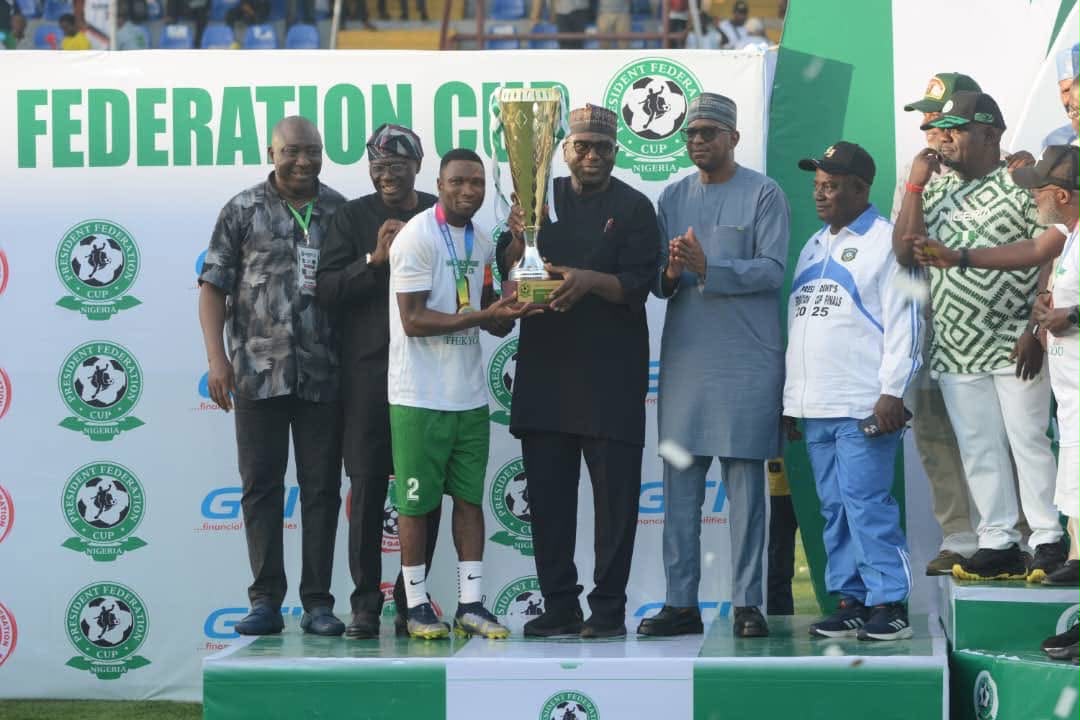
One of the clearest signs of change came on 28 June 2025, when Kwara United defeated Abakaliki FC on penalties to win the President Federation Cup.
The victory was historic. It was the club’s first major national trophy since the creation of Kwara State in 1967 and earned the team a place in the CAF Confederation Cup.
The achievement also brought renewed attention to the welfare of the players. The state government rewarded each senior player with ₦5 million and a plot of land in the Kwara Smart City.
But perhaps less visible, though equally significant, was the settlement of ₦201 million in outstanding sign-on fees owed to Kwara United players and coaches. The debt had reportedly remained unresolved for 16 years.
For the administration, the emphasis has not been limited to winning trophies. There has also been an attempt to rebuild the pipeline through which young athletes can emerge.
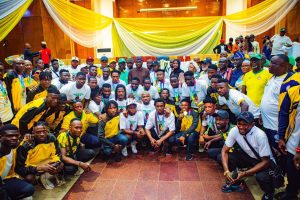
In 2019, Kwara United received a new coaster bus. The following year, the government secured federal support to reposition the long-dormant Kwara Football Academy as a national talent development centre.
The Kwara School Football Challenge was introduced in 2021 to bring secondary school students into organised football, while a partnership with Sportico Africa provided a scouting platform for young talents who might otherwise escape the attention of national selectors.
Another major intervention was the revival of the Kwara State Sports Festival in 2020 after a 15-year break.
Athletes from the state’s 16 local government areas competed in about 26 sporting disciplines, providing an avenue for young people to compete at a grassroots level and for the state to identify potential talents.
The thinking was straightforward: rather than continually importing athletes, Kwara needed to develop its own.
That philosophy has also influenced investment in sporting facilities.
The Pa Gabriel Ladipo Indoor Sports Hall, which had reportedly remained neglected for decades, was rehabilitated and handed over to the Kwara State Sports Commission in March 2026.
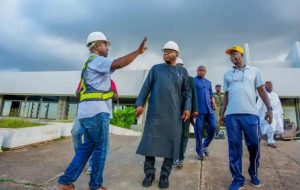
The facility now accommodates sports including basketball, badminton, judo and taekwondo.
The wider sports complex has also witnessed improvements, including an eight-wing squash facility, an Olympic-sized swimming pool and a modern table tennis arena. The main stadium bowl has been named after the late Nigerian football icon Rashidi Yekini, while other sections honour sports personalities associated with Kwara.
Outside Ilorin, the rehabilitation programme has extended to the Offa and Lafiagi stadiums, while mini-stadium projects are being developed in Patigi, Tsaragi, Kosobosu, Baruten and Omu-Aran.
The upgraded facilities have also enabled Kwara to host national sporting events, including the 40th Federal Public Service Games, bringing athletes and sporting activities from across the country to the state.
Institutional reform has accompanied the physical development.
The Kwara State Sports Commission was established in 2021 to provide a more structured framework for sports administration. The state’s subsequent performances at national competitions suggest some progress.
Kwara moved from 23rd position at the 2018 National Sports Festival to 15th at Edo 2020. At the 2024 Games in Abeokuta, the state won six gold, 11 silver and 12 bronze medals.
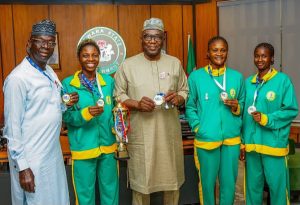
The state has also introduced financial and material incentives for successful athletes, including cash rewards for medal winners and vehicles for some outstanding performers.
The renewed attention to sports has extended beyond football.
Forty-five Kwara athletes participated in the inaugural Para National Sports Festival in 2022 across nine disciplines. Chess has been earmarked for a dedicated facility, while school sports have also received renewed attention, with sports kits distributed to public schools.
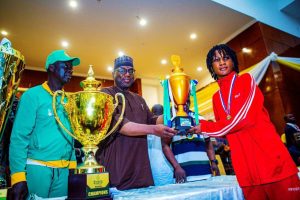
The latest test of the state’s sporting revival is the eighth Kwara State Sports Festival, being held this August.
About 700 athletes from the state’s 16 local government areas are expected to participate, providing another platform for talent identification and development.
For Kwara, the significance of the festival goes beyond medals.
It represents an attempt to reconnect grassroots participation with elite competition — from schools and local communities to state and national championships and ultimately to the international stage.
Whether the momentum can be sustained beyond the current administration will depend on continued investment, effective sports management and the ability to maintain the structures now being put in place.
For now, however, Kwara’s sporting landscape is considerably different from what it was seven years ago — and the state’s latest generation of athletes is beginning to provide evidence of that change.