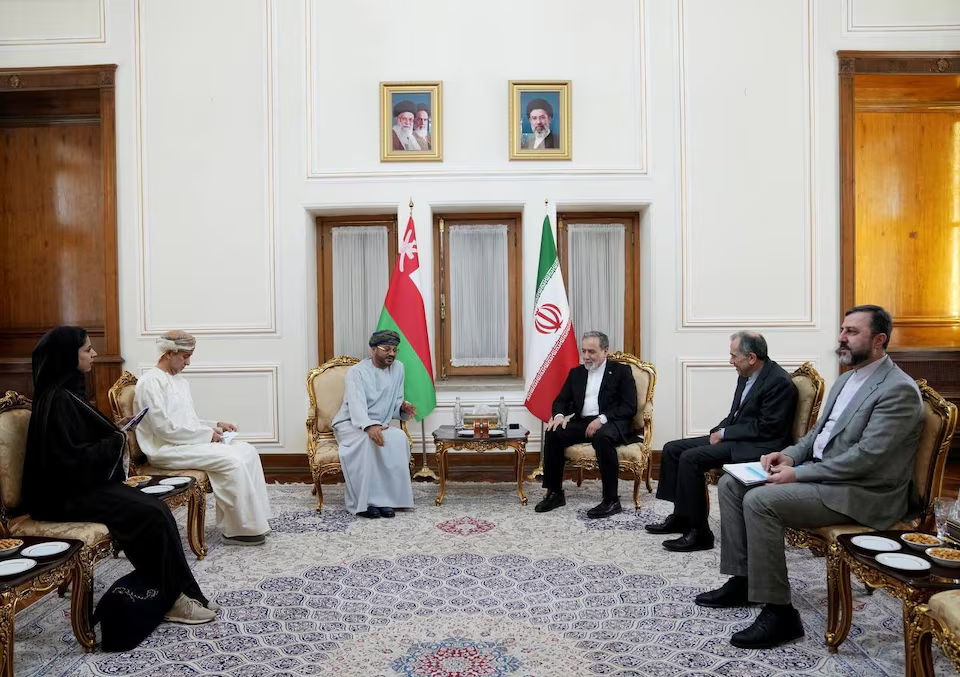
Iran and Oman have reached an agreement on their respective shares of the Strait of Hormuz and revenues generated from the strategic waterway, amid continued tensions over its reopening.
The agreement follows weeks of intermittent negotiations between the two countries over the management of traffic through the strait, which handled about one-fifth of global oil and liquefied natural gas shipments before the conflict began in February.
Most shipping through the strategic waterway has since been disrupted, contributing to higher global energy prices as Iran and the United States seek to assert control over the channel and have imposed separate blockades.
Islamic Revolutionary Guard Corps spokesman Hossein Mohebbi said the agreement covered the respective maritime shares of Iran and Oman as well as revenues generated from the strait.
READ ALSO: Strait of Hormuz to Stay Closed – Iran
“The Strait of Hormuz belongs to Iran and the country of Oman… We have been in negotiations with Oman for about a month, and we have reached results that are acceptable to both sides,” Mohebbi said in comments published by Iranian state media.
“In these negotiations, agreements have been reached regarding the share of each country in the waters of the Strait and the share of Iran and Oman in its revenues,” he added.
The IRGC, however, accused the United States of obstructing the Iran-Oman negotiations and warned that the agreement would not lead to the reopening of the waterway unless Washington accepted Tehran’s conditions.
“If the United States stops obstructing and returns to the agreement, we can open the Strait of Hormuz within the framework of the agreement reached… If the United States does not accept our conditions, the Strait of Hormuz will not be opened under any circumstances,” Mohebbi said.
Although active hostilities between the United States and Iran have largely eased in recent weeks, diplomatic efforts towards a peace agreement have stalled, while continued attacks on vessels have kept passage through the Strait of Hormuz risky.
Iran on Sunday announced a blacklist of 45 ships, apparently targeting ship-to-ship transfers used by Gulf energy producers to circumvent the Iranian blockade.
Sources indicated that some companies were planning to stop using vessels on the list.
The United States also threatened earlier this week to penalise countries that continue doing business with Iran as part of efforts to increase pressure on Tehran’s economy, although Washington said the penalties would not be imposed immediately.
The latest sanctions did not include Chinese financial institutions suspected of facilitating Iranian oil exports, despite the impact of the U.S. blockade on those shipments.
Iran condemned Washington’s efforts to isolate its economy as an act of “gross lawlessness” and expressed confidence that many countries would resist the pressure campaign.
Oil prices fell for a third consecutive day, dropping by more than two dollars a barrel to a two-week low, following indications of renewed efforts to find a mediated solution to the conflict that began on February 28 with U.S. and Israeli strikes on Iran.
Reuters