The National Centre for the Control of Small Arms and Light Weapons (NCCSALW) has assured the public that 3,199 assorted automatic weapons intercepted at Atinkan Island by the agency under the Office of the National Security Adviser (NSA) remain secured while investigations continue into the criminal network behind their importation.
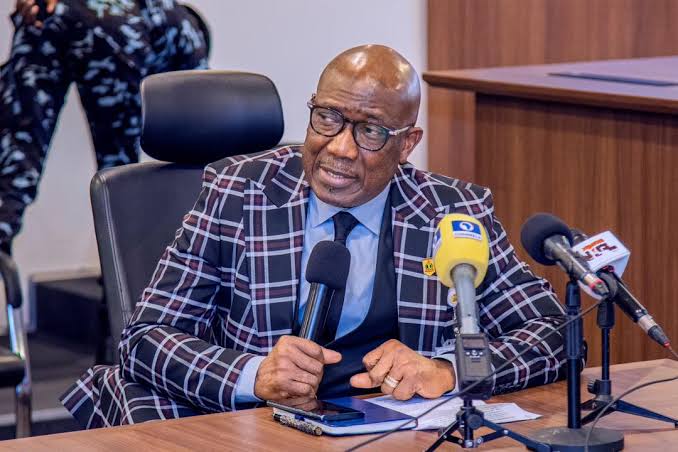
The Director General of the NCCSALW, retired Deputy Inspector General of Police Johnson Kokumo, gave the clarification at a quarterly Joint Security Press Briefing by the spokespersons of the security, defence, and law enforcement agencies in Abuja on Tuesday, while responding to questions over a viral video alleging that persons whose weapons were intercepted at the port had been sent by the National Security Adviser to smuggle arms into Nigeria.
DIG Kokumo described the allegation as false and said he personally witnessed the handover of the intercepted weapons to the Centre alongside the Comptroller General of the Nigeria Customs Service.
According to the NCCSALW Director General, the 3,199 automatic weapons intercepted by the Nigeria Customs Service were formally handed over to the Centre and are currently kept in a secured armoury.
Two suspects arrested in connection with the illegal importation remain in custody, while investigations are continuing to establish the wider criminal network and identify possible international partners involved in the movement of the weapons.
DIG Kokumo also used the briefing to distinguish between Nigeria’s traditional artisanal firearms production and the increasingly sophisticated illicit weapons now appearing in the country.
He acknowledged that local hunters have historically relied on locally manufactured firearms for activities such as hunting small game. The Centre, however, is now encountering weapons whose sophistication can make some locally manufactured automatic firearms difficult to distinguish from imported weapons.
This has led the NCCSALW to intensify efforts against what the Director General described as criminal manufacturers of illicit weapons.
The Centre’s approach therefore combines enforcement against criminal firearms production with the potential conversion of useful indigenous technical capacity into lawful national capability.
DIG Kokumo also defended Nigeria’s policy of destroying recovered illicit weapons, explaining that the practice is consistent with international obligations to which Nigeria is a signatory, including frameworks developed through the United Nations, African Union and ECOWAS.
He said destruction is intended to prevent weapons recovered from criminal or conflict environments from being diverted back into circulation and ultimately reaching non-state actors who could use them against civilians.
The NCCSALW’s position comes as the Centre reports continued progress in recovering, destroying and prosecuting cases involving illicit small arms and light weapons.
In the past three months, the Centre also received 5,050 illicit, unserviceable, decommissioned and obsolete assorted automatic weapons retrieved from the Nigeria Police Force, while the Nigeria Customs Service handed over 399 JOJEF automatic guns intercepted in the course of its operations. Other recoveries were received from the National Drug Law Enforcement Agency and the National Intelligence Agency.
The enforcement effort is being matched by prosecution, with the Centre working alongside the Office of the Federal Director of Public Prosecution and the Office of the Attorney-General of the Federation and Minister of Justice on cases involving trafficking, illegal importation and unlawful manufacture of firearms and ammunition.
A separate prosecution concerns criminal elements allegedly involved in the unlawful manufacture of firearms and ammunition in Minna, Niger State.
The Centre is also strengthening controls over weapons legally held by security institutions. Between May 18 and June 19, it conducted training on Physical Security and Stockpile Management for personnel of government arms-bearing security agencies, aimed at reducing the risk of diversion of licit weapons into criminal circulation.
With the 2027 general election approaching, the Centre has additionally sought to clarify the distinction between the Federal Government’s National Forest Guards initiative and an organisation it identified as the Nigeria Forest Security Service.
The Centre is also preparing to update Nigeria’s national understanding of the illicit arms threat. On August 20, it convened a baseline workshop involving international disarmament bodies, arms-bearing security agencies and relevant government institutions as the first step towards reviewing the 2016 National Arms Survey.