

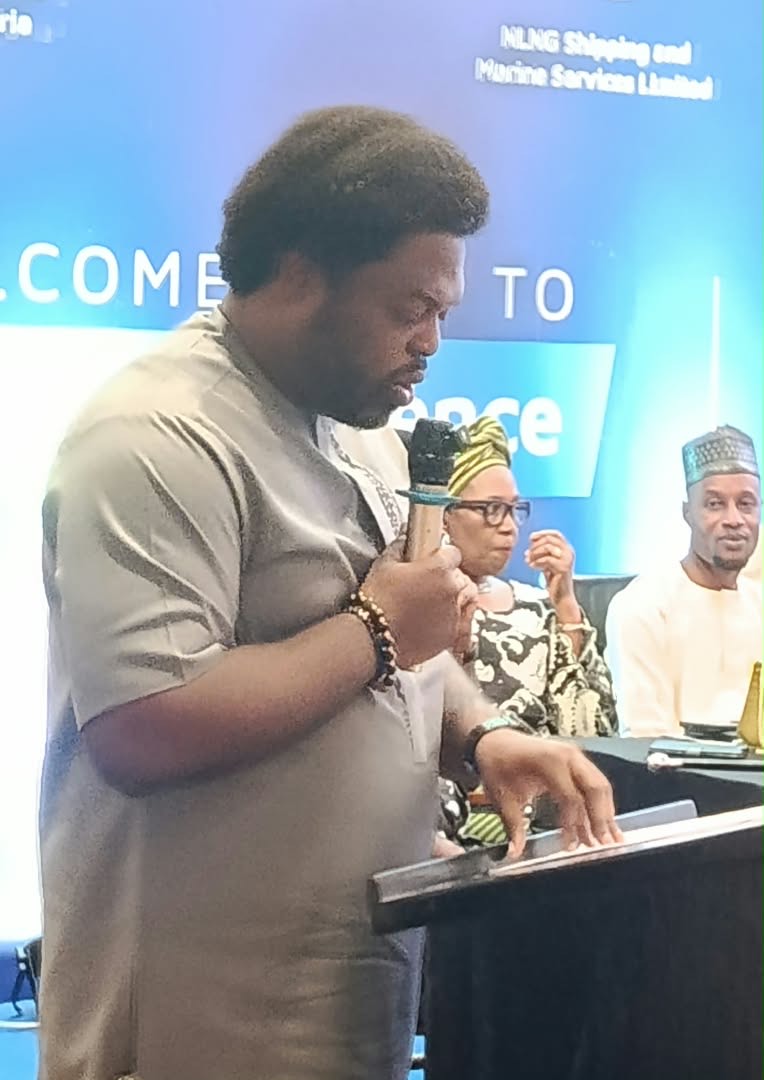
The Nigerian Maritime Services Limited (NSML) Maritime Centre of Excellence says 272 cadets have completed sea-time training under its Seafarers Continuous Development Programme, as Nigeria seeks to strengthen indigenous manpower in the maritime sector.
The Manager of the Maritime Centre of Excellence, Bonny, Dr Effiong Ekanem-Attah, disclosed this while representing the Managing Director of NSML, Mr Abdulkadir Ahmed, at the 2026 Maritime Training Summit and Awards.
The Summit with the ”The Power of Innovation in a Future-Ready Maritime Training Agenda,” was organised by the Association of Maritime Journalists of Nigeria.
Ekanem-Attah said the programme was designed to address limited access to quality sea-time training required by aspiring seafarers to obtain professional certification.
He said; “54 other cadets were currently in college or onboard vessels working towards obtaining their Certificates of Competency.”
Ahmed explained that the programme formed part of efforts to develop indigenous maritime manpower and increase the participation of Nigerians in the shipping industry.
He said NSML employed more than 700 qualified Nigerian seafarers as of August 2026.
The Maritime Centre of Excellence on Bonny Island provides maritime research, consultancy and training services and has accreditations and approvals from several international and Nigerian maritime organisations.
The centre has bridge and engine-room simulators as well as Dynamic Positioning systems for practical training in vessel operations, navigation, emergency response and decision-making.
Ahmed said; “the company, with support from the Nigerian Content Development and Monitoring Board, planned to expand the centre’s facilities and introduce additional courses to enable more international maritime certifications to be obtained locally.”
He said the move would support the development of Nigeria as a maritime training hub for West Africa and help retain training expenditure within the continent.
According to NSML, addressing Africa’s maritime manpower needs requires a combination of technology, practical sea-time training, certification, mentorship, research and industry collaboration.
The company said its training programme was aimed at producing maritime professionals capable of meeting international standards while increasing indigenous participation in the shipping industry.


 Maritime Centre of Excellence announcing that 272 cadets have completed sea-time training under its Seafarers Continuous Development Programme (SCDP).)