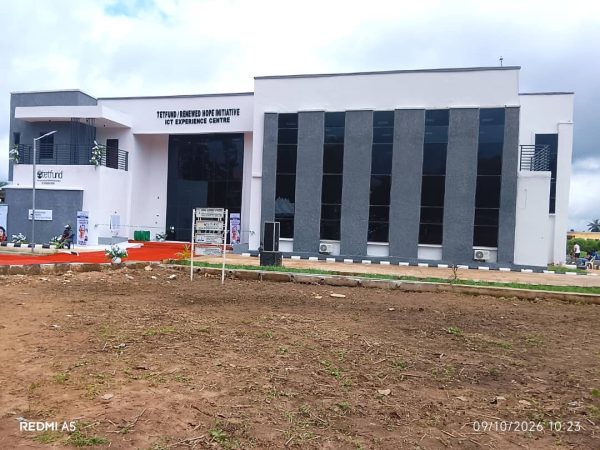
Nigeria’s First Lady, Senator Oluremi Tinubu, has commissioned the N1 billion South-East Zonal ICT Experience Centre at the Federal Polytechnic, Oko, Anambra State.
The centre, established as part of the Renewed Hope Initiative, is designed to provide students, lecturers and other beneficiaries with practical skills in digital literacy, software development, data science, multimedia, online learning, entrepreneurship and emerging technologies, including Artificial Intelligence (AI).
The centre is one of six ICT Experience Centres being established across Nigeria’s six geopolitical zones through a N6 billion intervention by the Tertiary Education Trust Fund (TETFund) to strengthen digital skills and human capital development in tertiary institutions.
READ ALSO: First Lady Commissions N1bn ICT Centre In Cross RiverTertiary Education Trust Fund (TETFund)
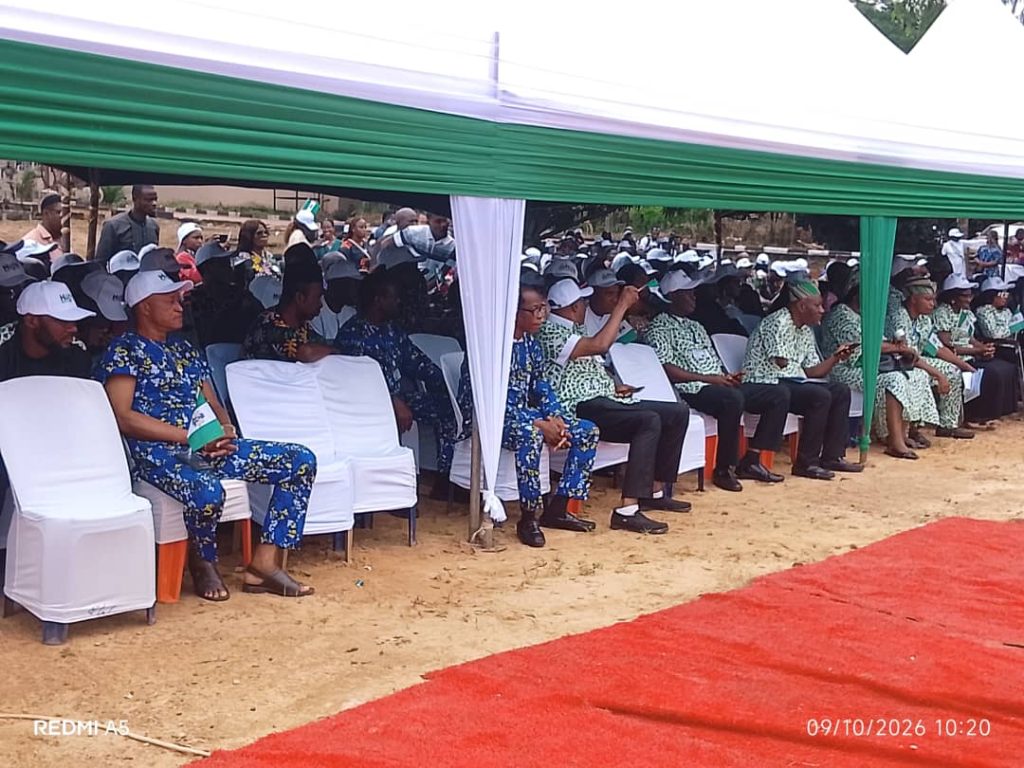
At the commissioning on Thursday, Mrs Tinubu, in a statement by TETFund, expressed appreciation for the opportunity to participate in the project and prayed for its continued impact on the institution and generations of beneficiaries.
“I’m really honoured to do this and I pray that God continues to bless this community and generations ongoing. Amen,” she said.
The First Lady described the facility as an important investment in the future of Nigerian youths.
The commissioning was held alongside the launch of the National Community Food Bank Programme for the South-East Zone.
Earlier, the Chairman of the TETFund Board of Trustees, Mr Aminu Masari, said the Oko facility was part of a nationwide strategic intervention approved by the Board to establish an ICT Experience Centre in each of the six geopolitical zones.
Masari said TETFund had approved N1 billion for each zone, bringing the total investment to N6 billion, with selected universities, polytechnics and colleges of education serving as beneficiaries.
He said the centres would equip students and lecturers with critical digital skills in areas such as Artificial Intelligence, cybersecurity, robotics and software development.
“The Board of Trustees recognised the need to align Nigeria’s education system with emerging global technological and industry standards,” Masari said.
He said the initiative would enhance graduate employability, foster innovation and position Nigeria to participate more effectively in the global technology-driven economy.
Masari urged the management of the Federal Polytechnic, Oko, to ensure proper maintenance and security of the facility and regularly upgrade its equipment in line with technological advancements.
The Executive Secretary of TETFund, Mr Sonny Echono, described the centre as an investment in people, possibilities and the future of Nigeria.
He said expanding access to digital learning, innovation and technology would enable young Nigerians to transform ideas into solutions, skills into livelihoods and aspirations into opportunities.
Echono said the intervention aligned with TETFund’s commitment to human capital development and the emergence of a knowledge-driven economy.
He said that TETFund remained committed to ensuring that the ICT Experience Centres achieved their intended purpose of expanding digital inclusion, nurturing talent and opening new opportunities for Nigerian youths.
The Rector of the Federal Polytechnic, Oko, Dr Chioma Awuzie, described the commissioning as a landmark achievement for the institution and an affirmation of the First Lady’s commitment to empowering Nigerian youths through education, technology and innovation.
Awuzie said the ICT Experience Centre, alongside the Chemical Engineering Building and Students’ Examination Centre, demonstrated the impact of TETFund’s interventions in the polytechnic.
She said the centre would provide students with access to digital skills, employment and entrepreneurship opportunities, educational resources, technology, innovation and networking.
According to her, the facility would also bridge the gap between theoretical knowledge and hands-on technological experience, equipping students with competencies required to thrive in the 21st-century economy.
“The world is increasingly driven by technology, artificial intelligence, digital skills, innovation and knowledge. Our youths must therefore be equipped not merely to participate, but to excel and lead,” she said.