The National Agency for the Prohibition of Trafficking in Persons (NAPTIP) is strengthening collaboration with relevant stakeholders to improve Nigeria’s capacity to prevent and combat human trafficking.
The agency is holding a two-day workshop under the PROTECT project, Preventing Human Trafficking through Operational Strengthening, Skills Transfer, Partner Exchange and Cross-Border Cooperation.
The initiative is supported by Expertise France and funded by the French Development Agency.
Read Also:
NAPTIP Wants Stronger Justice System to Tackle Human Trafficking
Human trafficking remains a major threat to human rights, with perpetrators exploiting vulnerable people and increasingly adopting complex methods that enable them to operate across borders.
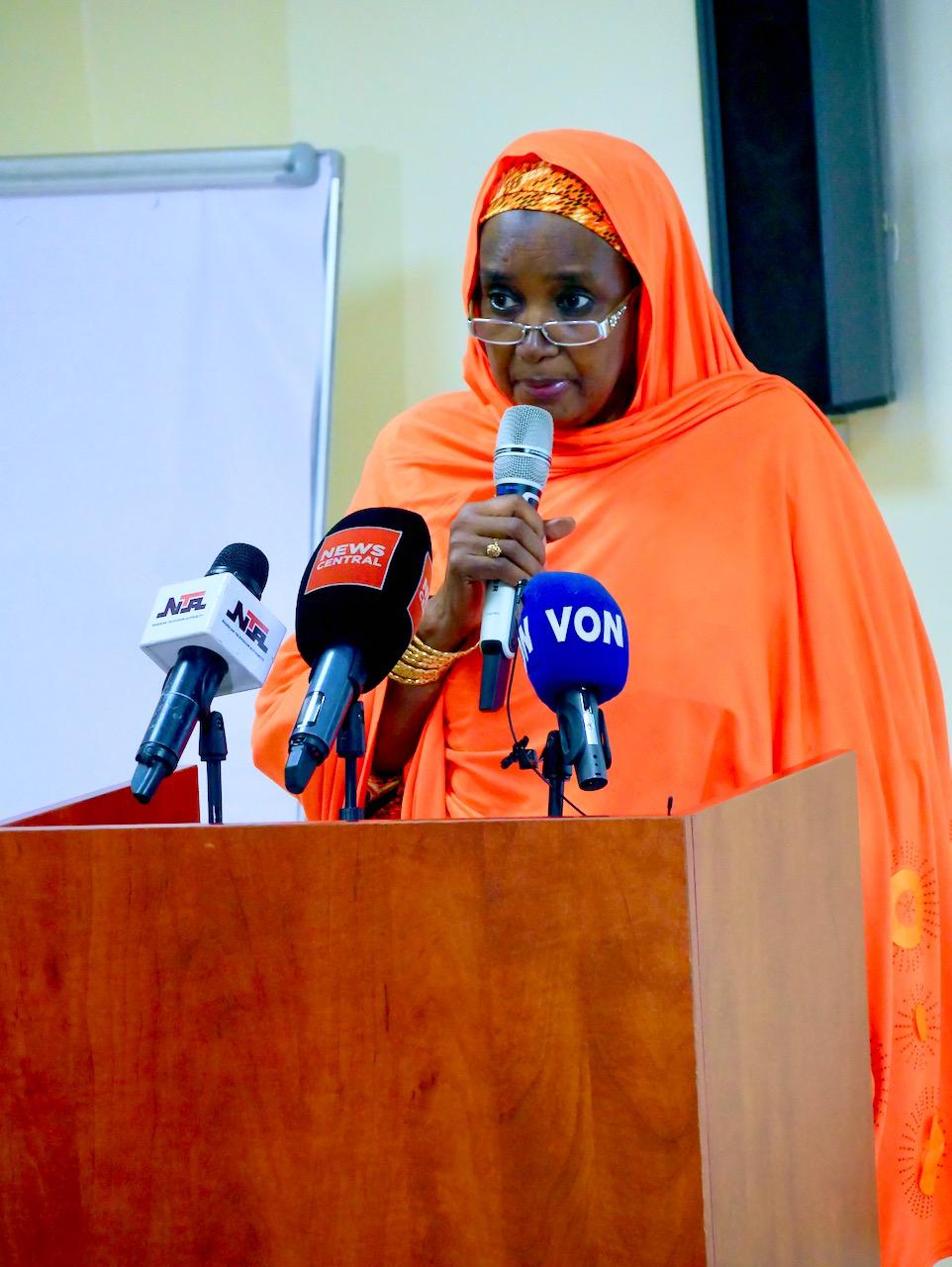
Speaking at the workshop, the Director-General of NAPTIP, Binta Adamu-Bello, reaffirmed the Federal Government’s commitment to preventing and eliminating trafficking in persons.
“The government of Nigeria, through NAPTIP and other relevant institutions, has continued to demonstrate its commitment to the prevention and elimination of trafficking in persons.
“Since its establishment, NAPTIP has remained at the forefront of Nigeria’s national response to human trafficking.”
Adamu-Bello said the agency continues to implement its statutory mandate through five key areas.
“The agency has continued to discharge its statutory mandate through the five broad pillars of policy, prevention, protection, prosecution, and partnership.”
The Director of Research and Programme Development at NAPTIP, Josiah Emerole, described trafficking in persons as a grave violation of human rights, stressing the need for stronger coordination to address its transnational nature.
“Trafficking in persons remains one of the most grievous violations of human rights in our time. It preys on the vulnerable, exploits the desperate, and knows no borders.”
Emerole said Nigeria’s position as a country of origin, transit and destination for trafficking victims places a responsibility on the country to confront the crime through sustained collaboration.
“Nigeria, as a country of origin, transit, and destination for victims of trafficking, has a responsibility and, indeed, a moral obligation to confront this scourge with every tool at her disposal.”
He noted that Nigeria’s response since the establishment of NAPTIP in 2003 has involved cooperation with sister agencies, stakeholders and international partners, including Expertise France.
The workshop also provides an opportunity to review previous interventions and partnerships aimed at strengthening institutional and operational capacity in the fight against human trafficking.
The PROTECT Regional Project Manager of Expertise France, Modeste Krah, said the organisation’s current engagement builds on previous collaboration with NAPTIP and other national and regional stakeholders.
“From 2019 to 2024, Expertise France worked closely with NAPTIP and other national and regional stakeholders through the ALTP project, funded by the European Union and the French Ministry of Finance, to strengthen institutional and operational capacities in the fight against human trafficking and to promote cooperation across the Gulf of Guinea.”
The two-day workshop is expected to enable stakeholders to assess existing coordination mechanisms, identify gaps and strengthen strategies for a more effective response to trafficking in persons.
With trafficking networks continually adapting their methods and exploiting emerging vulnerabilities, stronger institutional capacity, victim protection, prosecution and cross-border cooperation remain critical to tackling the crime.
The engagement is also expected to reinforce partnerships between Nigerian institutions and regional and international organisations in the prevention and elimination of human trafficking.