The United Nations Development Programme (UNDP) Nigeria Resident Representative, Ms Elsie Attafuah, has called for sustained investment in institutions, livelihoods, infrastructure, and inclusive opportunities to address the structural conditions driving insecurity.
She said that the structural conditions would build lasting peace in Nigeria.
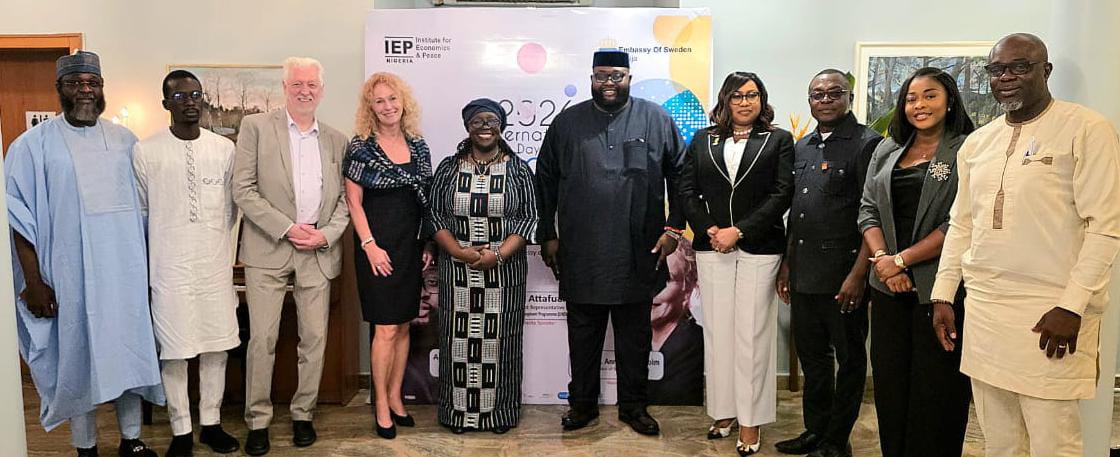
Attafuah made the call while delivering the keynote address at a high-level dialogue on “Investing in Peace in Nigeria,” organised by the Embassy of Sweden in collaboration with the Institute for Economics and Peace to commemorate the International Day of Peace.
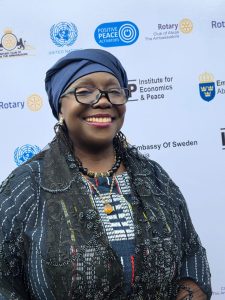
She said peacebuilding must go beyond managing insecurity to addressing conditions that allow conflict to persist, including limited economic opportunities, weak access to basic services, competition over land and resources, climate pressures and institutional gaps.
“Our collective responsibility now is to help turn that political commitment into implementation and to turn implementation into an investment proposition capable of changing the trajectory of millions of people,” she said.
The UNDP representative urged stakeholders to anticipate emerging risks, including competition around critical minerals, water scarcity and the disruptive effects of artificial intelligence, while strengthening women’s participation, youth leadership and democratic processes ahead of the 2027 elections.
READ ALSO: UNDP Urges Stronger Flood Preparedness, Response in Nigeria
She also called for attention to constitutional reforms, state police, disinformation and misinformation, stressing the need for stronger institutions and coordinated responses to insecurity.
Attafuah said investments should target functional schools and health systems, agriculture, productive value chains, youth and women’s livelihoods, roads, energy, water, connectivity, justice, accountable institutions and conflict-resolution mechanisms.
Building the Capacity
“Peace is built in classrooms and clinics, on farms and in markets, through jobs and enterprise, through justice and accountable institutions, through reliable energy and infrastructure, and through the confidence that citizens have in the future. Advocating for building the capacity of youth leadership to deal with disinformation and misinformation,” she said.
“Let us take seriously the opportunity before us, not simply to help manage fragility, but to invest with those who are leading, who are leading the transition from fragility to opportunity, because peace is not simply something we hope for. It is something we built and something we invest in every day,” she stated.
She stressed that women’s economic empowerment and participation in decision-making were central to peacebuilding.
“Investing in women’s economic empowerment, but also giving women’s opportunities at the table, where decisions are being made, becomes important,” she said.
Swedish Ambassador to Nigeria, Anna Westerholm, said lasting peace required stronger institutions, trust, social cohesion, human rights, and economic opportunity, as Sweden and Nigeria celebrated 65 years of diplomatic relations.
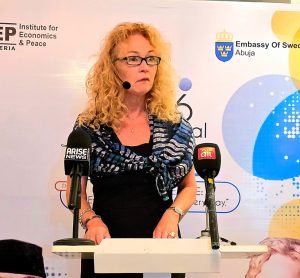
“Sustainable development, security, and peace are deeply interconnected. For Sweden, lasting peace is inseparable from democratic institutions, human rights, dialogue, and economic opportunity,” she emphasised.
Meaningful Participation
Westerholm said investing in peace means acting before conflict occurs, as peace is ultimately built locally and lasting peace could not be achieved without the meaningful participation of women.
“Women are not merely beneficiaries of peace efforts. Investing in peace means acting before conflict occurs, not merely responding once it erupts, and peace is ultimately built locally. It is built in communities, by individuals who resolve disputes, bridge divides, and prevent local tensions from escalating,” she stressed.
Institute for Economics and Peace Country Director, Mr Chijioke Roy-Stanley, said positive peace was measurable, buildable and investable, requiring deliberate action across eight pillars.
Roy-Stanley identified well-functioning government, a sound business environment, equitable distribution of resources, acceptance of the rights of others, good relations with neighbours, free flow of information, high levels of human capital and low levels of corruption as the eight pillars.
He called for sustained peaceful coexistence through the positive peace framework.