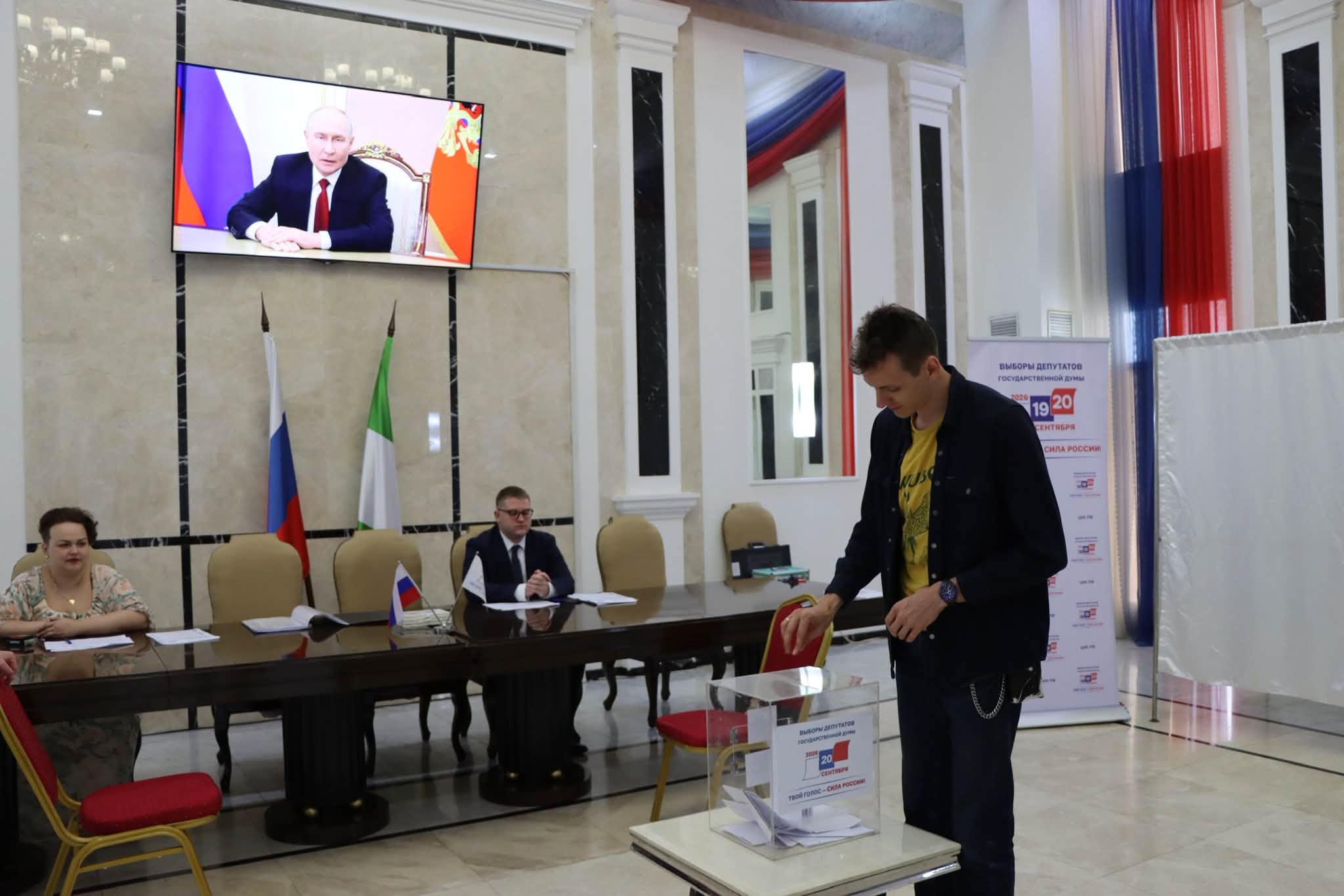
Russian citizens resident or temporarily staying in Nigeria have voted in the country’s capital in elections for deputies to the ninth State Duma of the Russian Federation.
Voting took place on Sunday, September 20, 2026, at polling station No. 8237, established at the Russian Embassy in Abuja, as part of Russia’s parliamentary elections.
The polling station, located at 1119 Constitution Avenue, Central Business District, Abuja, opened at 8:00 a.m. and was scheduled to remain open until 8:00 p.m., according to information released by the Russian Embassy in Nigeria.
The Embassy said Russian citizens residing or temporarily staying in Nigeria were eligible to participate in the voting.

Voters were required to present a valid Russian foreign passport to receive their ballot paper.
The election is being held to elect deputies to the State Duma, the lower house of Russia’s Federal Assembly.
Read Also: Parliamentary Election: Russia Reports Attacks on Voting Systems
The September 20 election was scheduled by a June 16, 2026 presidential decree.
First-time voters
The Russian Embassy in Abuja also shared updates from the polling station as voting progressed.
According to the Embassy, a commemorative souvenir was presented to the first voter, as well as to voters participating in an election for the first time.

The Embassy subsequently reported that voting at polling station No. 8237 was continuing during the day.
Diaspora voting
Voting by Russian citizens abroad forms part of the country’s wider parliamentary election process.
The Russian Foreign Ministry said Russian citizens living or temporarily staying outside the country could vote at polling stations established at Russian diplomatic missions.
The Ministry reported that 319 polling stations had been established in 152 countries, including 312 organised by heads of Russian diplomatic and consular missions and seven in Baikonur.
The 2026 election is the first Russian parliamentary election since the full-scale invasion of Ukraine in 2022.

International reporting has highlighted both participation by Russians abroad and controversy surrounding the political environment in which the election is being conducted.
The voting process in Abuja therefore provided Russian citizens in Nigeria an opportunity to participate in the election without travelling to Russia.