

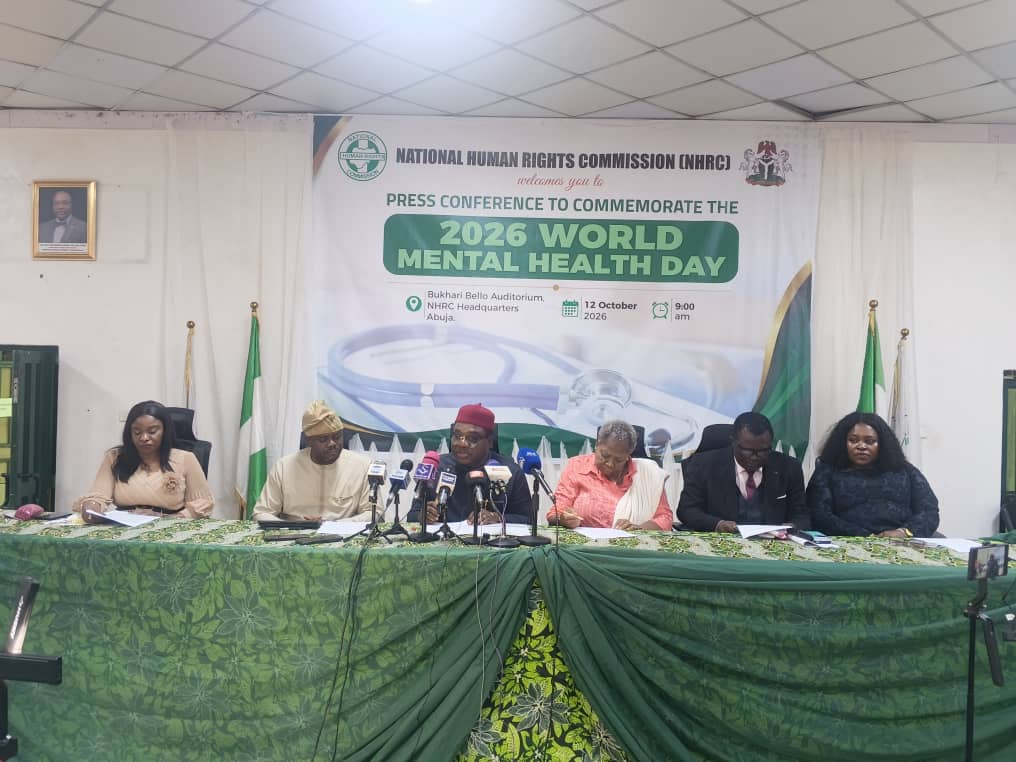
The Executive Secretary of the National Human Rights Commission (NHRC), Chief Tony Ojukwu, has urged the Nigerian government to prioritise mental health as a human rights and development issue.
He called for increased funding, affordable treatment, and stronger protection against discrimination and abuse.
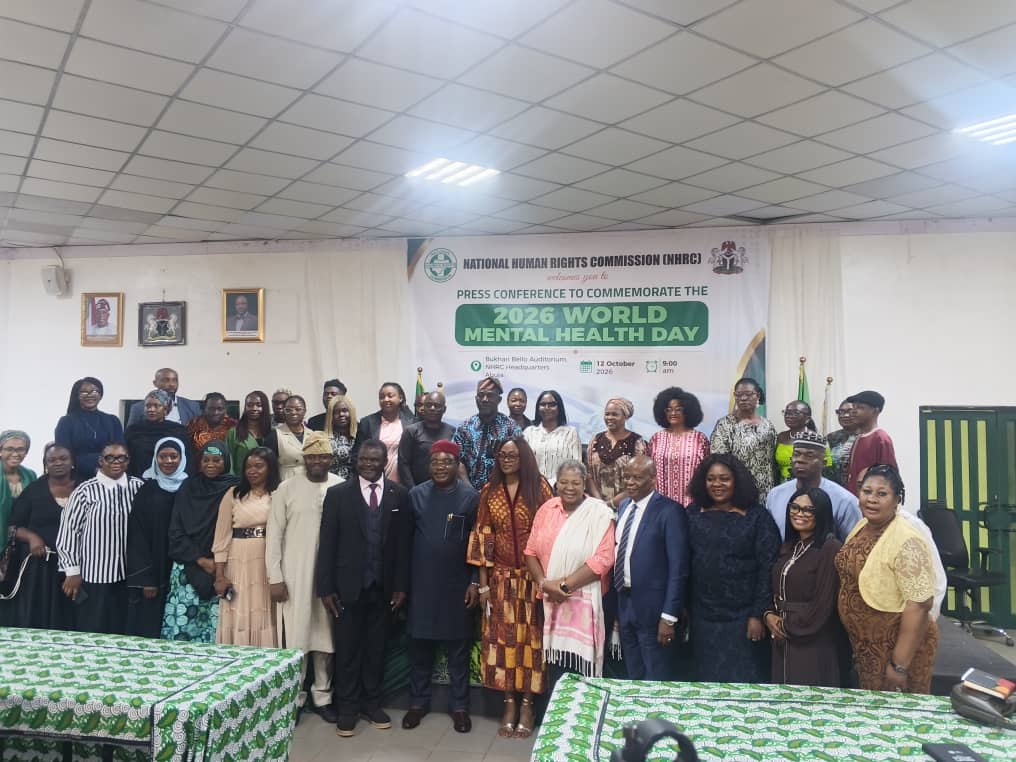
Ojukwu made the call during a press conference to commemorate the 2026 World Mental Health Day on 12 October.
He stressed that mental health goes beyond medical care and must be recognised as a fundamental human rights concern.
“A mental-health condition does not reduce a person’s worth, dignity or human rights,” he said.
Citing the World Health Organisation (WHO), Ojukwu noted that nearly one in seven people globally live with a mental disorder, while many who need care do not receive effective treatment.
He added that fewer than three per cent of Nigerians with mental-health conditions are covered by health insurance, leaving many families to bear the full cost of treatment.
He acknowledged Nigeria’s progress, including the National Mental Health Act 2021, which received presidential assent in December 2022, as well as the development of a National Mental Health Policy and a National Suicide Prevention Strategic Framework.
However, he called for their effective implementation to improve access to care and protect vulnerable people.
The NHRC Executive Secretary warned that people with mental-health conditions often face stigma, discrimination, neglect, violence, and exclusion from education, employment, and community life.
He stressed that mental-health services must be affordable and accessible, particularly through community-based facilities and primary healthcare centres.
ALSO READ: NHRC Seeks Human Rights Approach to Drug Abuse
Ojukwu said the Commission had established a Counselling Unit at its headquarters in Abuja to support people traumatised by human-rights violations and staff affected by distressing cases.
The NHRC has also trained investigation officers to recognise mental-health concerns and created a Vulnerable Group Department to strengthen protection for at-risk populations.
He disclosed that the Commission is collaborating with the Federal Ministry of Health and Social Welfare and other stakeholders to integrate human-rights principles into Nigeria’s proposed National Mental Health Strategic Plan for 2027–2032.
The NHRC has further participated in United Nations Office on Drugs and Crime training on drug prevention, treatment, rehabilitation, and the links between substance use and mental health.
In partnership with the Taipei Trade Office and civil-society organisations, the Commission has provided grants and free mental-health sessions to some indigent women affected by human-rights violations.
Ojukwu also cited interventions involving people subjected to solitary confinement in Kano State and the rescue of a child in the Federal Capital Territory, emphasising the need for professional care and family support rather than abuse or abandonment.
He urged the Federal Government to increase funding, expand health-insurance coverage, train more mental-health professionals, and strengthen safeguards against discrimination and degrading treatment.
He also called for greater psychosocial support for survivors of conflict, terrorism, gender-based violence, displacement, torture, and trafficking, while urging families, schools, workplaces, and communities to create supportive environments.
Ojukwu called on the media to report mental-health issues accurately and sensitively to reduce stigma and promote inclusion.
Reaffirming the Commission’s commitment to protecting vulnerable people and investigating violations, he said: “The time has come to move from sympathy to rights, from awareness to action, and from policy promises to real results.”
Also speaking, mental-health consultant Dr James Komolafe of SABA Resources Initiative Hub called for a shift from awareness campaigns to practical interventions, behavioural assessment, and professional support to address psychological distress and prevent violence in Nigeria.


, Chief Tony Ojukwu, has urged the Nigerian government to prioritise..)