


The Chairman of the Manufacturers Association of Nigeria (MAN), South-East Zone, and Chairman of the Board of Keystone Bank Limited, Lady Adaora Chukwudozie, has urged Nigeria to shift from responding to disasters after they occur to prioritising prevention and preparedness.
She warned that avoidable emergencies threaten lives, jobs, businesses and economic stability.
According to her media aide, Steve Onyebuchi, Chukwudozie said greater investment in preventive measures, resilient infrastructure and early-warning systems was essential to reducing the human and economic costs of disasters across Nigeria.
READ ALSO: RIMSON Calls For National Orientation In Disaster Prevention,Mitigation
She made the call while delivering the chairperson’s opening address at the 2026 International Day for Disaster Risk Reduction (IDDRR), organised by the Centre for Disaster Risk Management and Development Studies, University of Port Harcourt, in collaboration with the National Emergency Management Agency (NEMA).
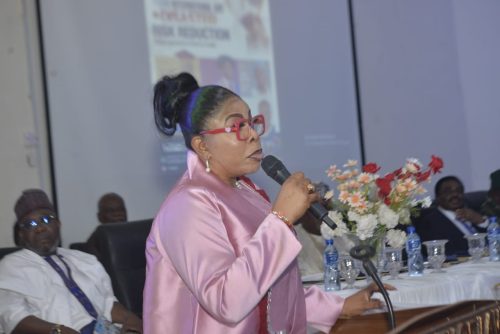
Speaking on the theme, “Resilience Starts at Home,” she said disaster preparedness required coordinated action by governments, businesses, households and communities, with risk reduction integrated into everyday decisions and development planning.
“Resilience requires investment. But disaster extracts a far greater price—by force, and often with interest,” she said, noting that the costs of disasters could extend well beyond immediate damage to property and infrastructure.
Drawing on her experience as MAN South-East chairman during the 2022 floods, Chukwudozie recalled the devastation at the Harbour Industrial Layout in Onitsha, Anambra State, where 19 manufacturing companies recorded approximately ₦11.48 billion in documented losses.
The losses involved machinery, raw materials, finished products and industrial buildings, while the wider impact included disrupted supply chains, threatened jobs and financial pressure on affected businesses.
“The true cost was not only in naira. It was in disrupted supply chains, anxious families, jobs at risk and businesses compelled to rebuild while still carrying financial obligations,” she said.
Chukwudozie warned that preparations made only after disaster strikes often come too late to prevent extensive damage, stressing the need for businesses and public institutions to identify risks and establish response plans in advance.
She urged governments at all levels to strengthen urban planning, drainage infrastructure, building standards, early-warning systems and regulatory enforcement, particularly in communities and commercial centres vulnerable to flooding and other hazards.
She also called on businesses to integrate risk assessments, workplace safety and business-continuity plans into their operations to protect workers, investments and supply chains.
Universities, she said, should expand research and professional training in disaster-risk management, while the media should communicate potential hazards before emergencies occur. Community leaders, she added, should promote preparedness and safer practices at the grassroots.
While commending NEMA and other emergency responders, Chukwudozie said relief efforts must be complemented by sustained investment in prevention.
“We must move from relief to resilience, from reaction to prevention, and from sharing blame after disaster to sharing responsibility before it,” she said.
She challenged participants to translate the discussions into practical action, including preparing family emergency plans, conducting workplace safety drills, clearing drainage channels and promoting disaster awareness in their communities.
In his keynote address, the National President of the Risk Managers Society of Nigeria (RIMSON), Dr Abbas G. Idriss, also called for a shift from disaster reaction to anticipation, citing climate-related hazards and other emerging risks.
“Our task, therefore, is to move from a culture of reaction to a culture of anticipation,” Idriss said, adding that sustainable development depended on integrating risk management into planning and decision-making across sectors.
He said RIMSON was committed to promoting risk-management awareness and strengthening collaboration between professional bodies and academic institutions to translate research into practical preparedness.
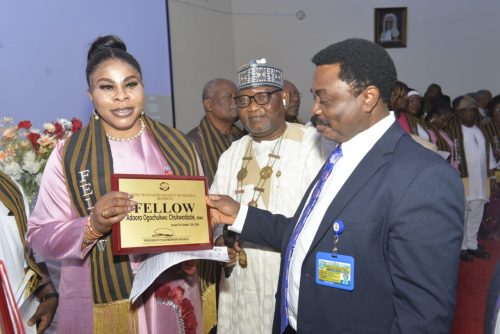
Addressing newly inducted Fellows and Associate Members of the society, Idriss urged them to uphold integrity, professionalism, visionary leadership and empathy, describing their induction as a responsibility to help build a safer and more resilient Nigeria.
“Let us go forth from here, not just as certificate holders, but as architects of a safer, more resilient Nigeria,” he said.
The event, held at the University of Port Harcourt, was attended by the university’s Vice-Chancellor, members of RIMSON’s governing board, academics from the Centre for Disaster Risk Management and Development Studies, and other stakeholders in disaster-risk reduction.


, South-East Zone, and Chairman of the Board of Keystone Bank Limited, Lady....)