The Nigerian Government is strengthening maternal and newborn healthcare through expanded access to primary healthcare services and health insurance coverage to reduce preventable deaths and protect families from the financial burden of medical treatment.
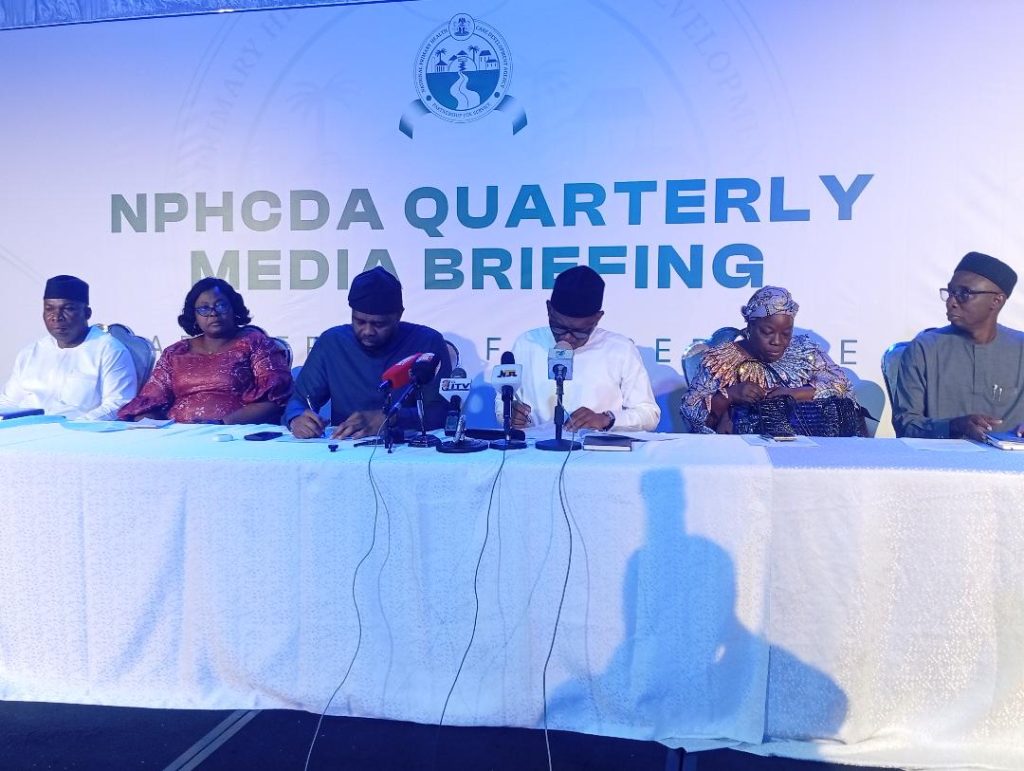
The Executive Director and Chief Executive Officer of the National Primary Health Care Development Agency (NPHCDA), Dr Muyi Aina, disclosed this at a joint quarterly media briefing involving the NPHCDA and the National Health Insurance Authority (NHIA) in Abuja.
Aina said more than 773,000 pregnant women had been linked to primary healthcare facilities under the Maternal and Newborn Mortality Reduction Initiative (MAMI), which supports women throughout pregnancy, childbirth and the immediate postnatal period.
READ ALSO: NHRC Urges Increased Funding for Mental Healthcare in Nigeria
“The programme was initially implemented in 172 local government areas across 33 states, with available data from 10 states showing that more than 773,000 pregnant women had been linked to facilities and were being monitored,” the NPHCDA CEO explained.
According to Aina, the initiative connects pregnant women to healthcare workers, facilitates necessary medical investigations, assesses their health risks and refers those requiring specialised treatment to appropriate facilities.
He added that the agency was collaborating with relevant partners to strengthen emergency maternal and newborn care, family planning services and emergency transportation for women experiencing complications during pregnancy and childbirth.
Aina said the interventions also included the revitalisation and refurbishment of primary healthcare facilities nationwide.
“Improving maternal health outcomes required functional healthcare facilities, adequately trained personnel and timely access to appropriate medical interventions, so 4,434 primary healthcare facilities had either been revitalised or were undergoing refurbishment nationwide, comprising 3,526 completed facilities and 908 where work was ongoing,” Aina emphasised.
He added that more than 78,000 frontline health workers had been retrained towards the government’s target of 120,000, while retraining was beginning for another 23,000 community-based health workers to extend essential services to underserved communities.
The NPHCDA chief executive noted that the interventions were contributing to increased utilisation of primary healthcare services, with quarterly patient visits and other service contacts rising from about 33 million to between 43 million and 45 million.
He also disclosed that the Ministerial Oversight Committee had approved an additional ₦40 billion for the Basic Health Care Provision Fund to strengthen service delivery, emergency transportation and other essential healthcare interventions.
On financial protection, the Director-General and Chief Executive Officer of the NHIA, Dr Kelechi Ohiri, said the authority was expanding health insurance coverage to ensure that financial constraints did not prevent Nigerians from accessing essential healthcare services.
Ohiri disclosed that health insurance coverage had increased by 42 per cent, from approximately 16 million people in January 2024 to 23.02 million, including at least 3.18 million poor and vulnerable Nigerians covered through the Basic Health Care Provision Fund.
“Comprehensive emergency maternal care was available without charge at more than 270 accredited secondary and tertiary health facilities nationwide, with treatment costs reimbursed through the NHIA,” Ohiri disclosed.
“More than 80,000 women had benefited from the initiative, while approximately 6,000 women had received government-funded surgeries for obstetric fistula,” Ohiri added.
The NHIA chief executive further reported that between 6,000 and 7,000 newborns had received life-saving interventions financed through the programme.
He explained that the interventions were intended to ensure that women and newborns received necessary treatment without being denied care because of their inability to pay.
Ohiri also disclosed that the authority had reviewed payments to healthcare providers to reflect prevailing costs.
“The authority had also reviewed payments to healthcare providers to reflect prevailing costs, resulting in a doubling of capitation payments and a 373 per cent increase in fee-for-service reimbursements from April 2025,” Ohiri explained.
He stressed that the review was aimed at strengthening healthcare facilities’ capacity to provide services covered by insurance and reducing cases in which patients were charged additional fees for treatments already included in their benefit packages.
The NHIA director-general further disclosed that about 87 per cent of complaints received by the authority in the previous year had been resolved within 48 hours, as part of efforts to strengthen accountability and restore public confidence in health insurance.
Both officials stressed the need for sustained collaboration among government agencies, state governments, healthcare providers and other stakeholders to improve service delivery, reduce preventable maternal and newborn deaths and advance universal health coverage in Nigeria.