President Bola Ahmed Tinubu has directed the redesign of the 136-kilometre Benin-Asaba Road as a dual carriageway, with construction expected to commence after the design is completed.
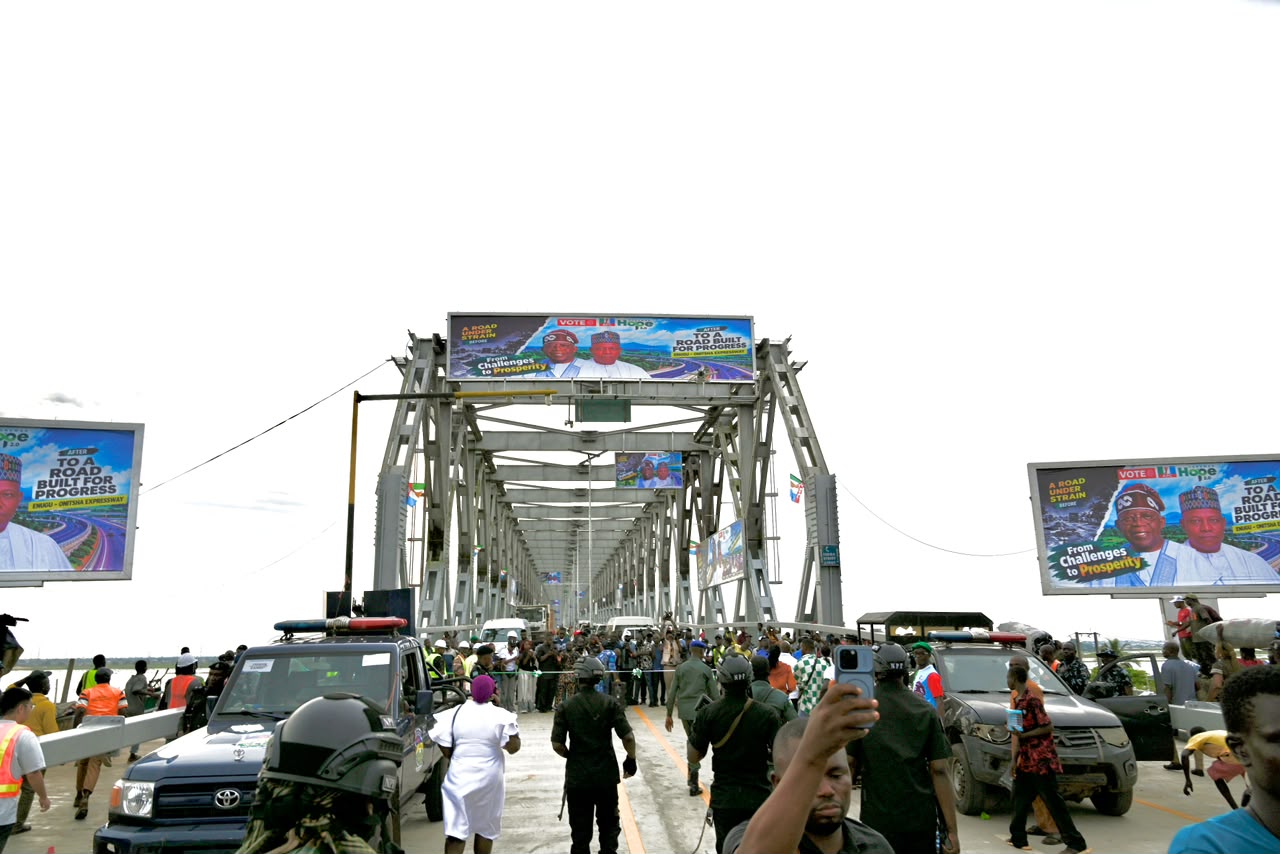
The Minister of Works, David Umahi, disclosed this during the reopening of the First Niger Bridge on the Asaba-Onitsha Road, explaining that the design process for the Benin-Asaba Road was ongoing.
Umahi also announced that the road, which was previously concessioned, had been returned to the Ministry of Works.
READ ALSO: Nigerian President to Sustain Undisrupted Academic Calendar
Motorists travelling along the Benin-Asaba Road, which links the South-East to Nigeria’s Niger Delta region, have faced difficult driving conditions and heavy traffic congestion due to deteriorated sections and poor contractor performance.
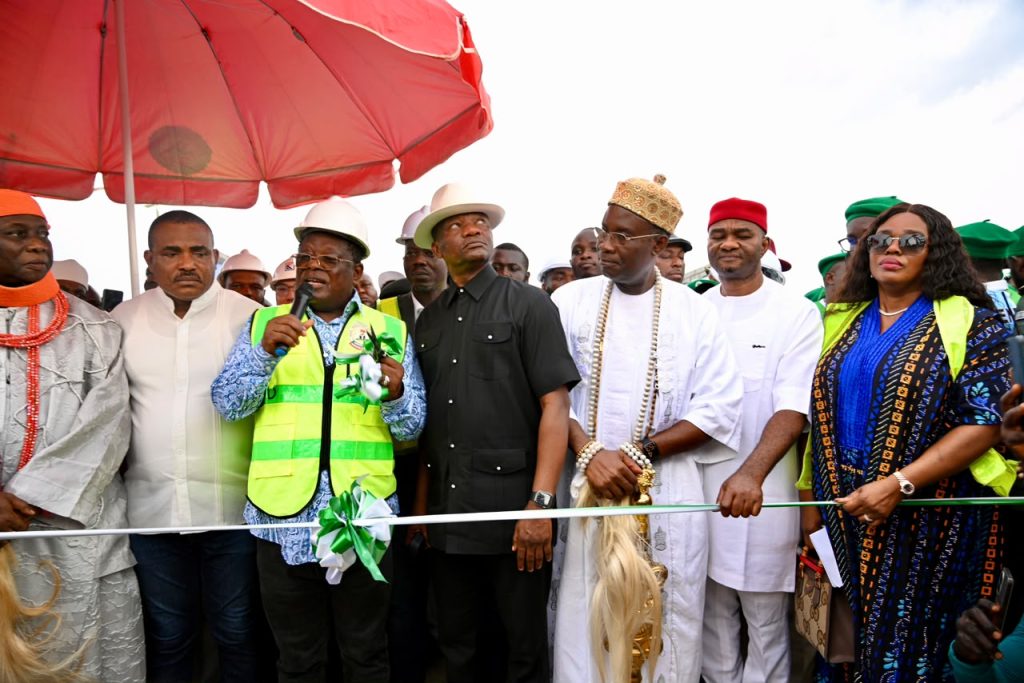
The Minister described the recovery of the road from the concession agreement as a major step towards addressing the longstanding challenges faced by motorists, noting that the return would enable the Ministry of Works to take direct responsibility for its reconstruction.
“What stopped the Ministry of Works from reconstructing Benin-Asaba Road, the concessioning of that route, has been unsealed. We now have our route back to the Ministry of Works,” Umahi explained.
The Minister also announced the Nigerian Government’s intervention to protect and rehabilitate the First Niger Bridge.
He explained that the Ministry of Works responded after a content creator alerted the government to activities threatening the bridge’s structural integrity.
According to Umahi, the rehabilitation work carried out on the bridge was similar to that undertaken on Lagos’ Third Mainland Bridge, including asphalt resurfacing and median demarcation.
“Exactly the treatment we gave to the Third Mainland Bridge is the treatment we gave to this place,” Umahi stressed.
He added that the demarcation was necessary because bridges were not designed to withstand static loads indefinitely.
The ongoing safety improvements include the installation of closed-circuit television (CCTV) cameras, solar-powered lighting and observation centres at both ends of the bridge.
Security personnel are expected to use the facilities to monitor activities on and beneath the bridge, while three turnaround passages have been created to help motorists manoeuvre safely when vehicles break down.
The Minister also warned against illegal sand dredging around bridges, reminding the directors of the Ministry of Works in Delta and Anambra States that federal regulations prohibit sand dredging within a 10-kilometre radius of bridges.
Umahi warned that disciplinary action would follow if the illegal activity continued, directing the state directors to report any failure by security agencies to enforce the regulations.