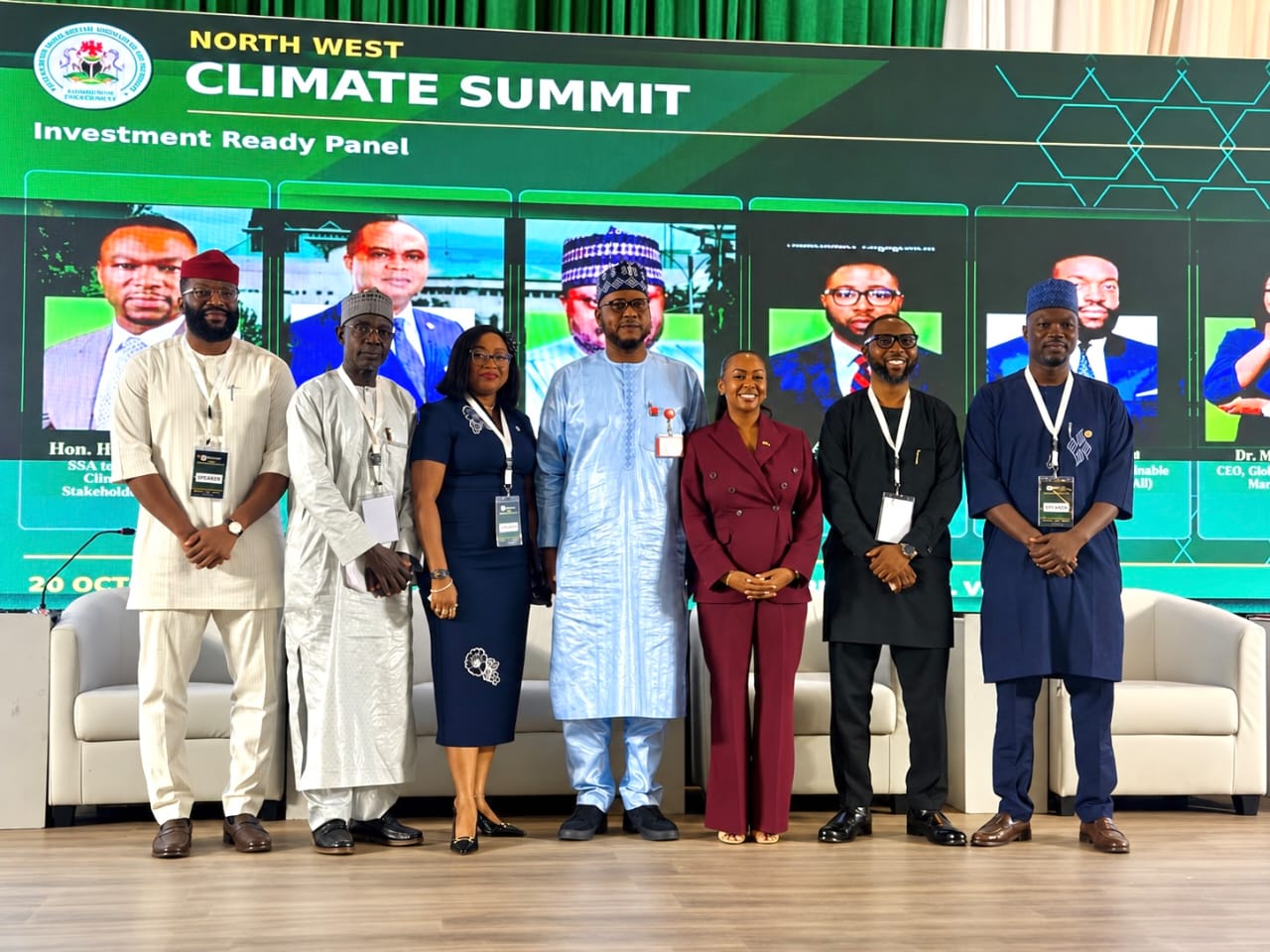
The North West Climate Summit 2026 has proposed the establishment of a Climate Academy, Climate Investment Marketplace and Climate Fund to mobilise investment and strengthen regional climate resilience.
The initiatives are also expected to translate environmental policies into sustainable economic opportunities for communities across North West Nigeria.
The initiatives formed the central focus of the summit convened on Tuesday by the Senior Special Assistant to President Bola Ahmed Tinubu on Community Engagement (North West), Abdullahi Tanko Yakasai, at the State House Banquet Hall, Presidential Villa, Abuja.
Held under the theme, “Accelerating Global Climate Solutions,” with a focus on “Unlocking Land, Water and Energy Systems,” the summit provided a federal-subnational platform for governments, investors, development institutions and private-sector stakeholders to advance coordinated climate investment and sustainable development across the region.
The summit emphasised that the success of the proposed initiatives would depend on their capacity to bridge the gap between knowledge, policymaking and investment, ensuring that climate interventions produce measurable improvements in agricultural productivity, water security, economic opportunities and community livelihoods.
It further highlighted climate change as a major development challenge with far-reaching implications for Nigeria’s food security, public infrastructure, economic productivity and community stability, particularly in the North West, where environmental pressures continue to threaten livelihoods and undermine sustainable growth.
Participants identified irregular rainfall, prolonged drought, desertification, soil degradation and flooding as major threats to the region’s agricultural economy.
They noted that “their consequences extend beyond farming communities to disrupt food supply chains, increase household vulnerability and place additional pressure on public resources.”
The summit underscored the importance of strengthening regional cooperation, institutional capacity and climate financing to address these challenges, while promoting investment in climate-smart agriculture, renewable energy, sustainable water management and environmentally resilient infrastructure.
The proposed North West Climate Academy is expected to strengthen technical knowledge, institutional expertise and community participation in climate adaptation, while the Climate Investment Marketplace will provide a platform for connecting viable regional projects with investors, development finance institutions and strategic partners.
Similarly, the proposed North West Climate Fund is designed to mobilise financial resources for climate adaptation, environmental sustainability and investment opportunities capable of stimulating economic growth and improving livelihoods across the region.
Chairman of the House Committee on Climate Change and Security, Nkemkanma Kama called for the integration of climate resilience into public investment planning, budgeting and project implementation, warning that “failure to anticipate environmental risks could expose government investments and vulnerable communities to avoidable economic losses.”
The initiative brought together a broad network of institutional partners, including the Federal Ministry of Environment, National Council on Climate Change, North West Development Commission, North West Governors’ Forum, Rural Electrification Agency, National Information Technology Development Agency, National Power Training Institute of Nigeria and National Emergency Management Agency.
Other partners included the United Nations Office for Disaster Risk Reduction, Sustainable Energy for All, Solar Marketplace Nigeria, Nigeria Climate Innovation Centre, Lagos Business School, Georgia House of Representatives and the Institute for Global Negotiation, reflecting the summit’s emphasis on international cooperation, technical expertise and investment partnerships.
Speaking on the significance of the gathering, the Lead Consultant for the North West Climate Summit 2026, Dr. Mea Boykins, described her involvement in the initiative as “an opportunity to contribute meaningfully to advancing climate action in Nigeria through collaboration among global leaders, government officials, development partners and private-sector executives.”
Boykins maintained that the summit represented more than a gathering of influential stakeholders, describing it as “an important platform for building strategic partnerships, mobilising investment and advancing innovative responses to the environmental challenges confronting Northern Nigeria.”
She emphasised that the ultimate value of the engagement would be determined by the implementation of commitments, the sustainability of partnerships and the tangible benefits delivered to affected communities.
“The true success of this summit will be measured not by who was in the room, but by what we accomplish together after leaving it,” Boykins declared.
The summit reinforced the need for sustained collaboration between federal and subnational institutions, development partners and investors to transform the North West’s environmental challenges into opportunities for climate-resilient infrastructure, economic diversification, job creation and long-term regional prosperity