Nigeria’s National Human Rights Commission (NHRC) has urged Civic Education and Guidance and Counselling teachers to strengthen human rights education in schools, helping students understand their rights, reject discrimination and promote dignity, equality and tolerance.
The commission gave the charge at a human rights capacity-building workshop for teachers in the Federal Capital Territory, stressing their role in preventing abuses and fostering safe, inclusive learning environments.
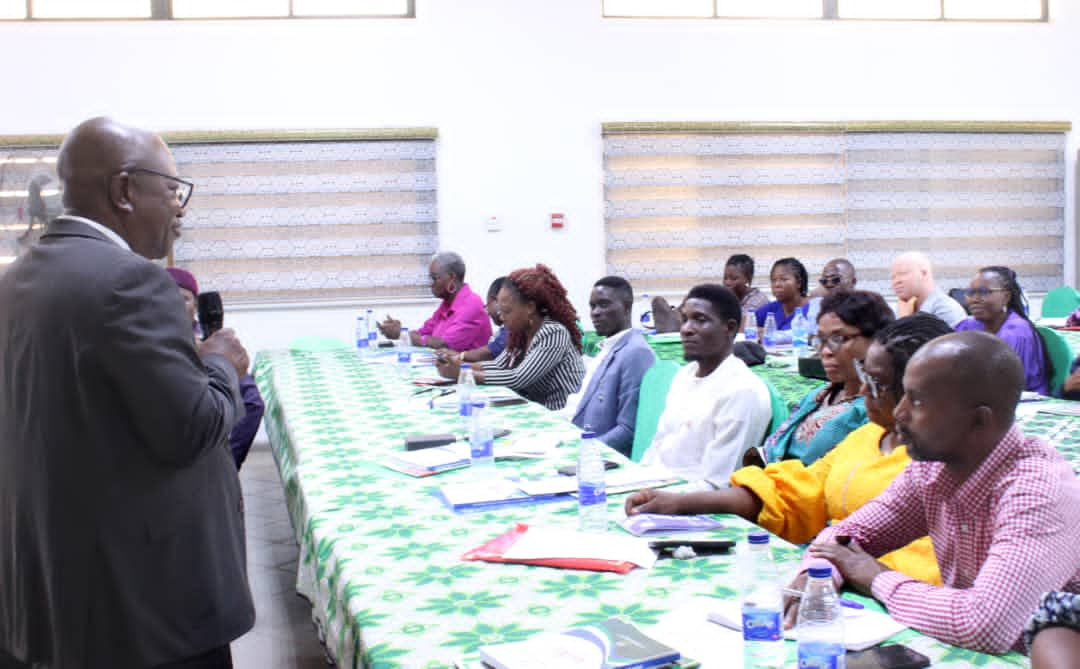
The NHRC Director of Legal Services and Enforcement, Rabi Anwar, who represented the Executive Secretary, Tony Ojukwu, said teachers could shape young Nigerians’ values by helping them understand their rights, appreciate diversity and speak out against human rights violations.
She explained that the workshop aimed to deepen teachers’ understanding of human rights principles and equip them to integrate human rights education into classroom teaching, counselling and school management.
She urged participants to apply the knowledge gained to build peaceful learning environments where students feel safe, respected and protected.
Anwar also called for stronger cooperation among teachers, school administrators, government institutions, parents, civil society organisations and other stakeholders to advance human rights education.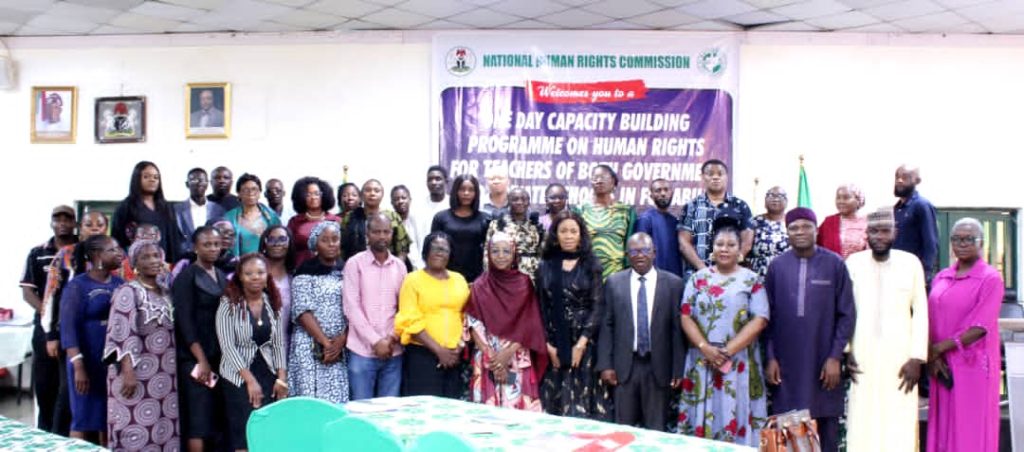
She said coordinated efforts were essential to ensure students understood both their rights and responsibilities while learning to reject violence, discrimination and other abuses.
READ ALSO: NHRC Seeks Human Rights Approach to Drug Abuse
During the workshop, human rights education expert, Mr Saka Azimazi examined the meaning, historical development and fundamental principles of human rights.
He traced key milestones in the evolution of human rights, including ancient legal codes, the Magna Carta, Enlightenment philosophy and the American and French declarations.
Azimazi also discussed the 1948 Universal Declaration of Human Rights, a landmark United Nations document that sets out fundamental rights and freedoms for all people.
He examined the relationship between human rights, religion, morality and culture, alongside debates over universalism and cultural relativism.
Another human rights education expert, Ifeoma Nwakanma, highlighted the role of Civic Education teachers in raising awareness and encouraging students to participate actively in school activities.
She urged teachers to create classrooms where students could express their views freely, understand their responsibilities and contribute meaningfully to school life.
Nwakanma also advocated establishing and strengthening student councils and peer education initiatives to promote participation and awareness among learners.
Guidance counsellor Henrietta Okechukwu, highlighted the importance of counsellors in preventing, identifying and responding to human rights violations in schools.
She said counsellors should identify cases of bullying, discrimination, violence, abuse, online harm and mental health distress.
Okechukwu added that affected students should receive appropriate support and referrals to relevant services.
She urged counsellors to apply child-protection and educational principles when addressing school-related challenges, emphasising that every student’s rights and welfare must remain a priority.
The workshop reinforced the importance of human rights education, student participation and effective counselling in creating safer schools and helping young Nigerians understand and exercise their rights.