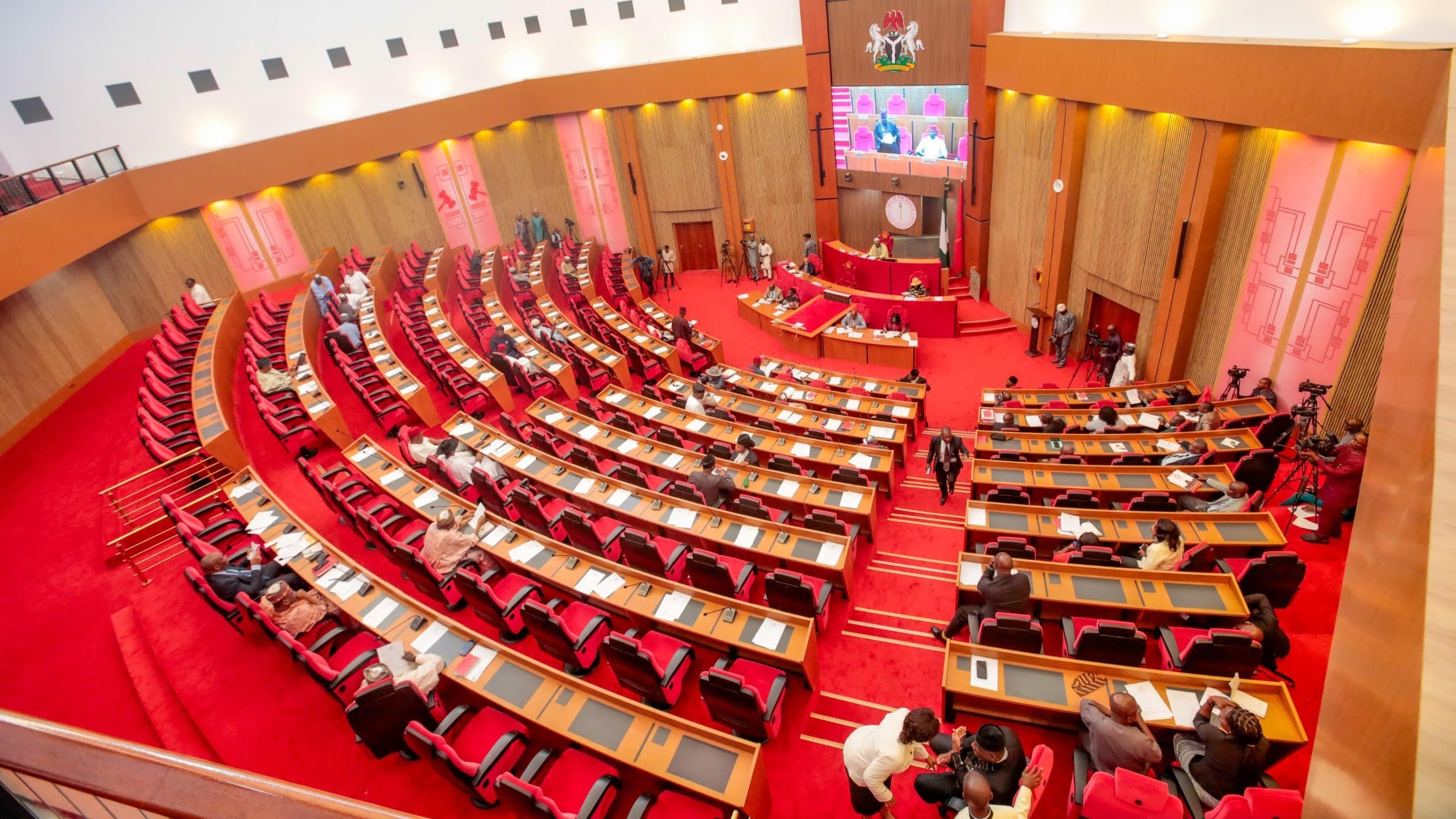
The Nigerian Senate has called for mandatory health screening of all passengers arriving in the country through international airports, seaports and designated land borders as part of measures to prevent the importation of Ebola and other epidemic-prone diseases.
The Legislature also urged the Nigerian Government to release emergency funds from the Service-Wide Votes to strengthen the country’s preparedness and response to the potential threat.
The resolutions followed a motion of urgent national importance sponsored by Senator Francis Faduyile, representing Ondo South, who raised concerns over the risk of Ebola entering Nigeria amid an outbreak of the Bundibugyo strain in the Democratic Republic of the Congo (DRC) and its spread to other African countries.
- READ MORE: Nigeria Intensifies Ebola Contact Tracing
Moving the motion, Faduyile said “the Nigeria Centre for Disease Control and Prevention (NCDC) had assessed the risk of Ebola importation into Nigeria as high, stressing the need for stronger surveillance and preventive measures at all international entry points.”
He recalled that Nigeria recorded an Ebola outbreak in July 2014 after an infected traveller arrived through the Lagos airport, warning that the experience underscored the importance of strengthening border health surveillance.
The senator identified gaps in the country’s existing screening arrangements, including the restriction of health declaration requirements to travellers from selected countries, inadequate Port Health personnel and equipment at some entry points, and an outdated legal framework for quarantine services.
He further warned that the possible introduction of another epidemic could place additional pressure on Nigeria’s healthcare system, which is already contending with diseases such as Lassa fever, cholera and diphtheria.
Under the resolutions, the Senate urged the Federal Ministry of Health and Social Welfare, the NCDC and Port Health Services to make health screening compulsory for all international passengers arriving in Nigeria.
The proposed measures include mandatory completion of health declaration forms, temperature checks and symptom screening.
Lawmakers also called for enhanced screening of passengers who had visited or transited through affected areas within the preceding 21 days, regardless of their nationality or country of departure.
The chamber further recommended exit screening for departing passengers during any declared public health emergency.
To strengthen screening capacity, the Senate urged the Federal Ministry of Health and Social Welfare, the Federal Airports Authority of Nigeria and the Nigeria Immigration Service to ensure that all international entry points were adequately staffed and equipped with trained Port Health officers, thermal scanners, personal protective equipment and isolation rooms.
It also called for the readiness of isolation and treatment centres across the 36 states and the Federal Capital Territory to ensure a coordinated response in the event of an outbreak.
Contributing to the debate, Senator Adamu Aliero, representing Kebbi Central, said the relevant ministry had already begun implementing many of the measures proposed in the motion.
He nevertheless stressed the need for caution and sustained efforts to prevent Ebola from entering the country.
“Virtually all the prayers that have been canvassed, the ministry has started doing them,”
“We have to be very careful; let us do all we can to control this disease” Aliero said.
Similarly, the Senate Chief Whip, Tahir Monguno, representing Borno North, called for an amendment to the existing quarantine legislation to reflect contemporary public health realities.
“There is a need for this parliament to amend the Quarantine Act of 1976 to bring it in tandem with existing realities,” Monguno said.
The motion, however, referred to the Quarantine Act of 1926 as the legislation governing Port Health Services and called for its replacement with modern public health legislation consistent with the International Health Regulations (2005).
The Senate also urged the Federal Government to make adequate provision for the NCDC and Port Health Services in the 2027 budget and release outstanding funds owed to the relevant agencies.
In a separate resolution, lawmakers called for emergency funding through the Service-Wide Votes to support agencies responsible for preventing and containing the disease.
Senate President Godswill Akpabio criticised what he described as a lack of seriousness in the aviation sector’s handling of the Ebola threat, urging relevant agencies to adopt a more proactive approach.
“The nonchalance with which the aviation sector treated this; everybody must now wake up,”
“We have to be proactive; everybody must take part. If it spreads, it will be a major problem. This is a medical emergency, a very deadly one” Akpabio said.
He emphasised the need for coordinated action among government agencies to prevent an outbreak and protect public health.
Also supporting the motion, Senator Ekong Samson, representing Akwa Ibom South, said the urgency of the situation required greater attention to the country’s healthcare system.
“I want to pull my weight behind this motion because of its urgency, substance and importance,”
“We have to take our healthcare system very seriously, so we can protect ourselves.”
Senator Sadiq Umar, representing Kwara North, also called for a coordinated, multi-agency response to prevent the spread of Ebola into Nigeria.
“Nigeria must not allow a single spread of Ebola; I think we should take this seriously,” Umar said.
“We need a multi-agency approach so we can tackle this” Samson said.
To ensure the implementation of the resolutions, the Senate mandated its committees on Health, Primary Healthcare, Development and Disease Control, Aviation, Interior, and Appropriations to engage relevant agencies and inspect major international entry points.
The committees are expected to report back to the chamber within four weeks for further legislative action.