


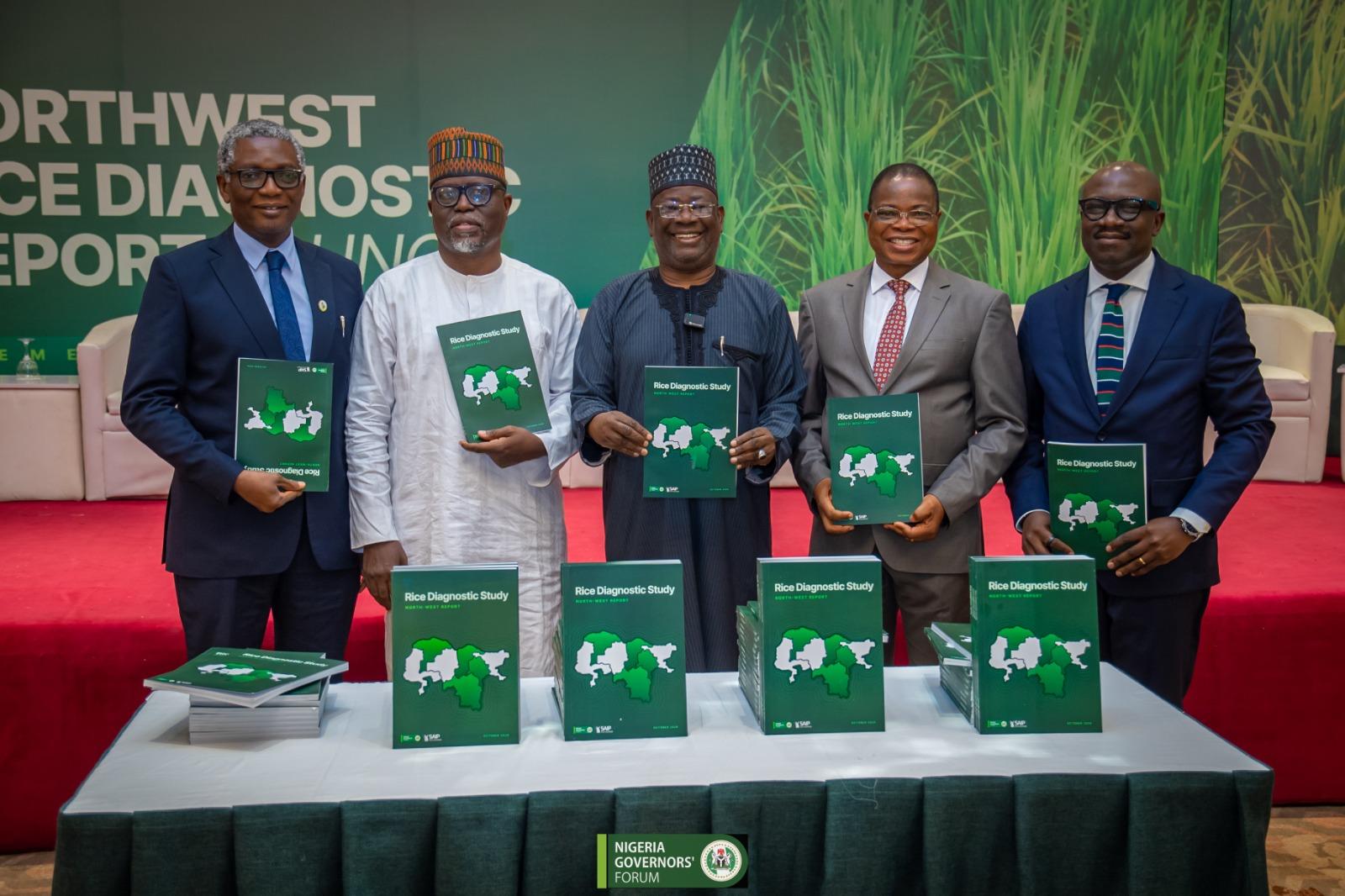
The Nigeria Governors’ Forum (NGF) has called for stronger coordination, improved agricultural data and increased investment to bridge Nigeria’s rice production gap and enhance food security.
The Director-General of the Forum, Dr. Abdulateef Shittu, made the call in Abuja during the launch of the Northwest Nigeria Rice Diagnostic Report, themed “From Diagnostic to Delivery.”
He said Nigeria consumes about 8.6 million metric tonnes of rice annually, while domestic production stands at approximately 3.3 million metric tonnes.
Shittu identified policy inconsistencies, inadequate financing, low productivity and poor data management as major challenges, stressing that coordinated policies and adequate support could position Nigeria as a net exporter of rice.
Earlier, the Programme Manager, Eghosa Omoigui, said the report provides an evidence-based assessment of the rice sector across the Northwest’s seven states.
READ ALSO: Nigeria achieves 75% self-sufficiency in rice production – FG
He identified fragmented farmer and miller records, inconsistent production estimates and incomplete market information as challenges to effective planning, calling for stronger collaboration among governments, development partners and private investors.
The report also highlighted the need for affordable inputs, improved irrigation, extension services, finance, machinery and market access.
The Executive Director, Programmes and Partnerships of the NGF, Dr. Ahmad Abdulwahab, said the diagnostic project was designed to address the lack of reliable data on rice production, processing and marketing.
He explained that the report examines institutions, public finance, production, processing, inclusion and agricultural data systems, urging governments and development partners to translate its findings into practical state-level action plans.
The Managing Director of the Bank of Agriculture, Mr. Ayodeji Oludare Sotinrin, said the bank financed 25 aggregators in the previous wet season, providing input credit to over 500,000 farmers, with plans to expand support to 700,000 farmers.
He said the bank was also developing guaranteed minimum prices for staple crops, financing irrigation projects around 15 dams in Kano State and expanding its mechanisation fleet with 2,000 tractors and 14,000 implements to support cultivation of about 2.4 million hectares annually.
The representative of the African Development Bank, Tabitha Kari-Kari, reaffirmed the bank’s commitment to implementing the report, stressing the need for increased financing, improved infrastructure and opportunities for businesses and jobs across the rice value chain.
He expressed optimism that the report would provide a common framework for coordinating interventions, improving farmers’ incomes and strengthening food security.
The representative of the Alliance for a Green Revolution in Africa (AGRA), Mr. Phillip Obosi, called for a stable and supportive policy environment to sustain a competitive rice sector.
He cautioned that regulatory inconsistencies could discourage private investment and undermine efforts to strengthen Nigeria’s domestic rice value chain.

