



The Speaker of the Nigerian House of Representatives, Mr. Tajudeen Abbas says the success of the Petroleum Industry Act (PIA) depends not only on its legal provisions but also on how effectively they were implemented.
He called for stronger corporate accountability and effective legislative oversight of the Nigerian National Petroleum Company Limited (NNPC Ltd).
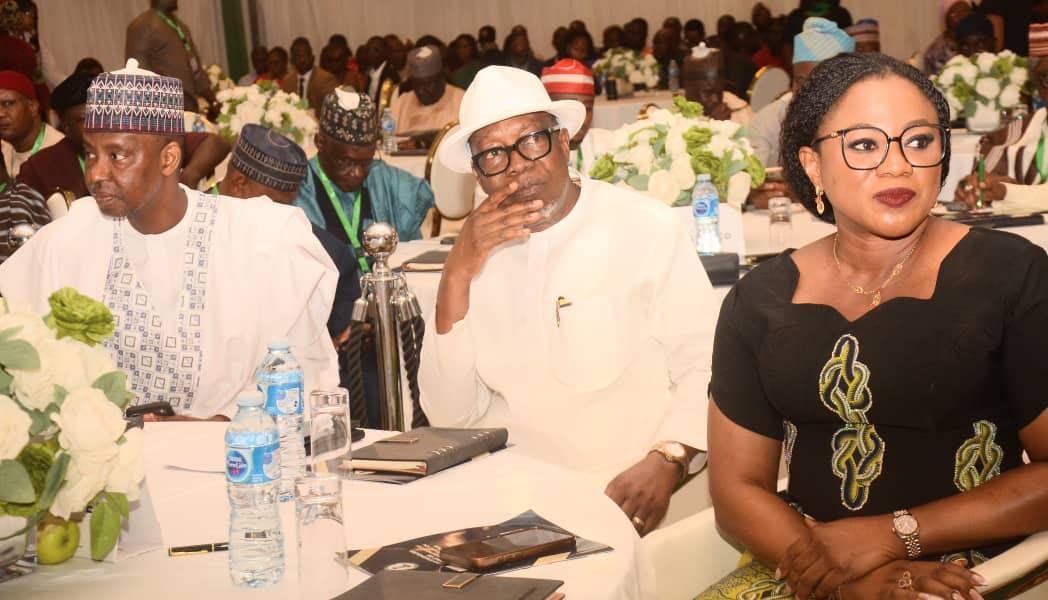
The Speaker made the comments at the opening of a three-day retreat, on Petroleum Industry Act Implementation: The PIA, Corporate Governance and Legislative Oversight, organised by the Nigeria National Petroleum Company Limited, NNPC, in collaboration with the Office of the Speaker, in Abuja.
He warned that commercial autonomy must come with responsibility.
READ ALSO: House Passes Abuja Rent Regulation Bill for Second Reading
The Speaker who was represented by the House Leader, Rep. Julius Ihonvbere described the PIA as one of Nigeria’s most consequential economic laws, saying it was designed to create a more transparent, commercially viable, accountable and investment-friendly petroleum industry.
“Five years down the line, the central question is how much of that promise we have translated into practice”. Mr. Abbas said.
He noted that the Act’s provisions, including the transformation of the Nigerian National Petroleum Corporation into NNPC Ltd, the establishment of regulatory institutions and the introduction of a framework for host community development, were intended to address longstanding challenges in the sector.
The Speaker pointed out that the passage of a reform law is not the same as the successful implementation of the reform.
According to him, the transition of NNPC Ltd into a commercially oriented company was expected to improve operational efficiency, attract investment and create greater value from Nigeria’s petroleum resources.
“But commercial autonomy must be accompanied by corporate accountability. The freedom to make commercial decisions must go hand in hand with responsibility for their consequences,” he said.
The Speaker said government, management and the legislature had distinct but complementary responsibilities in the management of state-owned commercial enterprises.
He explained that government, as shareholder, must protect the public interest, while management should retain the professional independence to make commercial decisions and accept responsibility for performance.
The stressed that the legislature must ensure that national assets remained subject to constitutional and statutory accountability.
“The legislature’s responsibility is not to substitute parliamentary judgment for management decisions or interfere arbitrarily in legitimate commercial operations. It is to ensure that statutory mandates are respected, governance obligations are fulfilled, public resources are protected and the institutions established by law deliver on their responsibilities,” Abbas said.
The Speaker while declaring the retreat open, expressed hope that its deliberations will strengthen the commitment to effective implementation of the Act.
In her welcome remarks, Chief Executive Officer of 3 Streams Synergy Ltd, Doyin Adelabu, called for stronger institutional collaboration and accountability to ensure that the Petroleum Industry Act (PIA) delivers its intended benefits to Nigerians.
She said five years after the Act came into force, stakeholders needed to assess the progress made in transforming the Nigerian National Petroleum Company Limited into a commercially driven, transparent and accountable company.
“The Act sets out to turn NNPC into a commercially driven, transparent and accountable company, and to give the industry a governance framework that attracts investment and serves the Nigerian people,” she said.
Adelabu said the summit will examine NNPC Limited’s corporate governance and accountability, as well as ways to strengthen legislative oversight and collaboration.
She urged participants to engage openly and identify practical solutions to the challenges affecting the implementation of the reforms.
The Chairman of the House of Representatives Public Accounts Committee, Mr. Bamidele Salam, in his goodwill message called for a review of the implementation of the Petroleum Industry Act (PIA), five years after its enactment, to identify gaps and improve its effectiveness.
He recalled the difficulties the legislation faced before its passage by the 9th National Assembly, and said the five-year milestone provided an opportunity to assess its impact and determine what needed to change.
“It is proper that after five years of implementation, that we have an opportunity to sit back and see what has worked, what hasn’t worked, and what do we need to do to make sure that we think out with the law in a manner that will make it more productive,” Salam said.
He urged stakeholders to identify and replicate best practices that could improve the petroleum industry.
Also speaking, the representative of the Chairman of the House Committee on Petroleum Resources (Midstream), Rep. Lanre Okunlola, said the transformation of the Nigerian National Petroleum Company Limited (NNPC Ltd) must be measured by tangible improvements in the sector.
Mr. Okunlola said the PIA was designed to improve corporate governance, attract investment, increase private sector participation, enhance operational efficiency and promote the development of host communities.
The three days summit is expected to ask direct questions: How far has NNPC Limited come in its corporate governance and accountability? How can legislative oversight and collaboration be strengthened to support the reform? And what must every stakeholder do to close the gaps that remain?

