


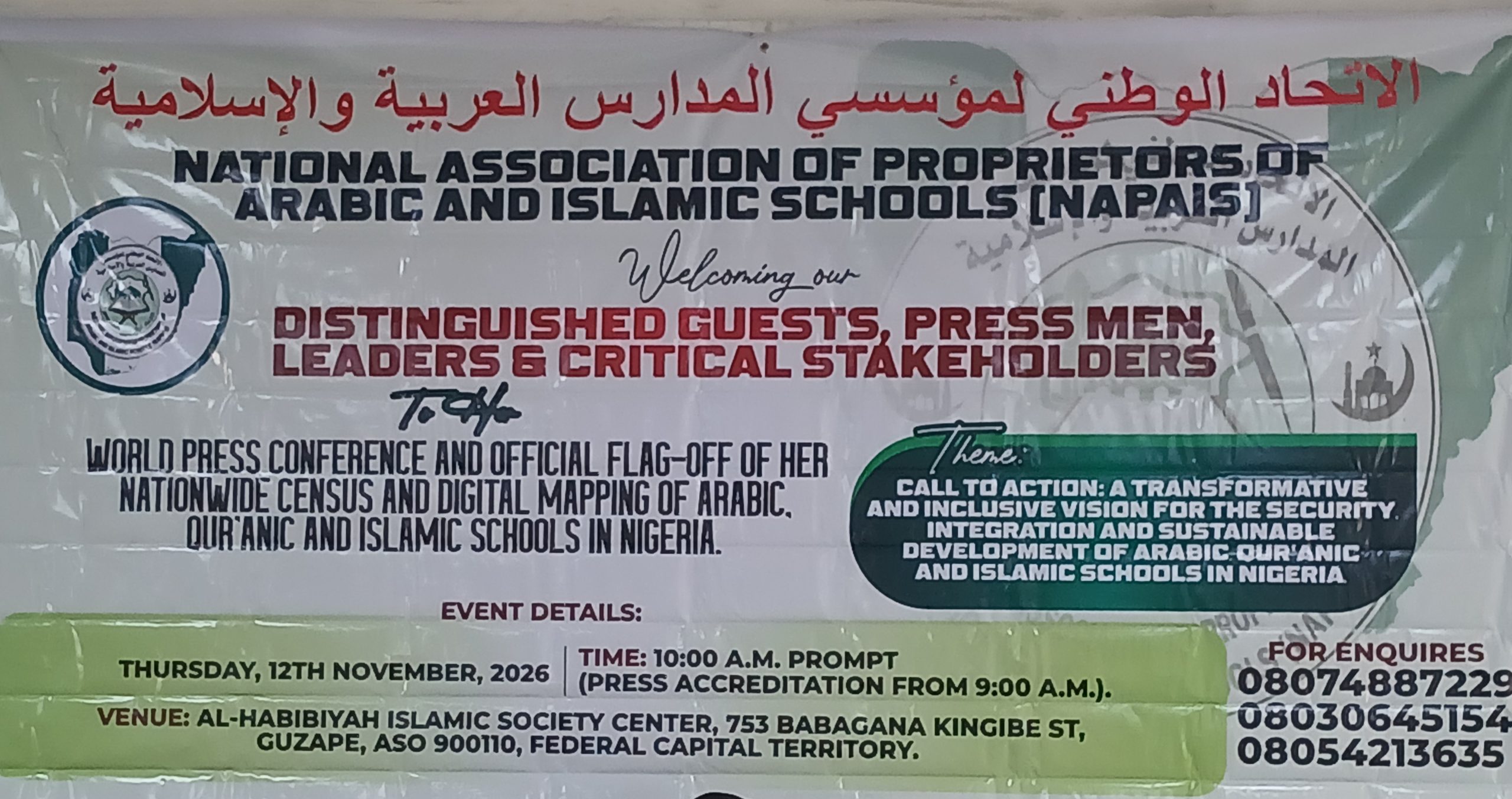
The National Association of Proprietors of Arabic and Islamic Schools (NAPAAIS) has unveiled a 60 day action plan to register Arabic, Qur’anic and Islamic schools across Nigeria.
Thisnis part of efforts to improve their security, integration and sustainable development.
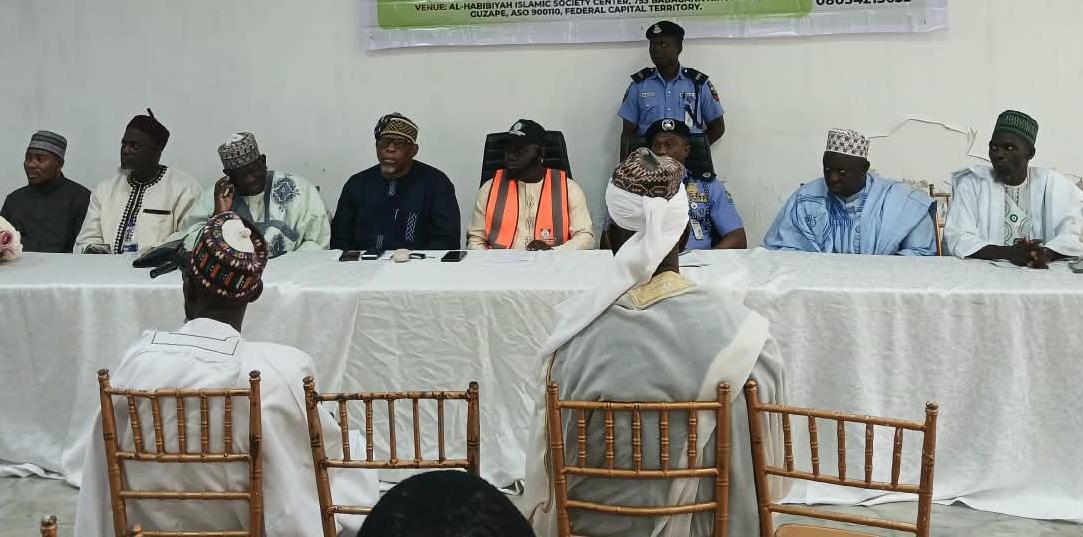
The National President of the Association, Sheikh Muhammed AbdulGafar, announced the initiative at a world press conference organised by the organisatio, in Abuja the nation’s capital.
The event was held under the theme, “Call to Action: A Transformative and Inclusive Vision for the Security, Integration and Sustainable Development of Arabic, Qur’anic and Islamic Schools in Nigeria.”
Sheikh AbdulGafar said the absence of reliable data on Arabic and Islamic schools had limited their visibility, access to government support and opportunities for partnerships with development organisations.
READ ALSO: NCAOOSCE Targets 6m of Out-of-School Children Enrolment
He explained that the proposed database would capture each school’s name, proprietor, location, number of pupils and teachers, facilities and subjects taught.
Registered schools would also receive unique NAPAAIS identification numbers, while geo tagging and photographs would support proper identification and verification.
Physical Verification
He said the registration would be free, warning against proxy enumeration, multiple registration and extortion. Coordinators across the six geopolitical zones are expected to complete the exercise within 60 days, with physical verification of 10 per cent of registered schools.
The NAPAAIS President also announced plans to develop a five-year strategic plan covering 2027 to 2031, alongside a cluster system through which groups of 20 schools would be monitored to promote standards and accountability.
On sustainability, he said that the association was developing a cooperative scheme, Endowment Fund, teachers’ certification and pension arrangements, as well as digital and vocational training programmes.
The association is also proposing a monthly contributions to support weaker institutions and provide soft loans to proprietors.
Addressing the Almajiri education system, Sheikh AbdulGafar called for comprehensive reforms rather than its abolition, citing inadequate funding, parental neglect, exploitation and poor regulation among the challenges affecting the system.
He proposed the registration of Almajiri children, community supported boarding arrangements and a curriculum combining Qur’anic, Arabic and Islamic studies with English, Mathematics, digital literacy and vocational training.
He also called for minimum standards on sanitation, water supply, accommodation and pupils’ welfare, as well as stronger parental involvement.
Meanwhile, the Special Assistant to the Minister of Education on Almajiri and Out of School Children’s Education, Dr Balarabe Kakale, has urged state governments to domesticate the National Commission for Almajiri and Out of School Children Education Act and fully implement funding provisions under the Universal Basic Education Commission (UBEC) Act.
Dr Kakale who represented the Nigeria’s Minister of Education, Dr Tunji Alausa said state and local governments had constitutional responsibility for the ownership, funding and management of basic education.
Provides Inclusion
He expressed concern that many states had failed to fully implement Section 15 of the UBEC Act, which provides for the inclusion of Almajiri children, street children, internally displaced persons and nomadic communities in basic education programmes.
He clarified that children enrolled in recognised Islamic, Makarantar Allo institutions are legally regarded as learners, stressing the need to distinguish them from children begging on the streets.
Dr Kakale commended NAPAAIS for initiating the nationwide census of Almajiri pupils, noting that reliable data would support effective planning and government interventions.
He also said that the Nigerian Government had deployed a digital dashboard to monitor enrolment, retention and infrastructure in conventional and non-formal schools nationwide.
He urged school proprietors, teachers and communities to engage state governments and legislators to ensure the domestication and implementation of the Almajiri Education Act.

