


By: Glory Ohagwu, Abuja
Two senior officials of the Global Alliance for Public Relations and Communication Management, Silvia Arto and Professor Tevhide Görpe, have called for greater integrity, accountability and ethical responsibility in global communication amid growing disruptions caused by artificial intelligence (AI).
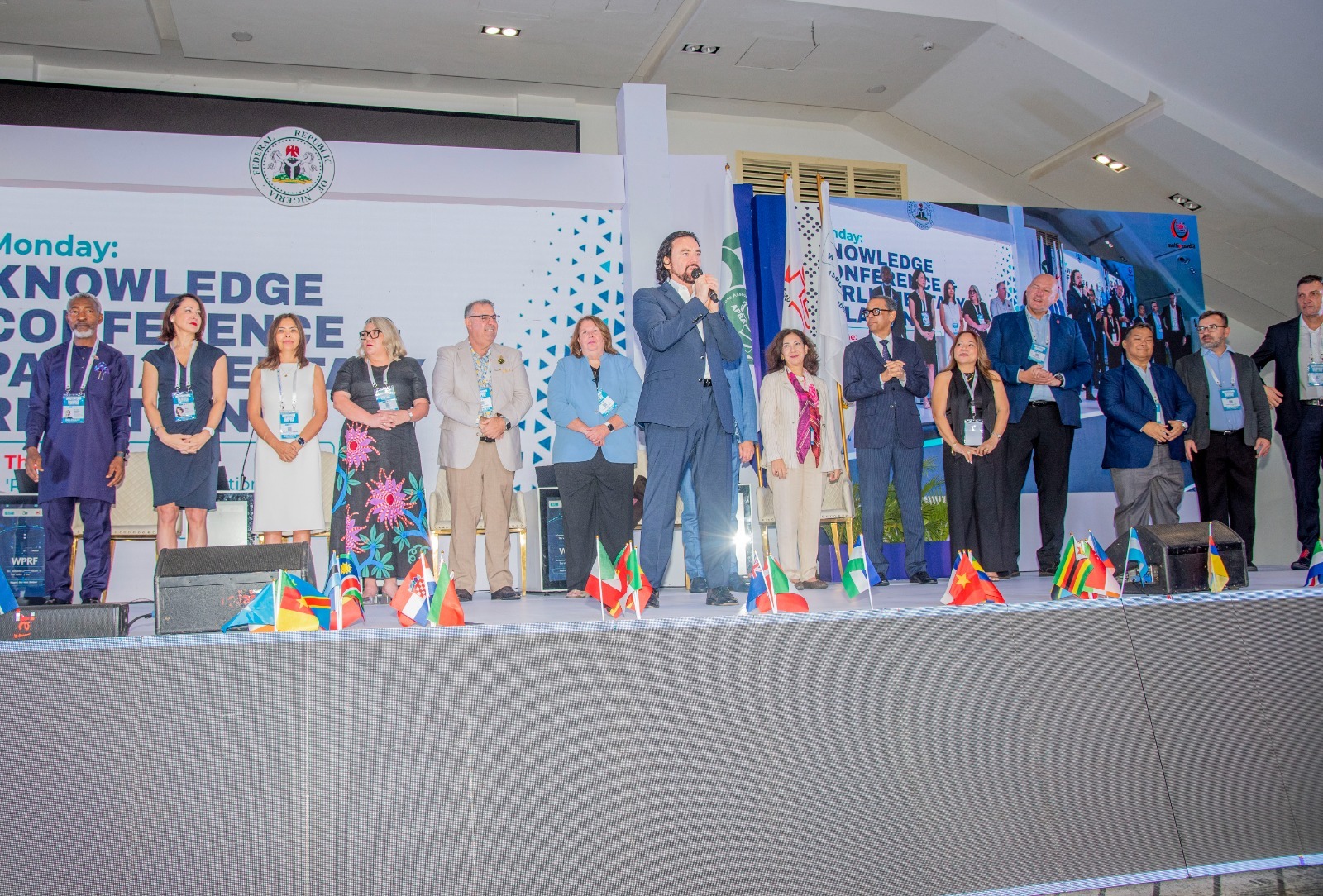
They made the call in separate interviews with Voice of Nigeria on the sidelines of the World Public Relations Forum (WPRF) 2026 ongoing in Abuja, themed:” Responsible Communication: Voice of the World” which has brought together communication professionals and academics from 126 countries to examine the future of responsible communication.
Arto, Vice President of the Global Alliance and Chair of its European Regional Council, described communication as a powerful instrument capable of either deepening divisions or fostering understanding across societies.

Against the backdrop of technological disruption, ecological transition and geopolitical tensions, she said communication professionals must recognise the far-reaching consequences of their messages.
“Communication is a power. Communication has the power to polarise people or communication has the power to bring people together, unify cultures, regions, races and everything,” Arto said.
She identified integrity, accountability and positive impact as the defining principles of responsible communication, stressing that professionals must establish the distinction between verifiable facts and personal opinions.
“First, integrity. Am I telling the truth? Second, accountability. We are accountable for what we are saying. And third is positive impact,” she emphasised.
Arto also called for greater representation of women in leadership, arguing that diversity of perspectives was essential to institutional performance and societal transformation.

Expressing concern over women’s representation in corporate leadership, which she put at less than 10 per cent of chief executive positions globally, she said the underutilisation of women’s expertise was a challenge to inclusive development.
“Diversity brings performance, diversity of perspectives,” she said, advocating complementary leadership in which men and women contribute their respective strengths to building a better society.
A Board Member of the Global Alliance, Regional Chair for Middle East and South Asia Professor Görpe and Professor of Communication at the University of Sharjah, United Arab Emirates, said the growing influence of artificial intelligence made ethical responsibility even more imperative for communication practitioners.
She described public relations professionals as the conscience of organisations, warning that the profession must not surrender its ethical obligations to the increasing volume of voices and technological tools shaping public discourse.
“As it has been said in the literature, we are the conscience of the organisations, but we have to repeat that to ourselves more often these days, with the invasion of other voices … artificial intelligence,” she said.
Görpe stressed that communication should not be mistaken for an easy profession, noting that its influence demands competence, discipline and responsible application.
She warned that artificial intelligence, geopolitical tensions and societal polarisation have heightened the need for responsible professional practice.
“That power should be in the hands of people who can use this power in a very responsible and ethical way,” she stated.
She also said that the Global Alliance was working on an edited book featuring academic and professional contributions on responsible communication, which would complement the conversations at the Abuja forum.
Looking beyond the conference, Görpe expressed hope that the gathering would inspire more structured engagement among public relations associations across participating countries.
The two experts’ submissions reinforce the central message of the Abuja forum: that in an age of artificial intelligence and competing narratives, the credibility of communication rests not only on what is said, but also on the integrity, accountability and responsibility with which it is delivered.

